
An American fighter jet is being equipped with an affordable hypersonic missile
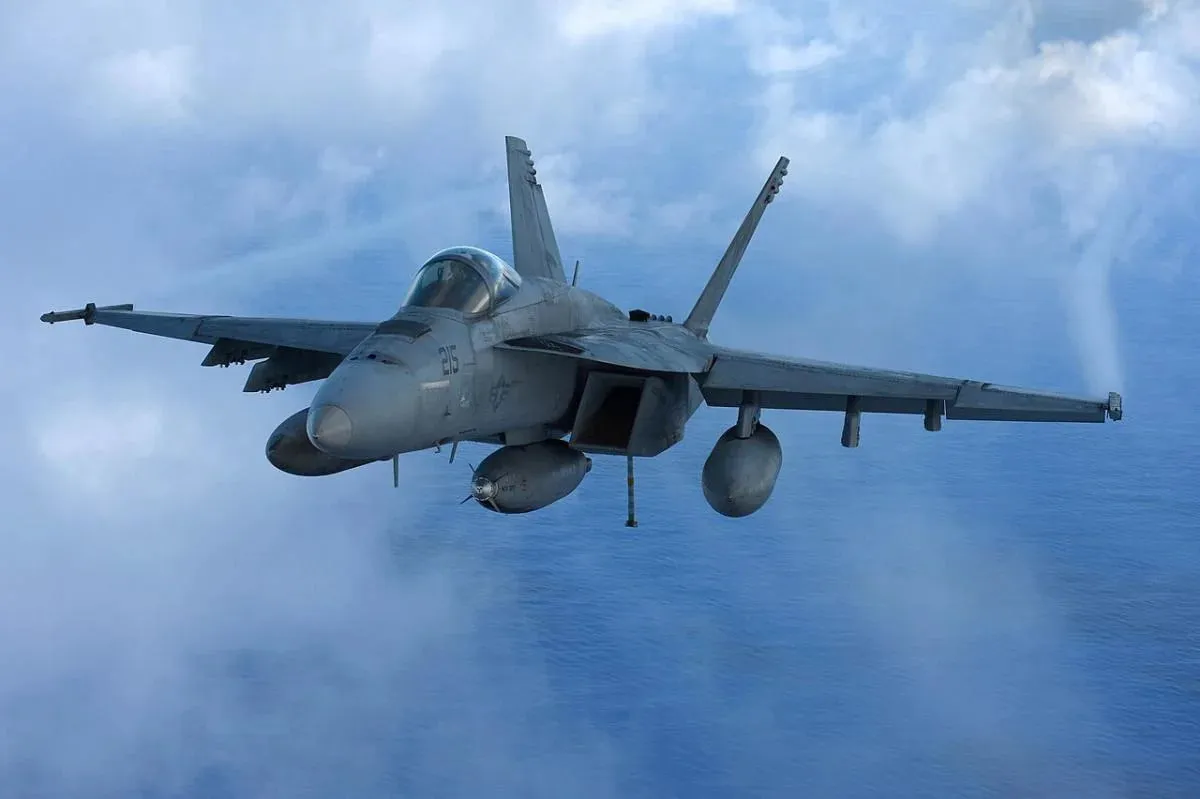
The airborne version of the Blackbeard hypersonic strike missile, developed by Castelion for the U.S. Navy, is already being tested on F/A-18E/F Super Hornet fighter jets. The developers are positioning Blackbeard as a more affordable alternative to next-generation hypersonic missiles.
A photo of the missile mounted under the wing of an aircraft was shown during the Tailhook Association conference. It depicts Blackbeard prototypes. These tests specifically focus on missile integration, not on confirmed launches.
The choice of carrier aircraft seems quite logical, even if we’re only talking about testing at this point. The F/A-18E/F Super Hornet is the U.S. Navy’s primary carrier-based fighter. It is also one of the most powerful 4++ generation fighters, already capable of deploying virtually the entire U.S. air arsenal.
News of the U.S. military’s intention to adapt the Blackbeard for use from naval fighter jets first emerged back in March. These plans are just part of a much larger program to deploy new hypersonic weapons.
Blackbeard is not only being developed in an air-launched version.
Castelion has also created a ground-launched version of this hypersonic missile, demonstrating an exceptionally rapid development pace. Less than 18 months passed from the concept’s inception on paper to the first actual tests.
Blackbeard – Key Features
Blackbeard is positioned as a low-cost alternative to next-generation hypersonic missiles. The product’s primary purpose is to engage targets hundreds of kilometers away, particularly moving and well-protected targets.
In the published images of Blackbeard, one can see a design consisting of a rocket booster and a hypersonic glider.
In appearance, the booster resembles a stage used in ballistic missiles. Its task is to reach the necessary speed and bring the glider to a specified altitude.
Castelion has not yet disclosed the exact tactical and technical specifications of Blackbeard. It is estimated that the missile’s range could be approximately 800 km.
This was reported by the TWZ portal, which drew attention to a related photo.
Details have emerged about a U.S. Air Force aircraft that secretly flew to Moscow.
NATO is preparing three steps in case of a Russian attack on the Baltic states — Bild.
As a reminder, NATO fighter jets shot down a drone in Latvian airspace.
On August 14, Latvian Prime Minister Andris Kulbergs commented on the incident involving a drone that violated the country’s airspace. According to him, the incident confirmed the effectiveness of Latvia’s air defense system.


