
Florida architect develops storm-resistant designs
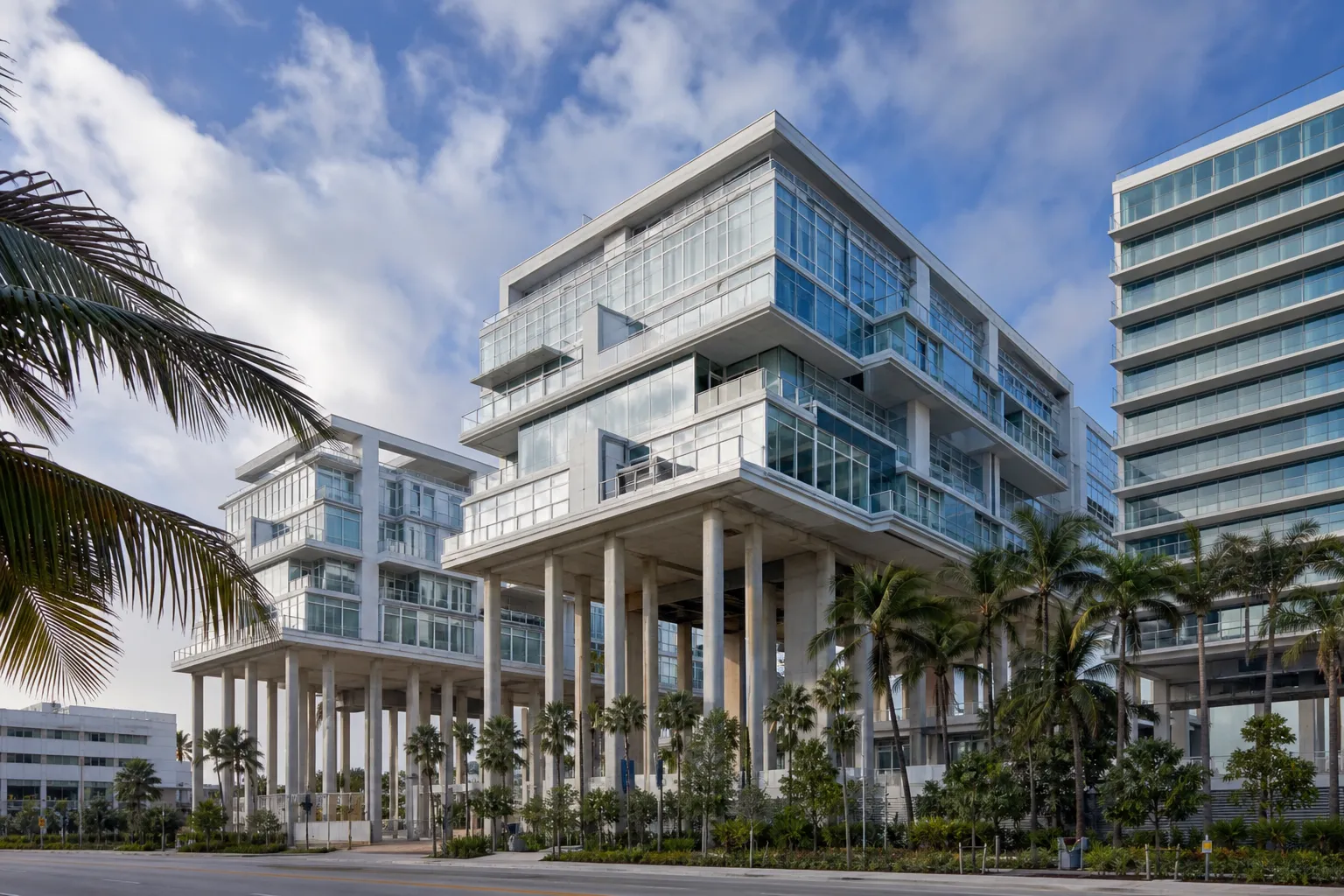
Landscape architect and Florida Atlantic University professor Jeffrey Huber, who survived Hurricane Andrew at the age of 12, is working on projects to adapt Florida’s coastal cities to storm surges and sea-level rise. As Fortune reports, one such project is the Vista Breeze affordable housing complex for older adults in Miami Beach, designed to withstand a storm surge of up to 6.1 meters.
In 1992, Category 5 Hurricane Andrew tore the roof off the Huber family’s home. According to him, rescuers could not reach them for several days, the family relied on food donations for a month and a half, and lived in a trailer for more than a year. Huber noted that design must take into account not only the storm itself but also its consequences for people and urban infrastructure.
Housing raised above sea level
The Vista Breeze complex, designed by Brooks Scarpa Huber, has 119 housing units in two buildings. It was raised 3.05 meters above sea level. To protect the structures, concrete was mixed with a crystalline waterproofing powder that prevents water penetration, while reinforcing steel was coated with zinc to protect it from rust and corrosion.
The buildings are oriented southeast, toward the prevailing winds, to provide natural cooling. The project also includes common areas, courtyards and terraces. The staircases were made more prominent than the elevators to encourage residents to use them.
More current news is available on the UA.News Telegram channel Telegram.
“Living” seawalls
Florida also uses 3D-printed “living” seawalls that combine coastal protection with the creation of habitat for marine species. Startup Kind Designs, founded by Anya Freeman in 2024, produces structures from a non-toxic concrete mixture. They can be shaped like natural coastal features, including mangrove roots.
According to the company, its technology dissipates at least 45% of wave energy. Researchers at Florida International University recorded 51 species on one of the walls a year after its installation, including oysters and tube worms. Freeman said Kind Designs has already installed 16 such walls in Florida for private, commercial and government clients and is preparing its first projects in California and New York.
A park as flood-control infrastructure
In Fort Lauderdale, a former parking lot was transformed into DC Alexander Park, which serves both as a public space and as an element of flood-control infrastructure. A native coastal forest was planted along the park’s boundaries, absorbing rainwater and saltwater during flooding.
Huber calls Miami a testing ground for solutions that may become relevant to other coastal cities. At the same time, architects and urban planners point out that funding, regulatory requirements and community support remain among the main obstacles to implementing such projects.


