
Astronomers have discovered mysterious rings on Venus that weren't supposed to be there
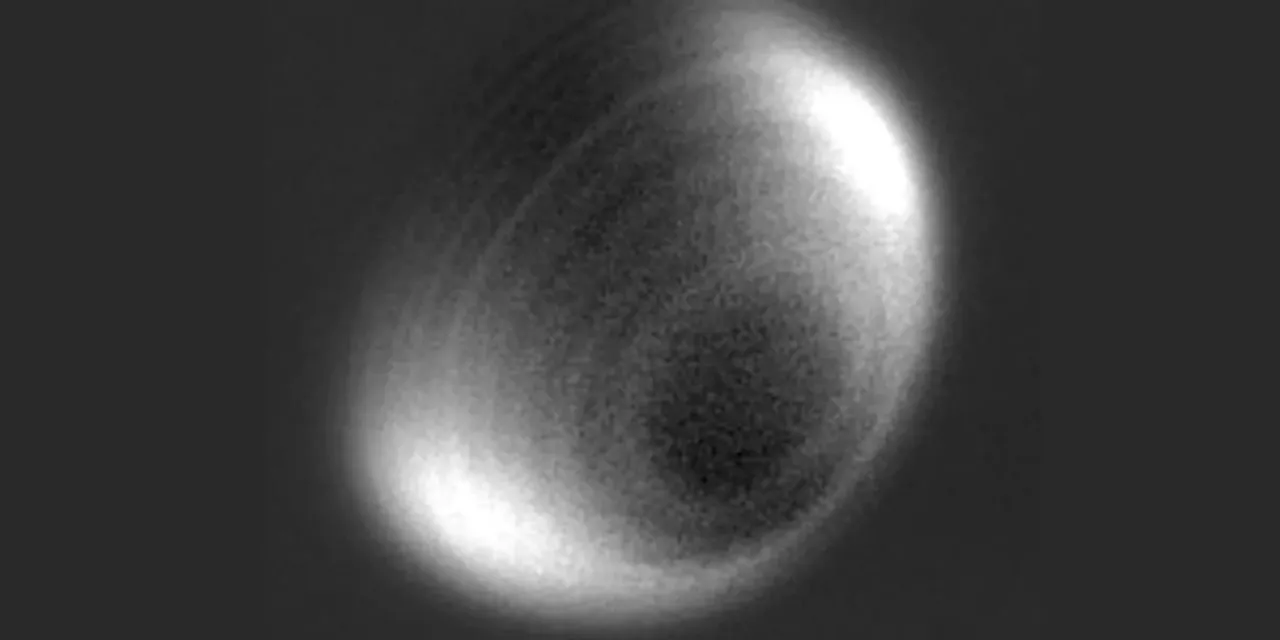
The ExPo experimental instrument detected polarized light in Venus’s atmosphere. Since light becomes polarized as it scatters through gas and dust, the instrument was able to reveal subtle atmospheric features of the planet that would otherwise have remained hidden.
While analyzing the data, astronomers discovered something strange—large concentric rings in Venus’s atmosphere that shouldn’t be there. Scientists concluded that these rings may be related to atmospheric waves. Simulations showed that changes in the density of Venus’s upper atmosphere, caused by atmospheric gravitational waves, can form such rings.

Atmospheric gravitational waves can propagate through a planet’s atmosphere, compressing and expanding the gas as they travel. On Venus, they can extend for thousands of kilometers, transferring energy between different layers of the atmosphere.
The rings detected by scientists are not the waves themselves, but rather the trail of polarized light left by small changes in density as the waves propagate through Venus’s dense atmosphere.
The exact mechanism behind the formation of these waves remains unclear. Scientists believe they may be the Venusian atmosphere’s response to solar radiation.
Astronomers note that it still needs to be confirmed whether large concentric rings actually exist in Venus’s atmosphere. But if they do exist, they could help solve one of Venus’s mysteries.
Scientists believe that atmospheric waves play an important role in sustaining the planet’s peculiar rotation, during which winds travel across the entire planet in 4 Earth days, even though the planet itself completes a full rotation on its axis in 243 Earth days.
ScienceAlert reports on this.


