
Researchers recorded 427 instances of primates interacting with other animals
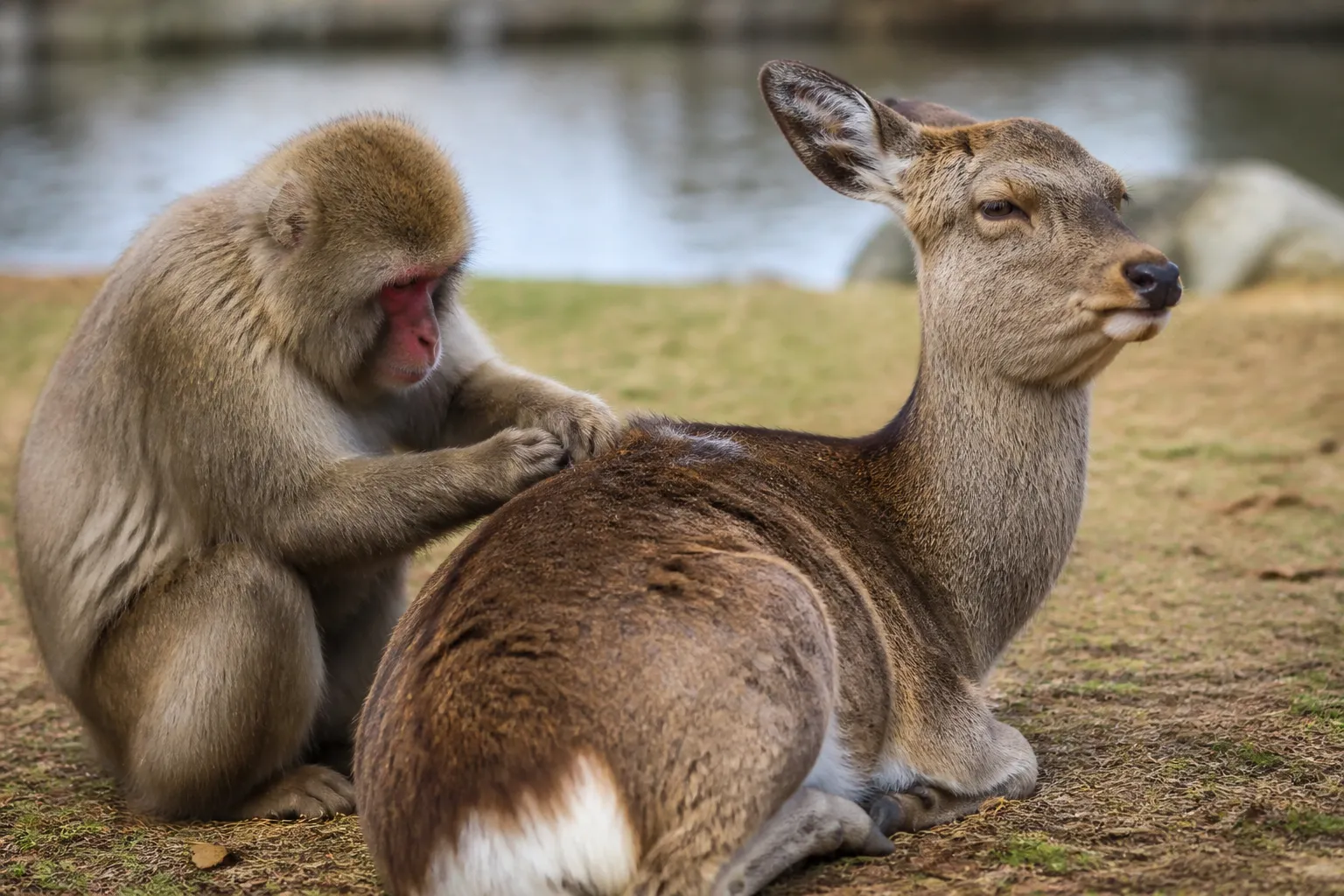
Researchers analyzed 427 documented cases of social interaction between primates and animals of other species, recorded from the 1970s through 2025. The observations covered 88 species of primates and 127 species of other animals, according to Fortune, citing a study conducted by Cyril Grüter and his colleagues.
Among the animals with which primates interacted were sheep, tapirs, deer, domestic pigs, cats, dogs, owls, lizards, toads, and insects. Most often, the researchers described play and grooming. They also documented instances where primates carried other animals, hugged them, shared food, or sometimes even adopted them.
Most of these interactions were initiated by the primates themselves. Examples include Japanese macaques grooming sika deer and riding on their backs, a langur petting a squirrel, a male gorilla who gently held a baby galago, and macaques grooming stray dogs. At the Shanghai Zoo, a northern white-cheeked gibbon held and caressed a mouse that had wandered into its enclosure.
For more breaking news, follow the UA.News Telegram channel.
Young primates were more likely to play with members of other species, while adult females were more likely to engage in grooming. Scientists suggest that grooming may promote hygiene, remove parasites, and strengthen social bonds, while play may foster the development of coordination, social skills, and cognitive flexibility.
At the same time, not all such interactions were positive. Some primates carried the young of other species, but rough handling or neglect sometimes led to injury or death of the animals. The researchers also documented cases in which primates took young animals away from their groups, and a small proportion of these interactions were accompanied by violence.
The authors noted that such interactions occurred across all major evolutionary lineages of primates, not just among great apes. Against the backdrop of forest fragmentation and more frequent contact between wildlife and domestic animals, studying these interactions may be important for wildlife conservation, animal welfare, and assessing the risks of disease transmission.


