
Study: Venus may have swallowed its moon
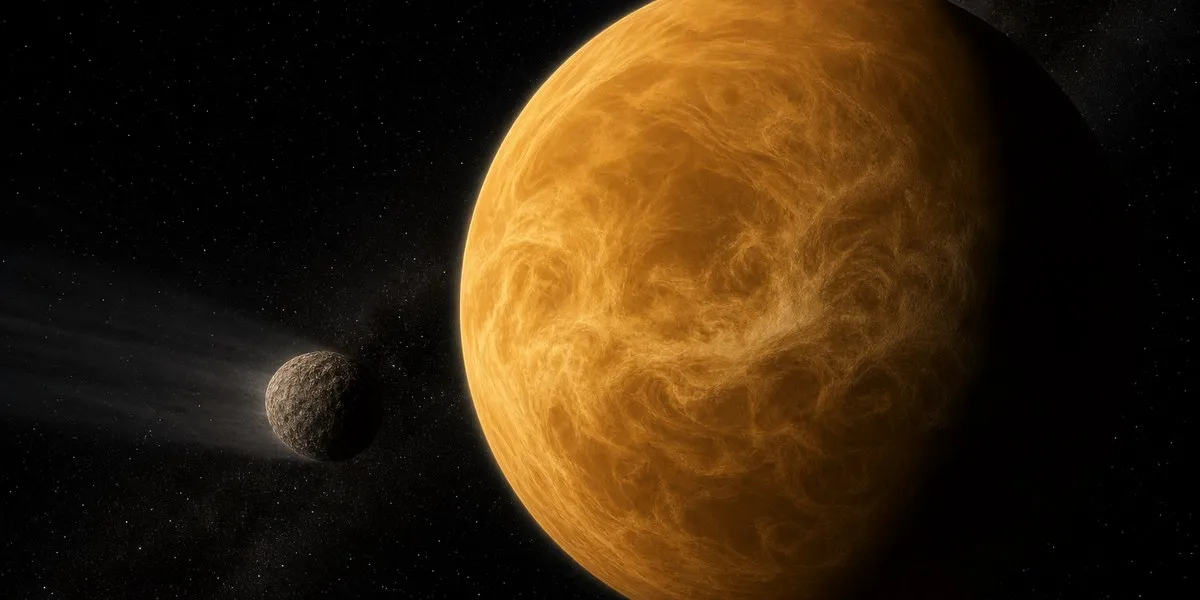
Scientists at the University of California, Riverside (USA) have proposed a theory that Venus may once have had a natural satellite, but due to the planet’s extremely slow rotation, it gradually moved closer and collided with the planet’s surface. The study was published in The Astrophysical Journal, Asharq Al-Awsat reports.
Venus’s slow rotation
The lead author of the study, astrophysicist Stephen Kane, said that computer models based on planetary physics and the gravitational mechanics of hypothetical Venusian satellites of different sizes showed the same result: eventually, they would have fallen onto the planet.
According to Kane’s estimate, such a collision could have occurred within the first billion years of Venus’s history. At the same time, there is no direct evidence that Venus had a satellite.
More current news is available on the UA.News Telegram channel Telegram.
Difference from Earth
Venus completes one rotation around its axis in 243 Earth days — slightly longer than its orbit around the Sun. Earth rotates around its axis in 24 hours, meaning more than 200 times faster. According to Kane, the energy of Earth’s faster rotation gradually moves the Moon away from our planet by about 4 centimeters per year. This movement is measured using mirrors left on the lunar surface by astronauts of the Apollo 11 mission in 1969.
Previously, scientists suggested that Venus either had no satellite from the beginning or that it was destroyed during a major collision with another celestial body. Venus is similar to Earth in its rocky composition, mass and size, but it has a dense toxic atmosphere. The greenhouse effect heats its surface to 471 degrees Celsius — a temperature at which lead melts.
NASA plans to launch the DAVINCI+ and VERITAS missions in the late 2020s or early 2030s. They are expected to study Venus’s atmosphere and geological features.


