
Experts point to uneven growth in Singapore’s economy across sectors
Singapore’s economy is forecast to grow by 4.5–5.5% this year. At the same time, experts surveyed by Channel NewsAsia point to early signs of uneven growth across sectors. Industries linked to artificial intelligence and technology are growing faster, while domestic businesses and consumer sectors face weaker demand, inflationary pressure and high costs.
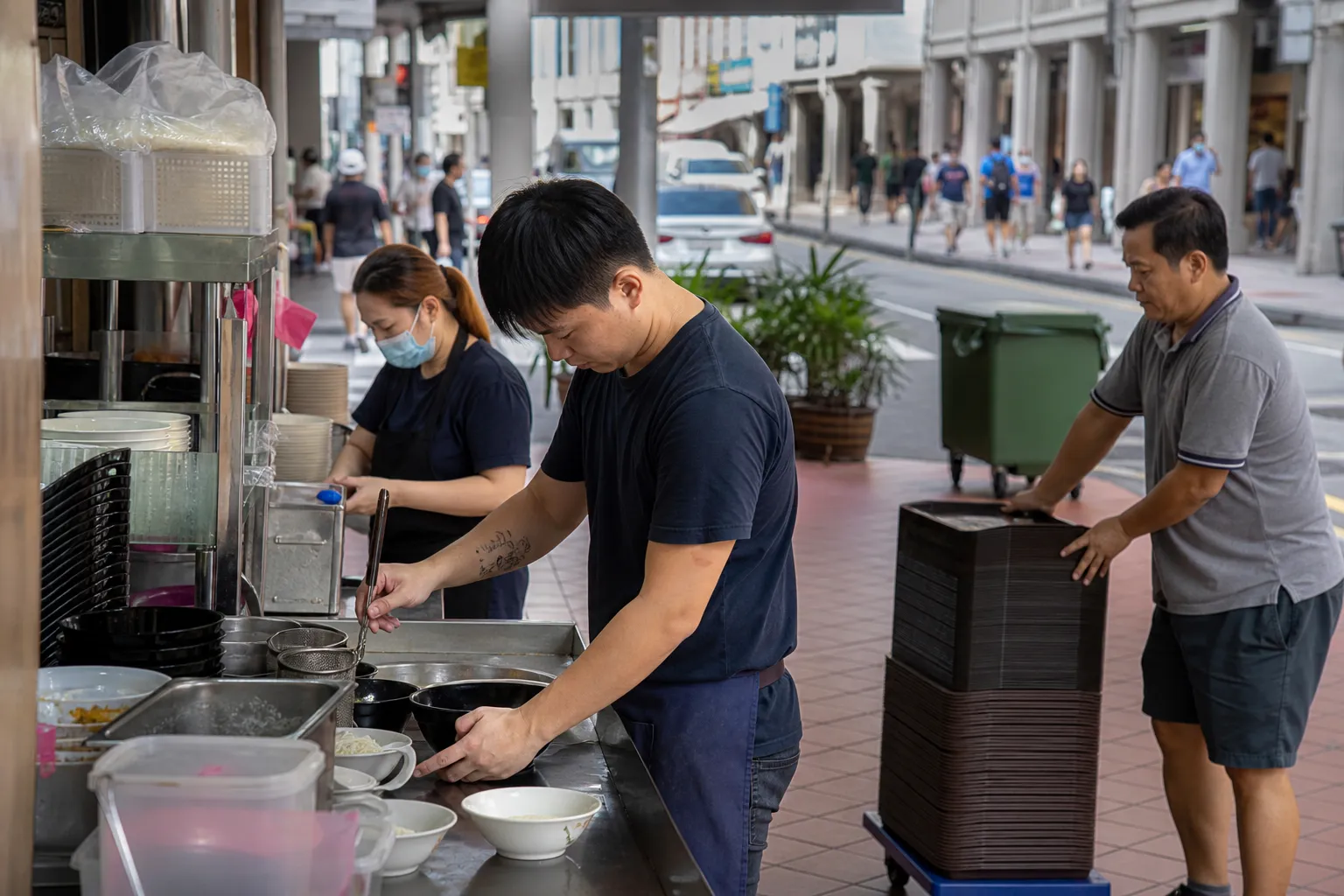
Maybank Securities Singapore economist Brian Lee noted that domestic and consumer-oriented sectors remain particularly weak. Retail trade and the food and beverage sector are under pressure from high rents and labor costs. He also pointed out that consumers are spending cautiously, while the strong Singapore dollar makes shopping and travelling abroad more attractive.
Different export rates
ANZ’s head of Asia research, Khoon Goh, said that the unevenness is especially noticeable in the export structure. In July, non-oil domestic exports of electronics rose by 112% year on year, while exports of non-electronic goods fell by 2.3%.
According to him, manufacturing and logistics accounted for nearly 60% of economic growth in the first half of the year. At the same time, the food and beverage sector contracted by 0.7%, while retail trade and non-professional services industries showed more modest growth rates.
More current news is available on the UA.News Telegram channel Telegram.
Employment and inequality
Retail trade, the hotel business and non-financial services account for 24% of Singapore’s economy, but employ about half of the country’s workers. According to experts, the most dynamic sectors in recent quarters are not labor-intensive, so GDP growth is not necessarily accompanied by a proportional increase in employment and wages.
Standard Chartered economists Edward Lee and Jonathan Koh believe that the situation is more accurately characterized as strong but relatively narrow and uneven growth. They stressed that households assess the economic situation primarily by employment stability, income levels and purchasing power, rather than by the overall GDP figure.
Tan Ern Ser, a researcher at the Institute of Policy Studies, warned that prolonged uneven growth could create a “dual economy.” In such a model, knowledge workers would benefit more from technology and productivity growth, while low-skilled workers could face weaker wage growth and the risk of being displaced from the labor market.


