
Colombian cartels may be sending operatives to Ukraine to gain experience working with drones
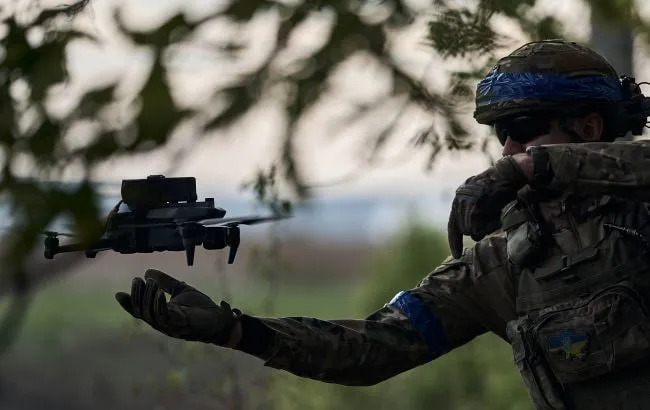
Colombian criminal groups are allegedly attempting to take advantage of the war in Ukraine to gain experience in operating drones. According to the Financial Times, some members of drug cartels may be arriving in Ukraine under the guise of volunteers to learn how to operate drones.
The Ukrainian military states that it is aware of the potential threats and is monitoring such cases. The Armed Forces emphasize the need to screen foreigners seeking to join combat units in order to prevent the leakage of military knowledge and technology.
According to the publication, over the past year, there have been repeated attempts by Colombian criminal groups to send soldiers to fight in Ukraine to gain experience in drone warfare.
“The recruitment schemes are very complex, but what concerns me most is the level of specialization they are acquiring. Former members of paramilitary groups, former guerrillas, and former soldiers are fighting here together and learning to operate drones together,” said a Colombian employee of a humanitarian organization in Ukraine.
The Ukrainian side is aware of these risks and is taking action to address them.
Taras Palianytsia, an employee at the Ministry of Defense’s Center for the Recruitment of Foreign Specialists, noted that men sent by the cartels to gain experience were identified in time, weeded out, and sent home. At the same time, he emphasized the high effectiveness of conscientious Colombian fighters.
“Colombians are quick learners, adapt very quickly, and can withstand difficult conditions of service. They have proven their capabilities to their commanders, who are very impressed with these guys,” said Palianytsia.
The Battle for FPV Technology and Fiber Optics
Drones have completely changed the nature of the long-standing conflict in Colombia. Whereas previously, during combat, the government always had complete control of the skies, the situation has now changed dramatically.
Last year, the Colombian military was able to neutralize 96% of attempted drone attacks by jamming radio frequencies and physically destroying the devices. That is why drug cartels are trying to draw on Ukrainian experience to circumvent electronic warfare systems.
Criminal groups are showing interest in the following technologies:
FPV drones: strike drones with a first-person view that are difficult to shoot down due to their high maneuverability and explode upon impact with a target;
communication encryption: methods for securing the control channel between the pilot and the drone;
payload installation: effective methods for mounting explosive charges on drones;
fiber-optic cables: the acquisition of drones controlled via an ultra-thin cable, making them invulnerable to any form of electronic warfare.
"In Colombia, they’re already starting to use FPV drones, but it is still unclear how to encrypt the communication between the drone and the pilot, or how to attach an explosive device the same way they do here in Ukraine,” said one of the Colombian FPV drone pilots fighting in Ukraine.
Analysts emphasize that a top priority for international security must be to stop the transfer of military know-how by Colombians returning home after completing their service.
This is reported with reference to the Financial Times.
Video: Colombians from the GUR International Legion drove out the occupiers near Stepnogorsk.
In the Zaporizhzhia region of Ukraine, thousands of legionnaires from Colombia have joined the Armed Forces, becoming part of the international front supporting the Ukrainian military.
As a reminder, the “RUG” unit, part of the 47th Separate Mechanized Brigade “Magura,” includes about 2,000 Colombian citizens.


