
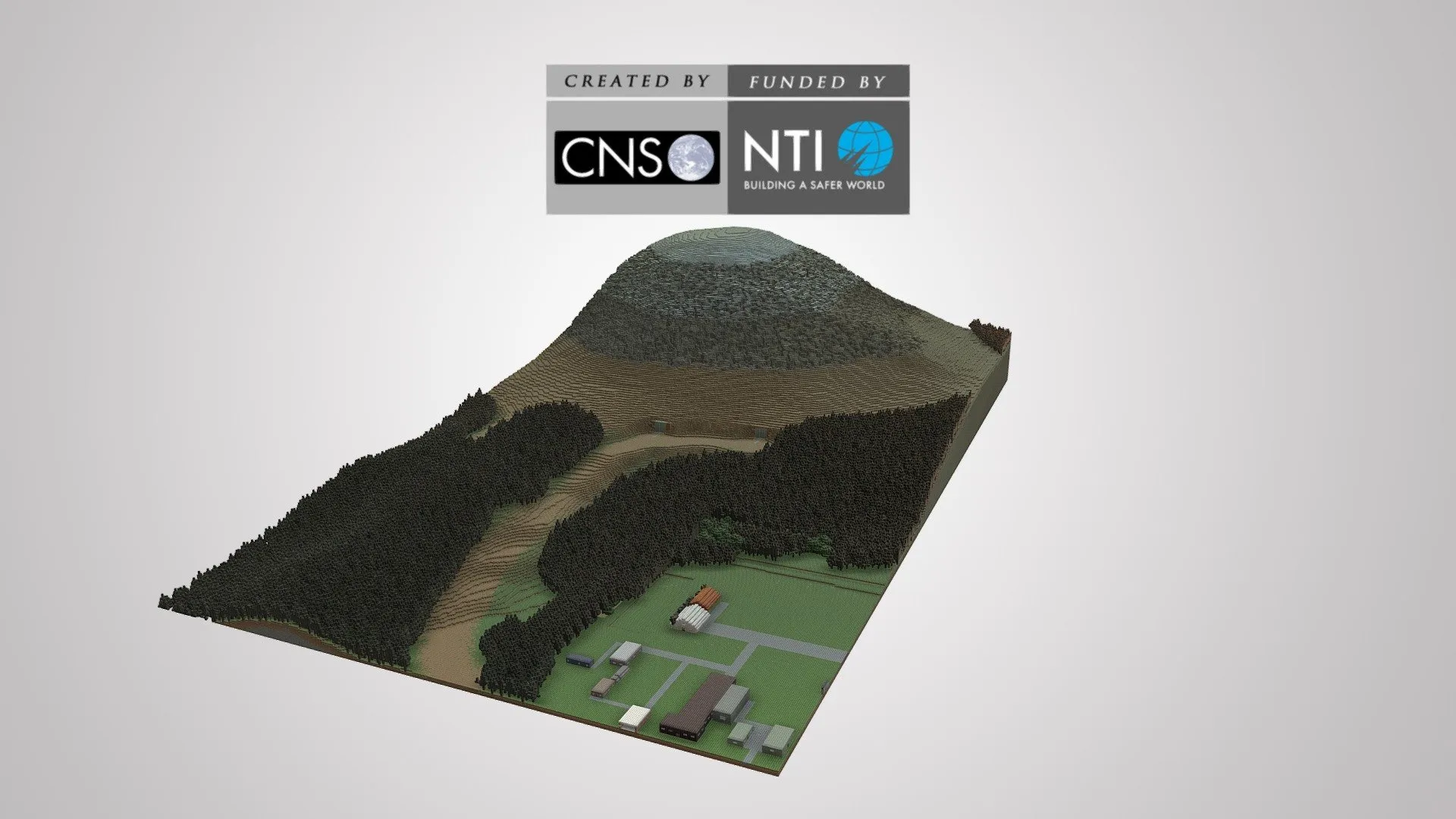
Deep inside Mount Kosvinsky Kamen in the Northern Urals lies one of Russia’s most secret military facilities. Behind massive gates and hundreds of meters of rock lies a network of tunnels and command centers, from which—in the worst-case scenario—the Russian military would retain the ability to control its strategic nuclear forces even after an attack on the country’s main command centers.
This is the so-called “Facility 1335,” which for decades has been linked to the Soviet “Perimeter” system. In the West, it has been given a much more ominous name—the “Dead Hand.” It was created at the end of the Cold War as a backup mechanism designed to ensure that even if the Soviet leadership were destroyed by a surprise nuclear attack, the enemy would still face a retaliatory strike.
It has now come to light that Russia has been extensively rebuilding and modernizing the complex, which for many years was believed to be partially mothballed. This is evidenced by millions of pages of military procurement documents, blueprints, satellite images, and testimonies from people who served at the facility.
UA.News explains how the “Dead Hand” came to be, whether it is truly capable of independently launching a nuclear war, and why Russia needed to invest enormous resources into this Cold War-era complex.
For years, Russia has been rebuilding the secret “Facility 1335” in Kosvinskaya Gora
A new investigation by Danwatch, conducted in collaboration with The Sunday Times and the Dossier Center, begins not with satellite photos or leaked classified documents, but with Russia’s public procurement system.
Over the course of several months, journalists collected publicly available Russian military procurement tenders. In total, they obtained nearly 2.5 million documents. Among them, they found thousands of orders related to “Object 1335” in the Sverdlovsk region.
The scale of these procurements is difficult to explain as merely routine repairs to an old military base. From 2018 through at least August 2024, approximately 22,000 metric tons of steel, over 56,000 metric tons of cement, roughly 170 km of steel pipes, and 600 km of electrical cables were ordered for the facility. In addition, the documents list 30 transformers, 21 electrical substations, 182 ventilation units, dozens of pieces of heavy equipment, and hundreds of components for rock drilling.
Journalists have compared the volume of steel purchased alone to the amount of material that would be enough to build roughly three Eiffel Towers. And Per Holtermann, a professor at the Technical University of Denmark, estimated that the scale of the cement procurement was sufficient to produce about 150,000 cubic meters of concrete. For ordinary civilian construction, this is a huge amount, and in a military complex with extremely thick walls, it points to large-scale underground construction.
Some of the tenders also inadvertently contained more direct clues. In the documentation, “Object 1335” was described as a complex for command, communications, and security systems, as well as for the permanent stationing of personnel on combat duty. Contractors were required to obtain an FSB license to handle state secrets, and drivers delivering equipment were prohibited from bringing cell phones, laptops, or other electronic devices with them.
Satellite images paint a more complete picture. Researchers observed large-scale removal of rock and construction work near several new entrances to the mountain. In other words, this was not merely a renovation of old facilities—the interior complex was likely being significantly expanded.
What Is the “Perimeter” System, and Why Did the USSR Create the “Dead Hand”?
To understand the purpose of this construction, we need to go back to the 1970s and 1980s, when the U.S. and the USSR possessed tens of thousands of nuclear warheads and were constantly preparing for a scenario in which the enemy would attempt to destroy the country’s leadership with a first strike.
One of the biggest problems with nuclear deterrence seems paradoxical. For nuclear weapons to truly deter an adversary, that adversary must be certain that it cannot destroy them with a single surprise strike. If there is a chance to simultaneously eliminate the leadership, command centers, and communications systems, the attacker is theoretically tempted to try.
It was precisely for this reason that the Soviet Union created a backup command and control system for its strategic forces. “Perimeter” was designed to ensure that the order for a retaliatory strike could be transmitted even when normal command channels had ceased to function.
Development of the system began in the 1970s. In the mid-1980s, during one of the most tense phases of the Cold War, “Perimeter” was put on combat duty. Around the same time, work began on constructing a deep command complex inside Kosvina Mountain.
In popular culture, “Dead Hand” is often described almost as a computer with a nuclear button: sensors supposedly detect explosions, the system realizes that the leadership has been killed, and automatically launches all the missiles.
The actual operating principle, as far as it can be reconstructed from open sources, is more complex and less fantastical.
Can the “Dead Hand” launch Russian nuclear missiles on its own?
It would be more accurate to refer to “Perimeter” not as an automatic missile launch system, but as a backup command transmission system. In a crisis situation, the leadership would first have to switch it to a special mode. Thereafter, the secure command center could receive information about what was happening in the country: whether nuclear explosions had been detected, whether the main communication channels were operational, and whether contact with political and military leadership existed.
If the country had indeed suffered a massive strike and communication with Moscow had been lost, the special command post would have been able to transmit an order to the strategic forces.

One of the most unusual components of the system was the command missiles. Instead of a conventional nuclear warhead, they were designed to carry a powerful radio transmitter. After launch, such a missile would fly over the territory of the USSR and transmit a coded order to the surviving components of the nuclear triad.
This allowed the system to bypass destroyed ground-based communication lines. In other words, the main idea behind “Perimeter” was not for a machine to independently decide to destroy the world. On the contrary, the system was intended to ensure a response even after the conventional command structure had been destroyed.
Former U.S. diplomat Stephen Pifer, who served as U.S. ambassador to Ukraine, pointed out another paradox. The existence of such a system could, in theory, even reduce the risk of a rash launch. If leadership knows that the capability to strike back will remain intact after an attack, it won’t have to decide within minutes whether to launch its entire arsenal based solely on radar warnings.
The problem arises when an increasing portion of the process is automated. In Russian military publications, one of the former developers of “Perimeter,” Major General V. G. Khalin, wrote about updates to the automation system, the introduction of mobile command posts, and the use of space-based communications. According to him, after extensive work, the system has regained combat readiness.
The exact degree of automation remains one of the main unknowns.
The complex inside the mountain is so large that buses reportedly run there
Kosvinsky Stone appears to be an almost ideal location for such a facility. The mountain range is located in the Northern Urals, far from major cities and potential routes of a conventional military invasion.
It is built on an extremely solid bedrock. According to preliminary Western estimates, part of the command complex may be hidden beneath approximately 300 meters of rock. That is why, as early as the 1990s, Kosvinsky Stone was considered one of Russia’s most important protected command centers.
Military Unit No. 20003 is located on the surface. The main entrance to the complex leads directly into the mountain through large, fortified gates. Former servicemen interviewed by the authors of the new investigation say almost nothing about the facility’s internal structure. However, one of them claims that the distances between different parts of the underground complex are so great that personnel are transported by bus.
The documents also mention tunnels and facilities designed for people to stay for extended periods. Among the equipment purchased are special ventilation systems and filters to protect against radioactive dust, chemical, and biological contamination.
The logic is clear: the command center must continue to operate precisely after an attack that could destroy a significant portion of the surface infrastructure.
Why Russia Is Modernizing the “Dead Hand” Right Now
It would be an oversimplification to attribute the renovation solely to a full-scale war against Ukraine. Documents show that the largest phase of the work began as early as 2018.
However, it fits well into a much broader program to modernize Russia’s strategic forces. In recent years, Russia has been developing new intercontinental ballistic missiles, modernizing submarine-launched ballistic missile carriers, advancing its strategic aviation capabilities, testing new delivery systems, and simultaneously upgrading its command infrastructure.
The last point is less visible but no less important. A nuclear arsenal only makes sense if a state is confident it can control it even during a large-scale attack.
Since 2022, the standoff between Russia and the West has only intensified. UA.News has previously analyzed in detail how realistic the prospect of a direct clash between Russia and NATO is today. European countries are increasing their defense budgets, NATO is restructuring its defense plans for the eastern flank, and Moscow is increasingly using the nuclear threat as part of its public military and political rhetoric.
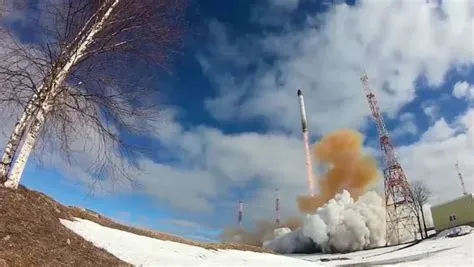
A separate aspect of this picture is the deployment of Russian tactical nuclear weapons in Belarus. As early as 2023, it became known that Moscow planned to build a storage facility near Belarus’s western borders. This is an entirely different level of system than the strategic “Perimeter,” but both developments show that the nuclear component in Russian military planning is not diminishing.
At the same time, the modernization of the Kosvinsky complex should not necessarily be interpreted as preparation for a first nuclear strike. “Perimeter” itself was created primarily to ensure a retaliatory strike. Tom Reset, a Norwegian researcher on Russian security policy quoted by Danwatch, interprets the new work exactly this way: Russia is trying to make its strategic center more resilient to modern weapons, including powerful bunker-busting munitions.
The world is returning to the nuclear arms race, which was considered over after the Cold War
The story of “Dead Hand” becomes significantly more important if viewed not merely as a Russian military project. As of early 2026, there were approximately 12,187 nuclear warheads remaining in the world. According to estimates by the Stockholm International Peace Research Institute, Russia had about 5,420 warheads in its total inventory, the U.S. had 5,042, and China had about 620.
Together, Moscow and Washington still control the vast majority of the world’s nuclear arsenal. At the same time, nearly all nine nuclear-armed states are modernizing their forces. China is expanding its arsenal faster than any other country, the U.S. is carrying out a large-scale modernization of its nuclear triad, and Russia is simultaneously modernizing its missiles, delivery systems, storage facilities, and command systems.
At the same time, the system of treaties that for decades limited great-power rivalry is weakening. In February 2026, the New START treaty—the last major bilateral treaty that set quantitative limits on the strategic nuclear forces of the United States and Russia—expired. SIPRI notes that the prospects for a new, comprehensive arms control mechanism between Washington, Moscow, and Beijing remain uncertain.
New factors have been added to the old confrontation between the two nuclear superpowers: the rapid expansion of China’s arsenal, North Korea’s programs, tensions between India and Pakistan, the situation surrounding Iran, and the growing role of nuclear deterrence in European security.
At the same time, the nuclear standoff has long since ceased to be limited to Moscow and Washington. In August, Pyongyang accused the U.S. and South Korea of bringing the world closer to a nuclear conflict and, at the same time, criticized the review of U.S. nuclear strategy. The DPRK explicitly stated that changes in Washington’s approach could accelerate a new arms race.
The situation surrounding Iran was also telling. As early as the 2025 G7 summit, there were reports of Western nations’ concerns about Iran’s nuclear program and attempts to bring the issue back to the negotiating table. In other words, the problem had long since gone beyond the old “U.S. versus Russia” model.
Also, back in 2023, UA.News, in an in-depth article on the G7 summit in Hiroshima, specifically analyzed the risks of Russian nuclear escalation and how Western nations might respond to such a scenario. It is symbolic that this discussion took place in Hiroshima—a city that has become one of the most powerful reminders of the real consequences of using nuclear weapons.
The world is entering a period in which several major powers are simultaneously expanding or modernizing their nuclear capabilities.
The “dead hand” is not terrifying because it presses the button on its own
The most sensational interpretation of the new investigation goes something like this: Russia has “revived the Doomsday Machine.” It works well as a headline, but it oversimplifies reality.
“Perimeter” is not a robot that independently decides to start a nuclear war. As far as can be determined from open sources, it is a backup command system designed for an emergency situation in which the state has already suffered a nuclear strike and the normal chain of command has ceased to exist.
However, this does not make the system safe. The more command relies on automated sensors, algorithms, and backup procedures, the more critical issues such as errors, misinterpretation of signals, cyberattacks, or technical failures become. And that is precisely why a former developer’s statement about modernizing the system’s “automation” has drawn particular attention from experts.
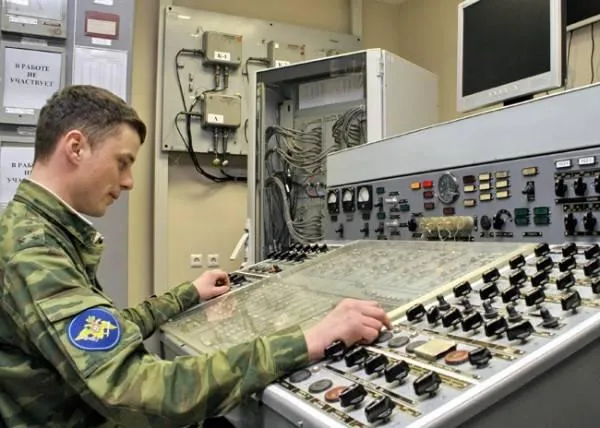
There is another problem. A guaranteed retaliatory strike system functions as a deterrent only when a potential adversary knows it exists. Former high-ranking Pentagon official Andy Weber even suggests that some of the information may not have ended up in public tenders by accident. If the other side is unaware of the “Dead Hand,” its existence has almost no impact on a potential attacker’s decision.
Therefore, the secret facility in Kosvinskaya Gora has a peculiar nature: Moscow conceals its exact design, but at the same time has an interest in ensuring that Washington knows—it will not be possible to destroy the Russian command-and-control system with a single strike.
This is precisely the logic of nuclear deterrence. The problem is that today this logic is once again taking center stage in world politics. Countries are modernizing their arsenals, old treaties are expiring, there are no new control mechanisms, and strategic systems created during the most dangerous years of the Cold War are once again receiving funding, new equipment, and modern communication channels.
And this is no longer just a discussion among military experts. Fear of a return to a nuclear scenario is gradually spilling over into the public sphere. As early as 2022, the results of a poll by the Associated Press-NORC Center for Public Opinion Research were released, showing significant concern among Americans about the possibility of a nuclear attack by adversarial states. In other words, systems created as a deterrent during the Cold War are once again being perceived as a real and present risk.




