
NATO Foiled a Russian Operation Involving a Secret Weapon in the Arctic — Reuters
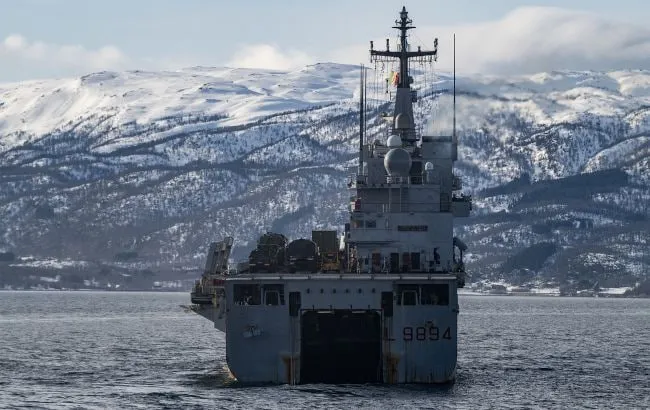
NATO allies detected and intercepted Russian submarines in the Arctic that were planning to use a secret weapon to damage critical undersea cables. As a result, Moscow was unable to carry out its planned sabotage.
As insiders explained, the Russians planned to carry out the operation in such a way as to leave no obvious traces. All of this took place back in the spring of 2026 in Arctic waters near the Svalbard archipelago.
It is also known that the Russian military used a special secret weapon to test the potential application of new technology.
The following forces were involved in tracking and countering enemy vessels:
the United Kingdom;
Norway;
the United States.
According to officials, the Russian military failed to carry out their plan and subsequently left the area.
In April, the United Kingdom and Norway had already reported the discovery of a covert Russian operation in Arctic waters. At that time, however, they did not disclose details about the new weapon, the location of the operation, or U.S. involvement.
This situation has drawn the attention of Western intelligence agencies amid concerns that Russia is stepping up sabotage operations in Europe and may be preparing for a possible war with NATO.
Some U.S. intelligence officials are increasingly concerned that Moscow may attempt to test NATO’s readiness to invoke Article 5 on collective defense. In such a scenario, undersea cables could become one of the key targets of Russian sabotage.
The fact is that they are of immense importance to global communications and the financial system. These cables carry vast amounts of internet data and are typically no thicker than a garden hose. Some of them are laid directly on the seabed, while others are laid at a shallow depth below it.
This was reported with reference to Reuters.
Russia has several scenarios for attacking NATO, according to The Telegraph.
Poland remains interested in participating in NATO’s nuclear sharing program. At the same time, Warsaw is negotiating its participation in the planning of a European “nuclear umbrella” proposed by French President Emmanuel Macron.
U.S. President Donald Trump stated that he is not concerned about the possibility of a Russian provocation against one of the NATO countries. He also denied that CIA Director John Ratcliffe’s recent trip to Moscow was related to warning the Kremlin about the consequences of such an attack.


