
New Zealand has granted the English language official status despite criticism — The Guardian
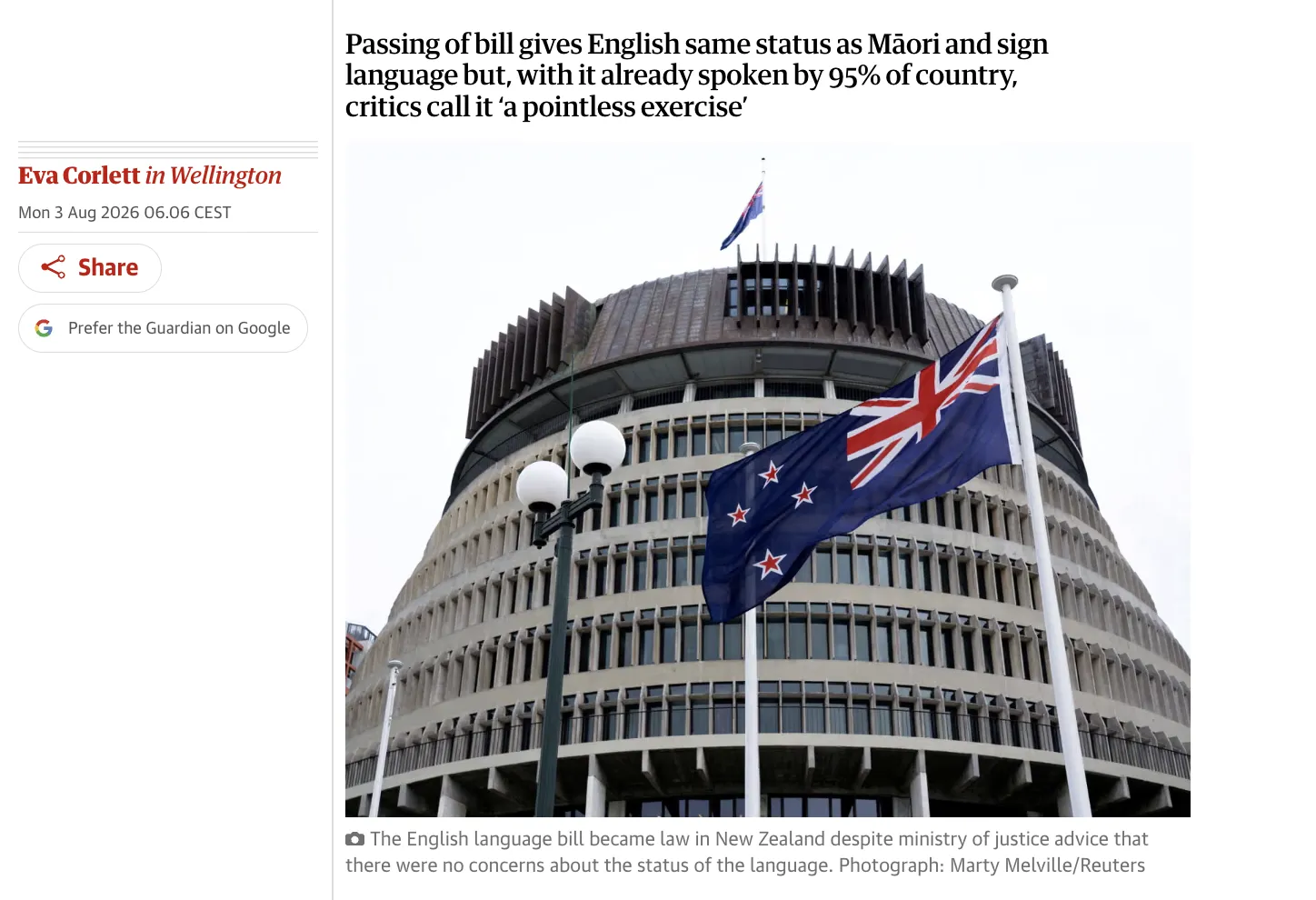
The New Zealand Parliament passed a law that officially enshrined the status of the English language in the country. The decision sparked controversy, and critics called it “pathetic” because, in their view, there was no practical need for such a move.
The New Zealand Parliament has passed a law granting English the status of an official language; however, this decision has drawn criticism from linguists, lawyers, and some members of Parliament, who called the legislation unnecessary, given that 95% of the country’s population already speaks English.
The English Language Bill took effect on July 30. From now on, English has the same official status as Te Reo Māori and New Zealand Sign Language.
At the same time, as the publication reports, New Zealand’s Ministry of Justice recommended that lawmakers not pass this bill, because “there is no evidence to support concerns regarding the use or status of English as an official language,” and also emphasized that Māori and New Zealand Sign Language were granted official status solely to protect linguistic minorities.
Despite the Ministry of Justice’s recommendations, the coalition government and the Labour Party supported the bill.
During parliamentary debates, MP Tamata Paul called the bill “a pitiful waste of this House’s responsibilities.” At the same time, Casey Costello, an MP from another party, defended the bill.
“This is a practical measure. It brings the body of law in line with long-standing practice and clearly defines the status of the English language within New Zealand’s official framework,” the official emphasized.
This was reported by The Guardian.
Earlier, a deadly strain of avian flu was detected in New Zealand for the first time.
New Zealand has allocated nearly $3 million in humanitarian aid to Ukraine.


