
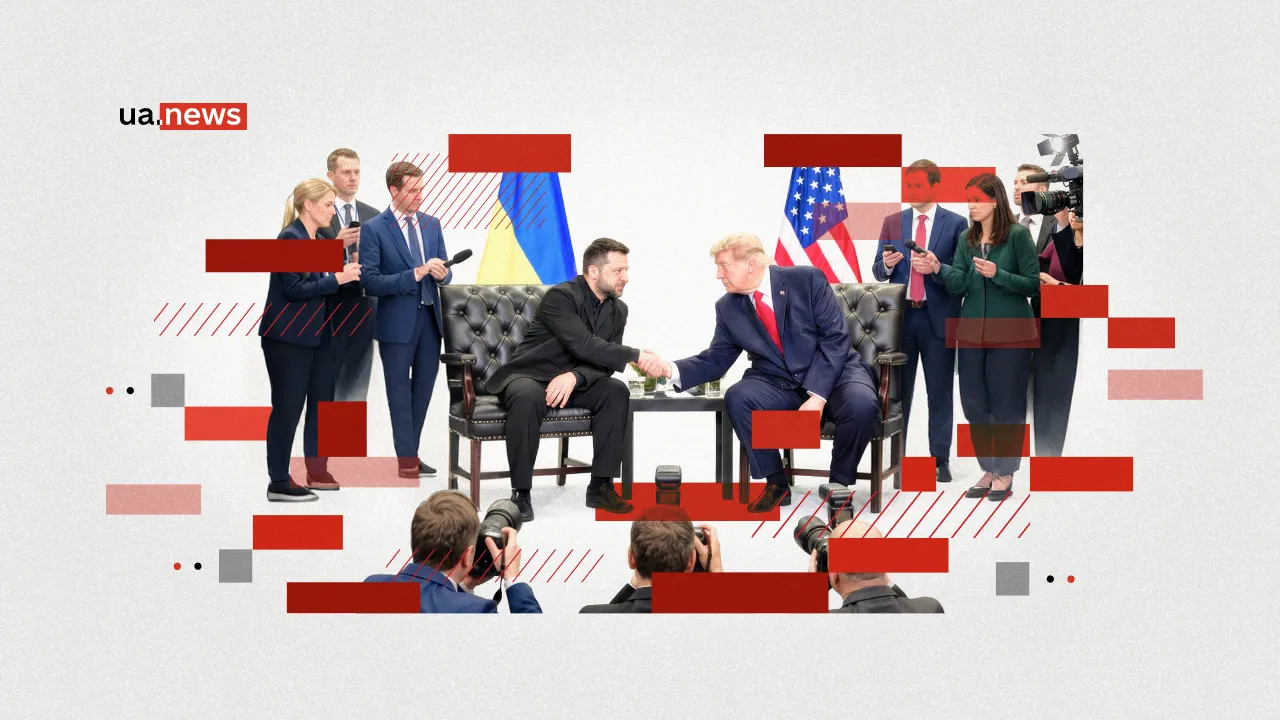
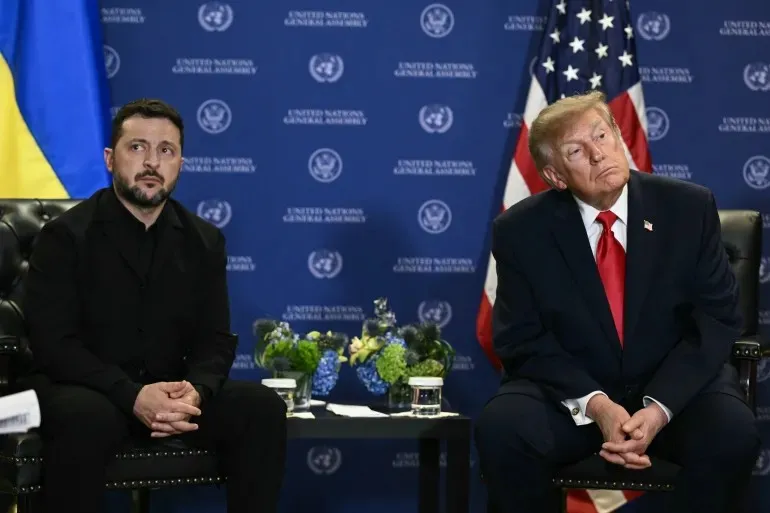
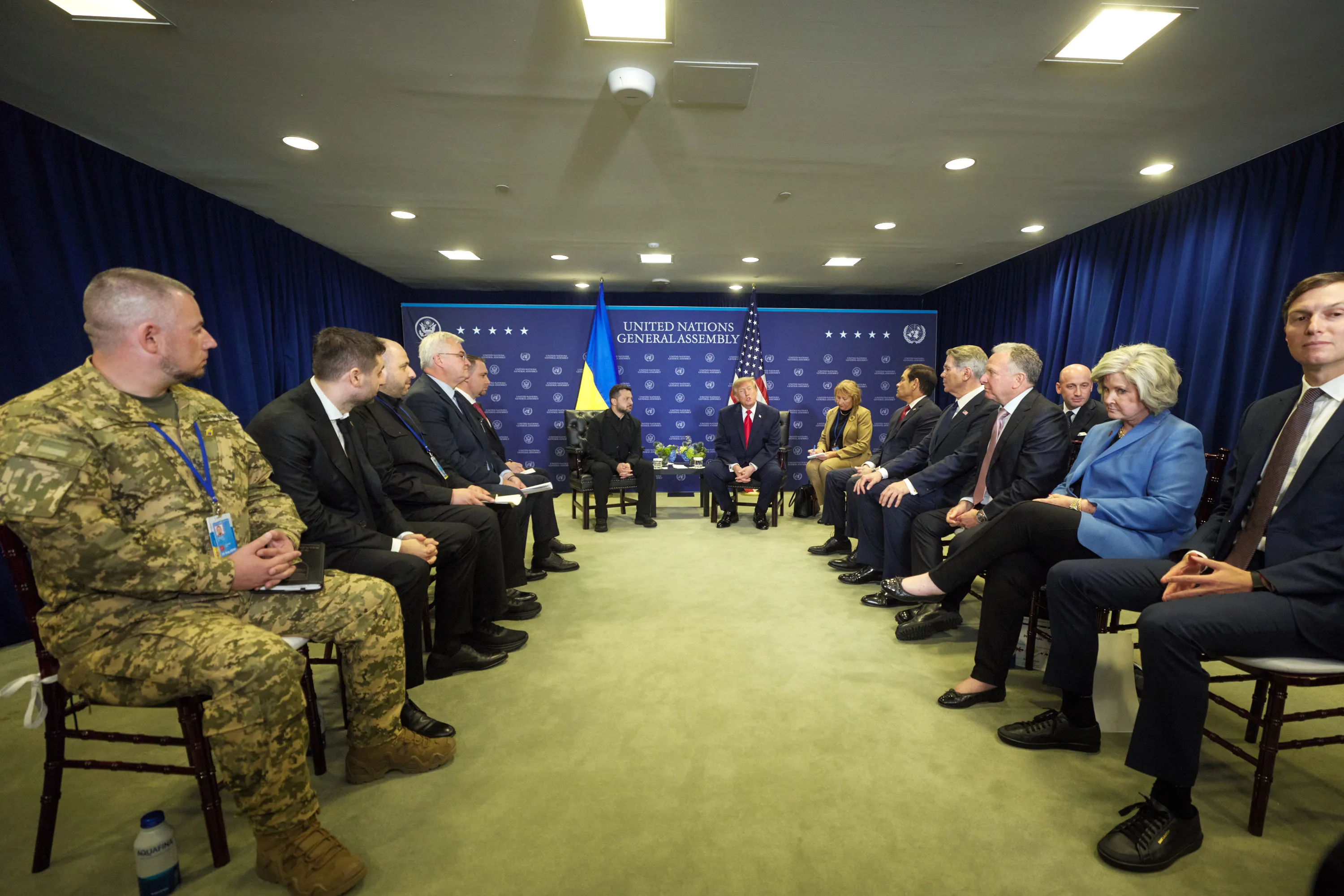
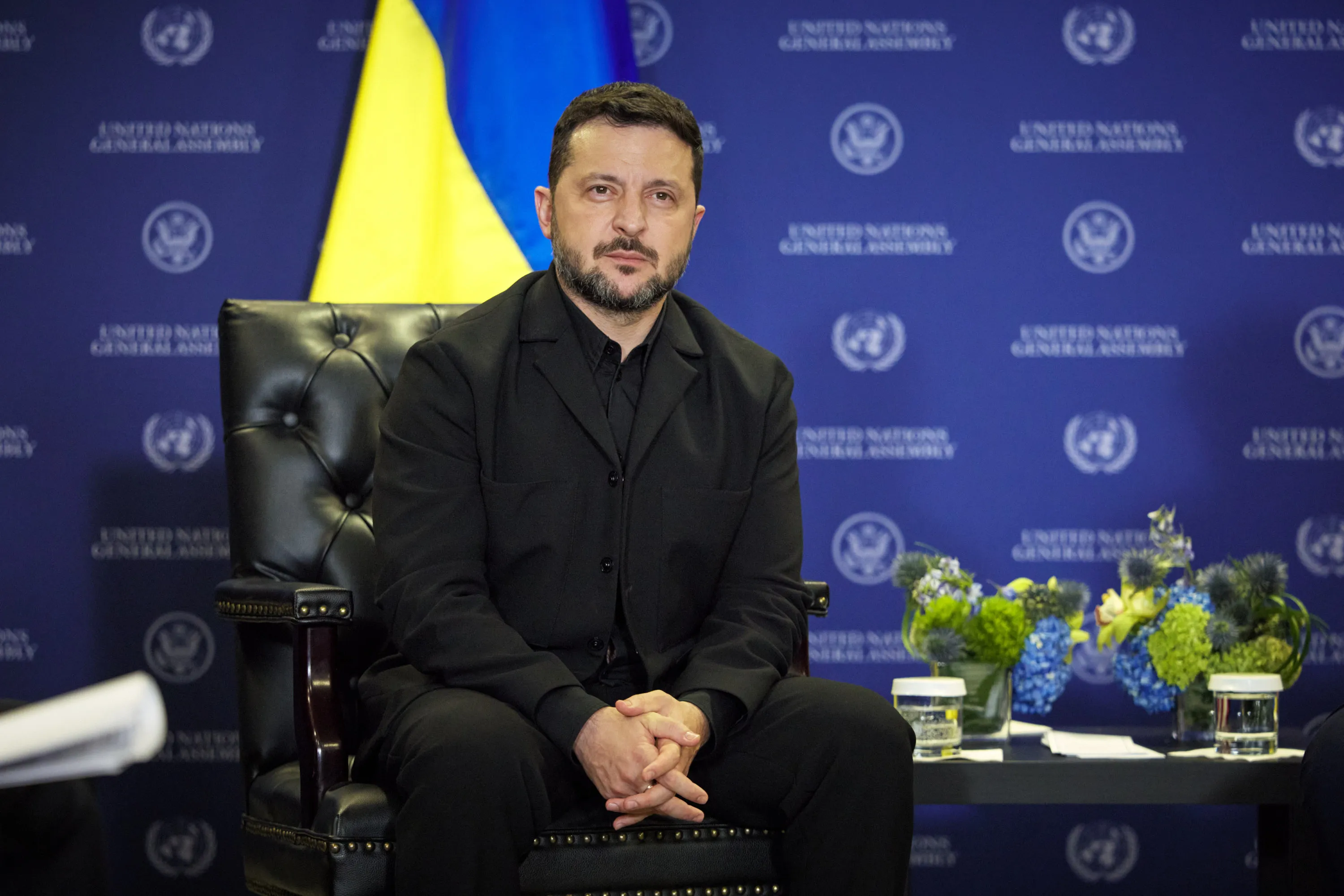
“I hope we will end this war, and President Trump will help bring it to an end. I think we need to make this happen before winter,” said Ukrainian President Volodymyr Zelenskyy ahead of closed-door talks with U.S. President Donald Trump in New York on September 22.
The talks took place on the sidelines of the UN General Assembly and lasted about 40 minutes, after which the leaders concluded the meeting without publicly announcing any specific new agreement. Donald Trump, while stating that peace could come “sooner than people think,” did not mention any specific dates.
For the U.S. president, an energy truce between Ukraine and Russia—which he links to a possible stabilization of fuel prices—appears to have taken center stage. The White House attributes the rise in diesel prices in the U.S. to Ukraine’s strikes on Russian oil refineries and a reduction in imports from Russia. However, according to U.S. experts, the main price hike began when the U.S. launched attacks on Iran in February.
What lies behind Zelenskyy and Trump’s statements about moving toward peace, as well as the reasons for the tension that appears to be escalating in Ukraine’s relations with its key allies—in this roundup of Western media reports.
Tell-tale statements about ending the war and diesel
prices
The American media largely analyzed the “latest telling remarks” by the Ukrainian and American presidents regarding the prospects for ending the war. They agreed that the final decision on this matter rests not with Zelenskyy or Trump, but with Russian dictator Putin. As for the U.S. president’s statements, they were viewed through the lens of domestic politics and rising fuel prices.
“Trump Pleads with Ukraine and Russia—Stop the War, Save Diesel!”—that was the title of a column published in The Hill. It states: “President Trump has a message regarding Russia’s war against Ukraine: he wants it to end! And he is particularly outraged by the price of diesel fuel, as Ukrainian long-range missile strikes are undermining Russia’s ability to produce it.”
The publication supports Trump’s assertion that “this senseless and endless war with Ukraine must be stopped. The whole world is suffering, as 25,000 people—mostly soldiers—are dying every month.” At the same time, it asks why the American leader did not say directly that it is Russia that must end the war?
“We know who to blame: we must blame Russian President Vladimir Putin, who now bears sole responsibility for the war’s continuation. We cannot blame the Ukrainians for defending their country. They were attacked, and they are trying to hold Russia back quite successfully… Indeed, Trump should be commended for everything he has done to bring about peace. But the reality is that there is only one person who can truly put an end to this senseless, destructive war. That person is Putin,” the publication states.
At the same time, some journalists “detected” a certain mockery of the Kremlin’s military capabilities in Trump’s rhetoric.
“Trump shifted from calling on Volodymyr Zelenskyy to stop bombing diesel fuel production in Russia (which is driving up global prices) to lamenting that Russia has ‘lost control of its diesel industry.’ “This sounds as if he is mocking Putin and also suggests grounds for the West to believe that the Kremlin’s resolve may be waning,” reads an editorial in the New York Post.
Following Trump’s calls for a halt to attacks on energy facilities, Zelenskyy clarified that Ukraine would adhere to a mutual ceasefire if the U.S. and other partners could guarantee that Russia would do the same. However, it is unclear whether the Trump administration has approached Moscow with similar requests to halt attacks on Ukraine’s energy infrastructure, notes the Financial Times (FT).
Previous attempts by the U.S. leader to secure an energy ceasefire have failed, the publication recalls.
On the eve of the U.S. midterm elections, fuel has become a political issue for Donald Trump. Against the backdrop of the conflict with Iran and the Russia-Ukraine war, fuel shortages are intensifying, leading to an unprecedented rise in prices in the U.S.
In a comment to the FT, a high-ranking Ukrainian official stated that, in his opinion, Trump may delay applying the “hellish sanctions” law against Russia in order to use it as leverage against Ukraine and force it to stop attacks on Russian oil refineries. However, Trump could also use the sanctions to pressure Russia in an attempt to push the Kremlin to resume direct negotiations.
The
meeting between Trump and Zelenskyy took place against the backdrop of fruitless attempts at negotiations between Russia and Ukraine. Although Trump administration negotiators Jared Kushner and Steve Witkoff visited Ukraine for the first time in early September to discuss peace, diplomatic talks have reached an impasse, writes the American publication CNBC, commenting on the talks between the leaders of the U.S. and Ukraine. Moreover, Russian and Ukrainian forces have intensified their attacks on each other.
Against this backdrop, Zelenskyy called on Trump to discuss ways to end the war with Chinese President Xi Jinping.
“I told the president quite openly that we believe if he also engages with President Xi Jinping, he will have influence over Putin. If we want to put an end to this war—not just in words—we must all work on this around the clock, for the sake of the people,” the publication quotes the Ukrainian president as saying.
The visit amid Washington’s
concerns
U.S. Secretary of State Marco Rubio took a more direct stance against Ukrainian strikes on Russian logistics. He criticized not only the shelling of Russian energy infrastructure, which is losing its export capacity.
On September 22, the day of talks between the leaders of the U.S. and Ukraine on the sidelines of the UN General Assembly, Rubio stated on Fox News that Russian vessels linked to the United States had repeatedly been targeted by Ukraine over the past few months.
According to the secretary of state, such incidents may have been unintentional, but Washington cannot ignore them.
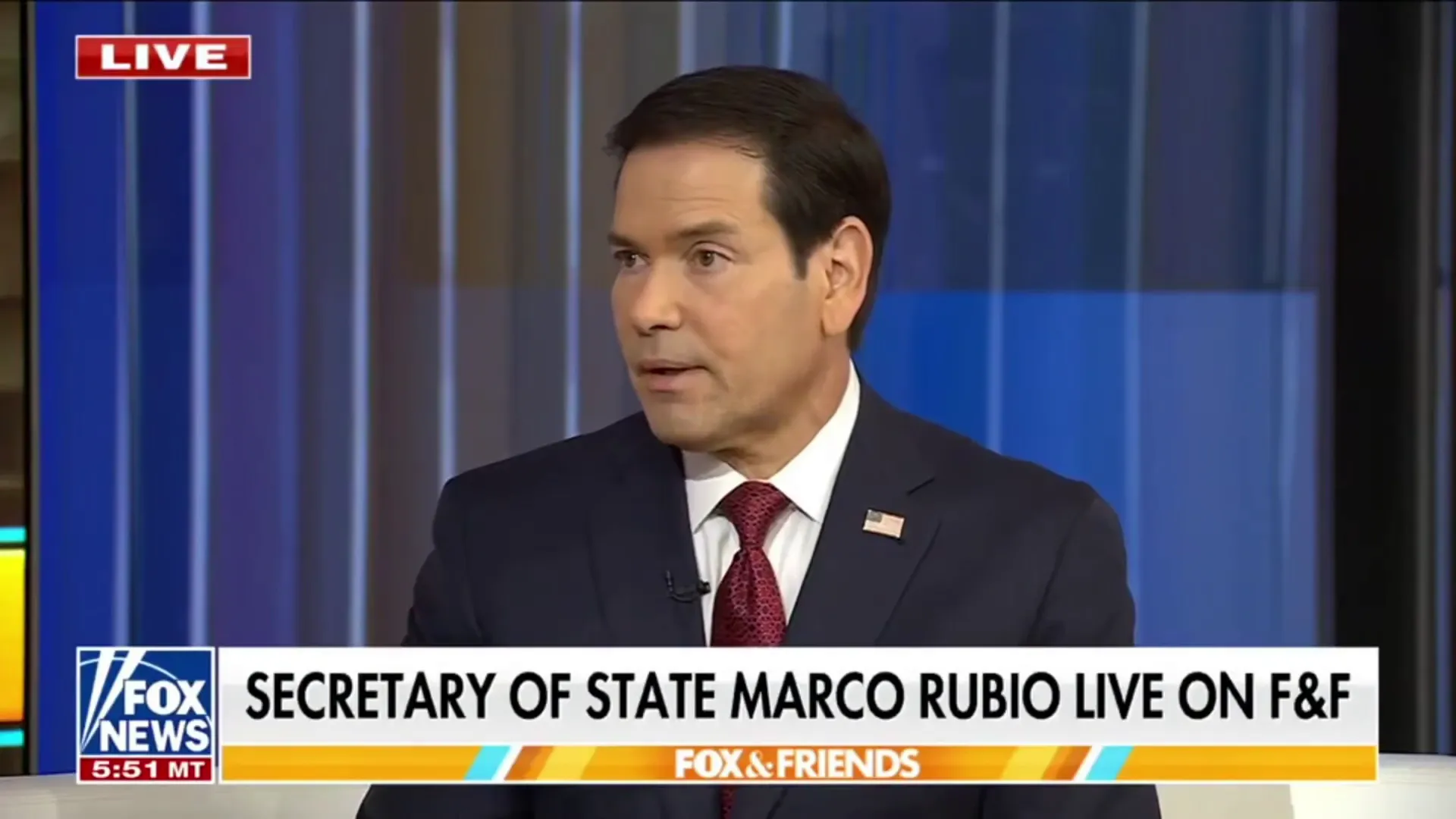
“Over the past few months, vessels linked to the U.S. have repeatedly been targeted—probably unintentionally, but still—by Ukraine. We cannot allow this to happen. This problem must be resolved,” Rubio emphasized, though he did not name the companies that own the attacked vessels.
Later, in an interview with WABC radio, Rubio acknowledged that there is still no energy truce agreement between Russia and Ukraine, as previously announced by U.S. President Donald Trump. According to him, Trump is ready to seize any opportunity to bridge the differences between Kyiv and Moscow, but right now “we’re not there yet.”
“This war benefits neither side. It doesn’t benefit Ukraine, and for Russia, it’s absolutely terrible. Things aren’t going well for them. Just not at all,” Rubio stated.
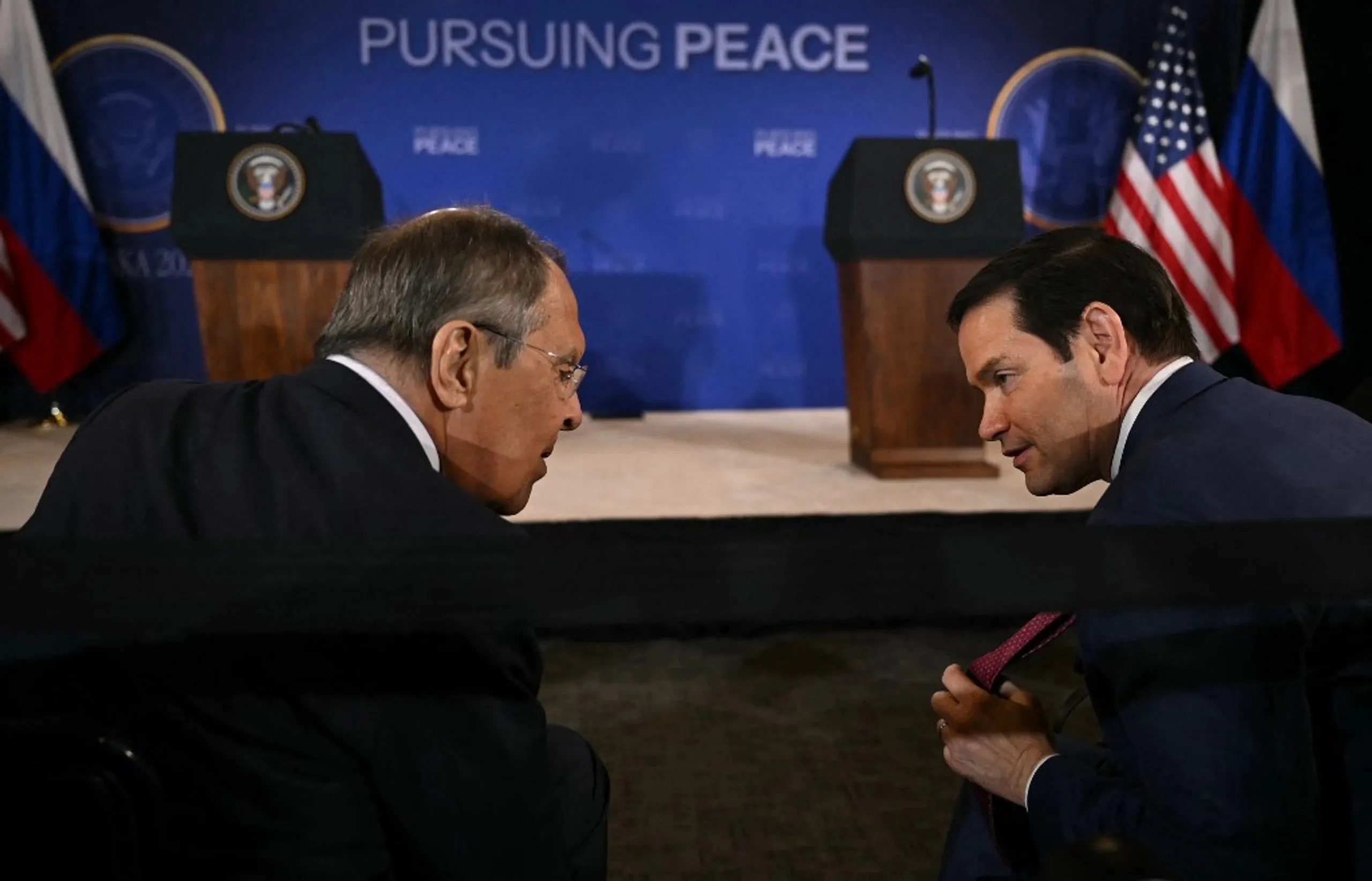
On September
23, the day after the talks between Trump and Zelenskyy, U.S. Secretary of State Marco Rubio met with Russian Foreign Minister Sergey Lavrov. Following the closed-door meeting, he announced that the U.S. had invited Putin to the G20 summit in Miami on December 14–15.
“We believe this will be an opportunity for him to speak not only with President Trump but also with world leaders. We hope this invitation will be accepted,” Marco Rubio said.
President Volodymyr Zelenskyy had previously expressed willingness to meet with Putin on the sidelines of the summit, but the Kremlin rejected the proposal. The Kremlin insists that the meeting take place in Moscow.
In its coverage of this event, Reuters noted that the Kremlin stated that, as before, there are no grounds for peace talks regarding Ukraine. And Kremlin press secretary Dmitry Peskov stated that Putin is ready to meet with Trump face-to-face if both leaders deem such a meeting necessary.
Another point of tension: The EU is demanding reforms in exchange for continued funding
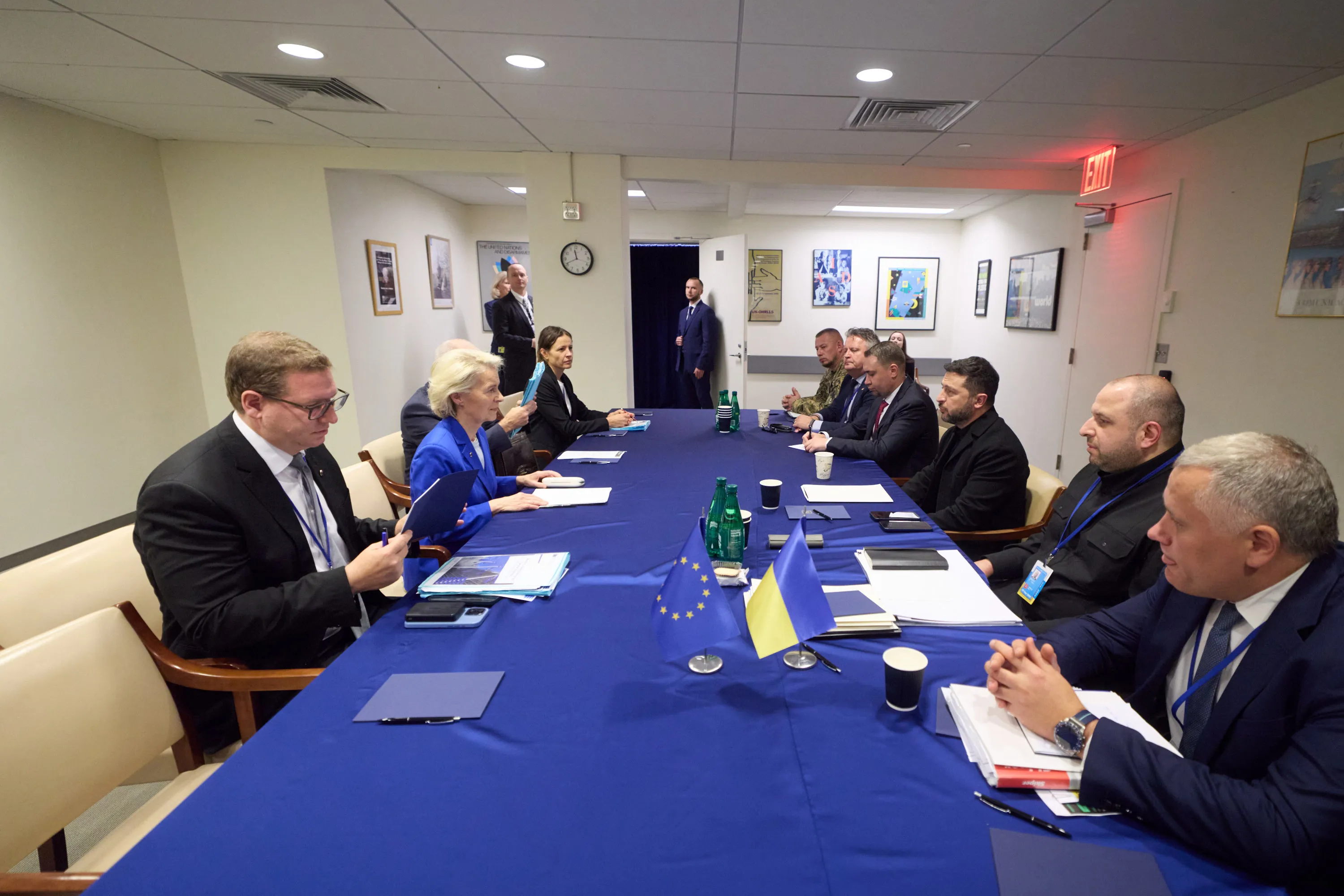
On the sidelines of the UN General Assembly in New York, President Zelenskyy also met with European Commission President Ursula von der Leyen. Bloomberg reported on the tense atmosphere of these talks, citing its own sources.
At this meeting, Ukrainian representatives expressed concern about the prospect of Russian escalation over the winter, given the shortage of air defense systems to protect cities. The delegation was also outraged that the EU had agreed to lift sanctions against two Russian oligarchs.
In Kyiv, there is growing dissatisfaction with the reluctance of some European allies to supply interceptor missiles against Russian ballistic missiles. Meanwhile, Europeans are irritated by the increasing demands for funding.
Ukraine has appealed to its allies to help fill an unexpected budget shortfall of about 26 billion euros ($30 billion) and has asked the EU to expedite the disbursement of a 90-billion-euro loan. These funds were intended to provide Ukraine with financing through the end of next year. Observers have noted that the EU is opposed to some Ukrainian officials and is suggesting that other partners—including Canada, Norway, and Japan—provide additional funding.
After speaking with Ursula von der Leyen, Zelenskyy told reporters that their teams would meet again in seven to ten days for further negotiations on this issue. He expressed hope that a solution would be found. In addition, the Ukrainian president noted that the Europeans had indicated for the first time that they see “growing risks of aggressive actions by Russia against other European countries.”




