
Glacier collapse in Nepal triggers devastating flash floods
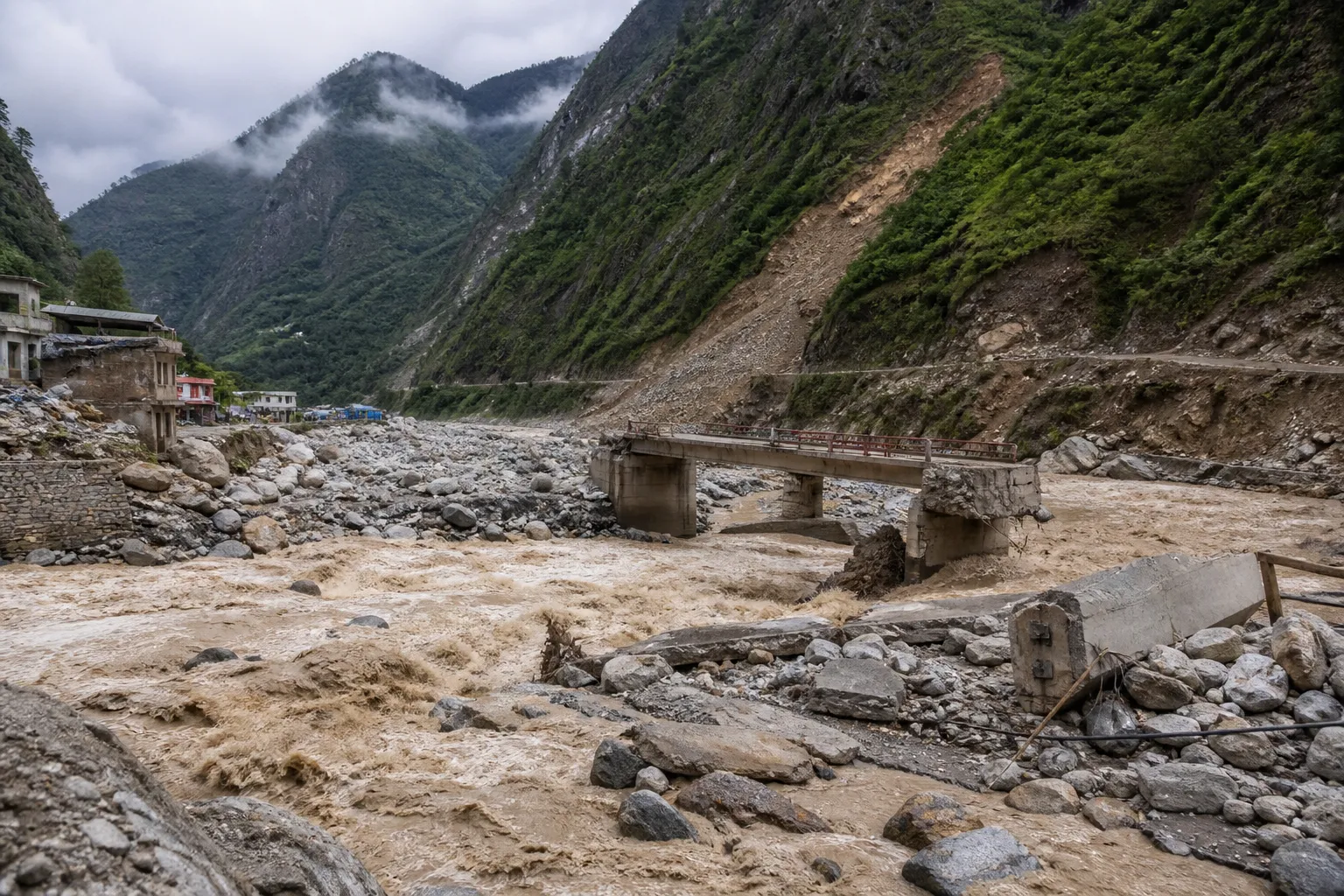
A glacier collapse in the border area between Nepal and Tibet triggered devastating flash floods on the Bhote Koshi River. Hundreds of people were killed, and at least 1,500 are considered missing. The torrent of mud and water swept away buildings, bridges and trucks, while burying villages in its path.
According to ABC News Australia, it was initially assumed that an earthquake may have caused the disaster. However, the U.S. Geological Survey said the glacier collapse was so massive that it registered as a magnitude 5.2 seismic event, and it was this collapse that caused the destruction downstream.
Millions of cubic metres of ice
Poul Christoffersen, a glaciologist at the University of Tasmania, noted that in such high-mountain regions, glaciers are located on steep slopes in the upper parts of valleys. In his assessment, several million cubic metres of ice may have instantly fallen into the valley.
According to the scientist, images indicate possible melting and the appearance of liquid water, which could have contributed to the formation of cracks. Friction and heat as the ice mass moved down the slope may have affected the development of the event, while damage to lakes in its path could have released additional water.
More current news is available on the UA.News Telegram channel Telegram.
Warming increases risks
Scientists stress that this specific glacier collapse cannot currently be directly linked to climate change. At the same time, rising temperatures create conditions in which similar events become more likely: glaciers are melting and retreating, while meltwater weakens soils and destabilizes slopes.
Climate historian and director of La Trobe Asia Ruth Gamble, who studies Tibet and Himalayan rivers, said landslides and outburst floods have occurred in the region before, but are now happening increasingly often. She pointed to shrinking glaciers and snow cover, more rainfall and more intense precipitation in the mountains.
Thawing permafrost can also undermine the stability of mountain slopes and create problems for housing and infrastructure. Glaciologist and polar engineer Adrian McCallum explained that accumulated meltwater can form dams, whose breach can cause a rapid flow down the valley.


