
The Pentagon plans to undergo its first full financial audit in 2028
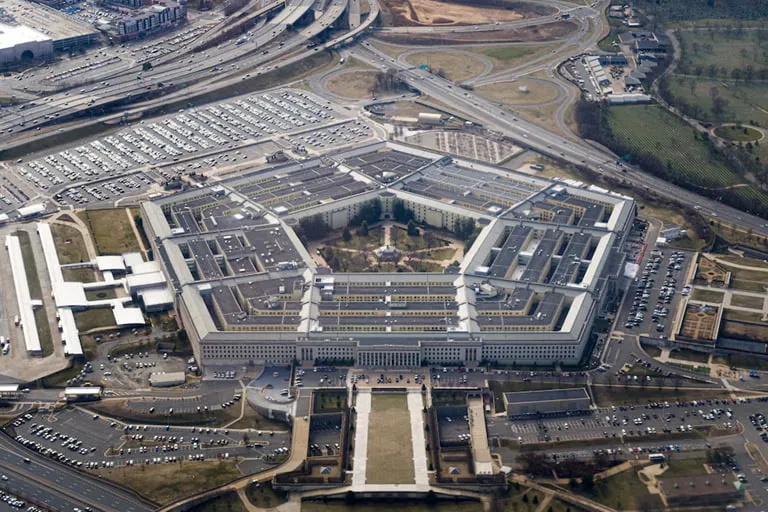
The U.S. Department of Defense is preparing for the first fully successful financial audit in its history, which is scheduled to take place in 2028.
New accounting systems have already helped identify errors that for years distorted data on expenditures, assets, and military equipment.
These include, in particular, incorrect serial numbers, extra zeros in records, and even instances where the letter “O” was used instead of the number “0” during manual data entry.
The U.S. Department of Defense manages nearly a trillion dollars a year, but has never been able to fully substantiate its expenditures during an audit. Annual audits of the Pentagon have been conducted since 2018, although Congress mandated them as early as 1990.
In December, the Pentagon failed its eighth consecutive audit. At that time, the department’s acting chief financial officer, Jules Hurst, stated that the department was committed to resolving critical issues and obtaining an unqualified audit opinion by 2028.
One of the main challenges has been the number of disparate business systems. In 2019, the U.S. Army alone used more than 1,300 separate systems, and that number has now been reduced to approximately 200.
In June, the Army launched a new technology to view all expenditures in one place. This is the Army Fiscal Frontline digital dashboard, which is designed to display the service’s financial status in real time and at the level of individual transactions.
“We are on schedule and confident that we will be part of the Department’s overall conclusion in 2028,” said Mark Andersen, Assistant Secretary of the Army for Financial Management and Control.
According to Natasha Anderson, Director of Financial Operations and Accounting for the Army, consolidating data into a single system has helped identify errors that previously masked the true state of inventory.
One example involved the accounting of military vehicles. Data from the asset tracking system and the maintenance system did not match, and when manually entering serial numbers, employees sometimes typed the letter “O” instead of the number zero. As a result, the system treated an existing vehicle as a new piece of equipment.
As a result, on paper, the army had more trucks and other equipment than it actually had at its disposal. Now, such errors are being corrected across the entire army.
Another set of problems concerned real estate. After consolidating the data into a single system, officials were able to verify the floor areas of buildings, utility networks, and other characteristics of the properties. This revealed records with extra zeros that had previously gone unnoticed due to a lack of cross-checking.
Anderson explained that such errors have practical consequences: inaccurate property data can affect how much funding a base receives for repairs to barracks, hospitals, infrastructure facilities, or new construction.
Anderson described Army Fiscal Frontline as a kind of “single window” for financial information. According to the Army’s plan, the system should allow both field units and leadership at the Pentagon to view the same baseline data, rather than different versions of reports.
Going forward, the U.S. Army wants to use machine learning to detect recurring errors before they make their way into financial documents. Specifically, the system could automatically flag instances where the letter “O” is entered instead of a zero in a serial number.
Source: Reuters.
The Pentagon is not disclosing full information about those wounded in the war with Iran – NYT.
Iran claimed to have struck U.S. surveillance systems in Oman.
Quds Force claims to have struck a U.S. base in Syria.


