
The Pentagon will continue to deploy troops to the Middle East through 2027
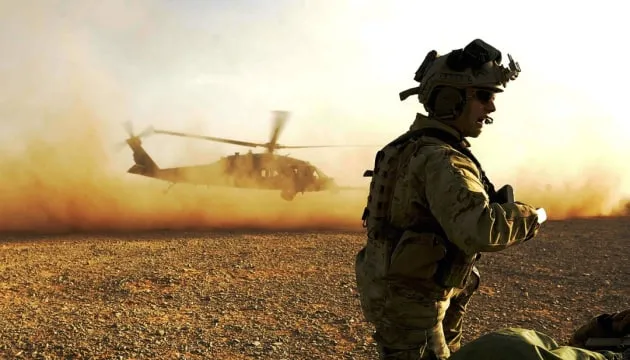
The Pentagon plans to maintain the U.S. military presence in the Middle East as President Donald Trump’s administration prepares for a possible protracted conflict with Iran. The standoff is expected to last at least until 2027.
At the same time, U.S. officials told the WSJ that President Donald Trump has discussed in private conversations with senior advisers whether he should declare an end to the war with Iran. According to them, Trump believes that sustained economic pressure could eventually force Tehran to abandon its nuclear program or even lead to the collapse of the Iranian regime.
According to the report, Washington currently has about 50,000 military personnel in the region, as well as 19 warships, fighter squadrons, air defense units, and marines.
Sources note that the military presence is intended to preserve President Trump’s options between continuing economic pressure, limited military operations, and broader escalation.
According to the report, some advisers have warned Trump that expanding the conflict beyond the recent exchanges of strikes could harm Republican candidates in the November midterm elections. Trump maintains that electoral considerations do not influence his military decisions.
According to the WSJ, Trump was presented last month with options for possible military action, including intensified airstrikes and the deployment of ground troops to seize Iranian islands near the Strait of Hormuz. Mount Picax—a site near Natanz that has drawn particular attention from U.S. and Israeli officials due to concerns about Iran’s potential nuclear activities—was also cited among the potential targets.
The possibility of carrying out such operations requires the U.S. to maintain significant offensive capabilities in the region—even as Trump tries to determine whether economic pressure can lead to a diplomatic resolution.
At the same time, prolonged deployments are taking an increasingly heavy toll on American service members, their families, and military equipment. According to the WSJ, protracted missions are leading to a backlog of maintenance issues that could take years to resolve. This is felt most acutely by Army air defense personnel responsible for intercepting Iranian missiles and drones, whose standard deployment period has increased from nine to 12 months, the source said.
Some units, originally assigned to serve in Europe or the Pacific region, have already spent more than a year on deployment after being redirected to the Middle East.
Such deployments highlight the contradiction at the heart of Washington’s current strategy: Trump is signaling a desire to de-escalate the conflict while maintaining the military capacity to escalate it rapidly, the publication notes.
The WSJ reported this, citing sources familiar with the matter.
The Pentagon has restricted access to classified military documents, according to media reports.
The Pentagon awarded GE a contract worth nearly $2.9 billion for F/A-18 engine parts.
The Pentagon has agreed to increase production of SM-3 missiles


