
Poland has not yet allowed Ukraine to conduct search and exhumation operations
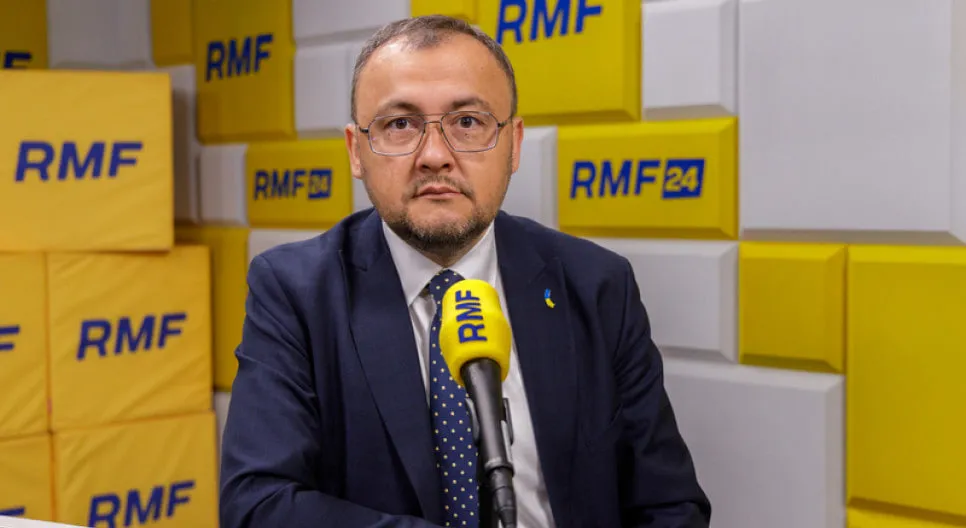
The Polish authorities have not yet granted Ukraine any permission to conduct search operations or exhume the remains of Ukrainians on Polish territory. Vasyl Bodnar, Ukraine’s ambassador to Poland, spoke about the difficulties in reaching agreements between the two countries.
According to him, the Ukrainian side has already issued six or seven permits; in particular, work was carried out in Puzhnyky, Huta Peniatska, Ostrivky, Volia-Ostrivetska, and Uhlia.
“However, three applications have also been submitted by the Ukrainian side, but we have not yet received any permits. I would like to appeal to the Polish side here to issue at least one permit for exploratory work in Poland, because I have been trying for several months to obtain at least one permit in Lask, but we have not received it. There are always some bureaucratic obstacles, so I am publicly appealing for at least one permit to be prepared and issued by the Polish side,” the ambassador said.
Vasyl Bodnar noted that Ukraine is trying to improve relations with Poland: it is proposing work with archives and collaboration among historians, consultations at the committee level, and cooperation between ministries.
“We emphasize once again that historians must sit down and discuss the topics being raised in Poland, because the Polish approach is one-sided, and I have noted more than once that it is wrong to simply say that Ukrainians are bad and Poles are good. The Sahryn massacre didn’t just happen out of nowhere either. And this isn’t about some acts of retaliation in which over 30,000 Ukrainians were killed—we need to speak openly about that as well. When we discuss the events in Volhynia, we condemn the crime, but in each case we must determine who carried it out. Because the Polish narrative omits the German occupation regime, the actions of the Soviet authorities, and other groups that fueled hatred between Ukrainians and Poles. And, of course, we must convey this information to the public,” the diplomat emphasized.
Bodnar called Poland’s attempts to influence the decision to name a Ukrainian military unit after the UPA an interference in the affairs of a sovereign state.
“The Polish side took an unequivocal stance: ‘Just change your mind,’ while the Ukrainian side perceived this as an ultimatum: ‘There is no other way out; do as we say.’ So this is not about the UPA, but about the right to make decisions, which has been undermined in Poland,” the Ukrainian ambassador explained.
According to the diplomat, improving relations between the countries requires bilateral interaction—movement in both directions—which demonstrates the willingness of both partners to cooperate.
“On our part, there was openness and a proposal for consultations between the ministries of foreign affairs. We are waiting for a response. There was a proposal for consultations between presidential committees at the highest level. There has been no response. There was a proposal to organize a meeting of historians. We are awaiting a response. If historians do not address this issue directly, we will never learn the truth about what actually happened to both nations,” says Vasyl Bodnar.
Among the factors influencing Poles’ attitudes toward Ukrainians, the diplomat specifically cites political manipulation ahead of the elections in Poland, as well as Russian propaganda, which is amplifying this issue on both sides of the border. And instead of countering it and creating accurate narratives, we get fixated on the history and issues that divide us. Because of this, he says, Ukrainians’ perception of Poland is changing, and this aggression, of course, triggers a defensive reaction.
This was stated by Vasyl Bodnar, Ukraine’s ambassador to Poland, in an interview with RMF published on August 18.
Poland may transfer MiG-29s to Ukraine in exchange for drones.
Earlier, Finland explained why it would not transfer Patriot missiles to Ukraine.
As a reminder, during his first official visit to Serbia, Ukrainian President Volodymyr Zelenskyy stated that the supply of interceptor missiles for the Patriot systems in 2026 had decreased compared to 2025.
Ukrainian President Volodymyr Zelenskyy stated that Ukraine currently has only about 1% of the required number of Patriot interceptor missiles, while Russian ballistic attacks have become more frequent.


