
A powerful telescope in Hawaii has captured amazing phenomena on the Sun
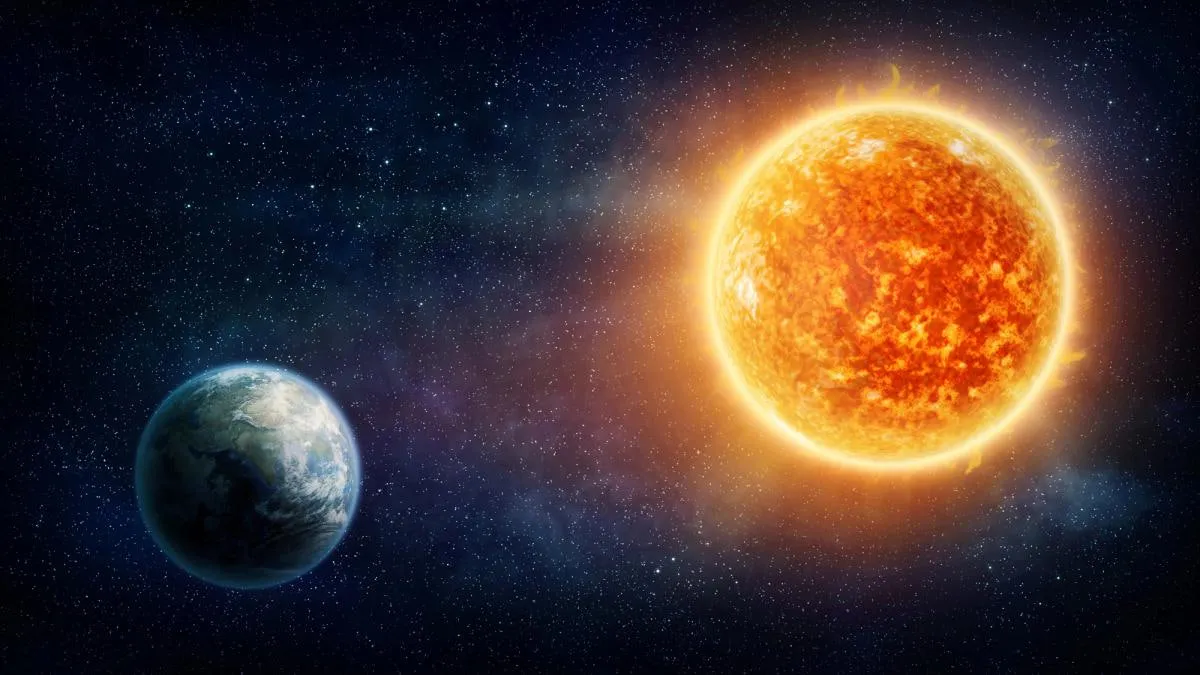
Scientists have obtained new, highly detailed images of the Sun’s surface, revealing previously unseen features of its activity. Thanks to the Daniel K. Inouye Telescope, located on the island of Maui in Hawaii, researchers were able to examine the scorching surface of our star with unprecedented precision.
Initially, the scientists took these images for a different reason—to calibrate the telescope and test its capabilities. However, when they reviewed the results, they realized they had photographed the Sun’s bright outer layer with higher resolution than ever before.
"Video footage of these discoveries shows strange, feather-like patterns across the surface, as well as 'vortices' of activity that no one has ever seen before," the article states.
Scientists observed waves of instability on the Sun’s surface caused by particles of magnetized plasma moving past one another at different speeds—similar to the waves that form when a gust of wind sweeps across water.
This phenomenon has been observed on Earth and other planets, such as Jupiter and Saturn; however, as study co-author Friedrich Vogel of the National Solar Observatory noted, “it has never before been observed on the Sun’s surface at this scale.”
“We’ve observed large-scale phenomena on the Sun, but we lacked an understanding of some of the fine-scale physical processes underlying these phenomena—those ‘tiny engines’ that drive solar activity. "The Inoue telescope gives us a clearer picture of these processes, and KHI may be one of those engines," said Vogel.
Researchers are interested in the internal processes on the Sun in order to better track powerful bursts of energy—so-called coronal mass ejections—that can travel toward Earth. When they reach Earth, they can trigger solar storms that have the potential to disrupt GPS communications and create colorful auroras.
"To better understand and ultimately predict the Sun’s most destructive phenomena, we first need to understand the tiny physical processes that drive them. The more of these elements we find, and the more thoroughly we study them using powerful instruments such as the National Science Foundation’s (NSF) Inouye Solar Telescope, the clearer and more complete our understanding will become,” Voger added.
The Mirror reports on this.
A total solar eclipse will cover part of Europe on August 12.
As a reminder, the longest solar eclipse of the century will occur in 2027 in areas where it is visible.
AI helped decipher ancient Babylonian prophecies about eclipses.


