
President Tinubu calls for Africa to get seats on UN Security Council — Premium Times Nigeria
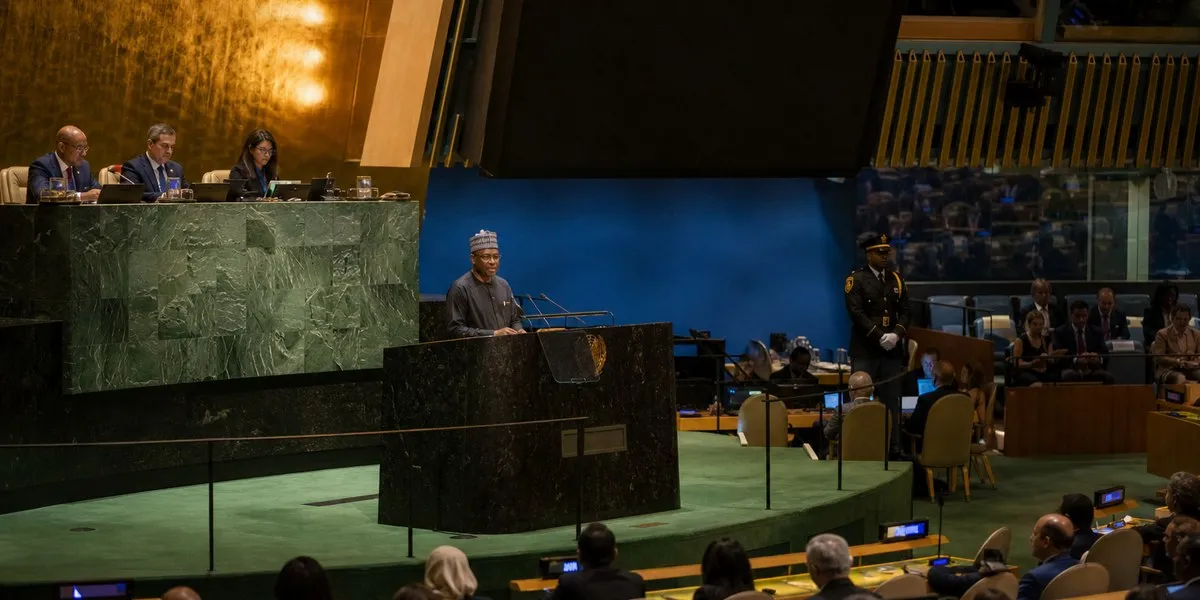
Nigerian President Bola Tinubu called for reforming the UN Security Council and granting Africa at least two permanent seats with all rights and responsibilities, including veto power for as long as it exists. His address at the general debate of the 81st session of the UN General Assembly in New York, United States, was delivered by Vice President Kashim Shettima, Premium Times Nigeria reports.
Africa's representation
Tinubu said that the world of 2026 cannot remain dependent on a distribution of power formed in 1945. According to him, African issues continue to make up a significant part of the Security Council's agenda, yet the continent has no permanent membership in it.
Nigeria also demands a total of five non-permanent seats for African countries on the Security Council. In the address, Tinubu referred to the Ezulwini Consensus and the Sirte Declaration.
Diplomacy, climate and financing
The Nigerian president called on world leaders to end wars and abandon the intensification of nationalism. He stressed that the UN must return to the principles of dialogue, mutual respect and collective responsibility, and that diplomacy must prevail over coercion.
More current news is available on the UA.News Telegram channel Telegram.
Tinubu also mentioned Nigeria's participation in peacekeeping efforts in Liberia, Sierra Leone, Darfur, Mali and The Gambia. According to him, the country is working through ECOWAS, the African Union and partnerships in the Gulf of Guinea on mediation, democratic governance, counterterrorism and maritime security.
In the address, he called for supporting the development of developing countries through technology transfer and climate financing. Tinubu noted that Africa produces less than 4% of global emissions but faces a significant climate burden. According to him, Nigeria is working to achieve net-zero emissions by 2060 while expanding access to affordable, reliable and sustainable energy.
Separately, the president advocated reforming the international financial architecture, broader access to concessional financing and debt sustainability mechanisms that take development needs into account. He stressed that developing countries spend a significant share of their resources on debt servicing instead of education, healthcare and infrastructure.




