
The Russian Orthodox Church in Europe is masquerading as Ukrainian churches to influence refugees
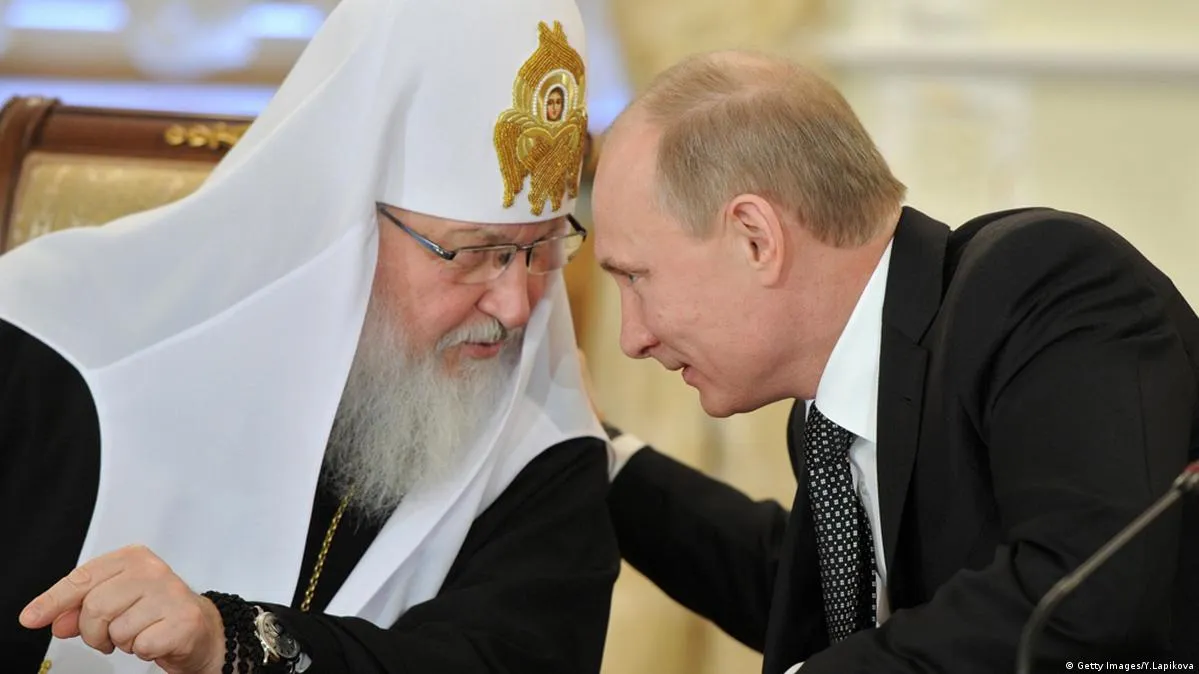
Russian Orthodox church organizations in European countries are masquerading as Ukrainian religious communities in order to influence Ukrainian refugees. This is the conclusion reached by the authors of the study “The Russian Orthodox Church in Europe: Infrastructure of Russian Influence,” prepared by the Institute for National Resilience and Security.
According to the researchers, the network of Russian Orthodoxy in Europe consists of three jurisdictions: the Russian Orthodox Church, the Russian Orthodox Church Outside Russia, and the Ukrainian Orthodox Church of the Moscow Patriarchate. In total, they encompass up to 660 parishes and, according to the authors’ estimates, bring together between 1 and 1.2 million believers.
The largest number of such church structures is in Germany—about 130 parishes—and the smallest is in Poland, where there are up to 15.
The authors of the study assert that Moscow adapts its activities to the specific conditions of different countries, using both its influence on local elites and disguising itself as Ukrainian organizations. To attract Ukrainian refugees, they provide humanitarian aid, operate children’s centers, and offer psychological counseling, as well as conduct worship services in Ukrainian or in both languages, using Ukrainian symbols and names.
The researchers paid particular attention to Telegram channels that pose as Ukrainian news outlets. According to their data, pro-Russian narratives are spread through such platforms, including claims that “Ukraine does not value its own people” and “we will not survive without Russia.”
Rena Marutyun, director of the Institute for National Resilience and Security, noted that Telegram channels adapt to the information environment more quickly than state-run Russian media and serve as an important tool for hybrid influence.
At the same time, the study emphasizes that there are only 15 parishes of the Orthodox Church of Ukraine operating in Germany and Poland, and their work relies largely on the initiative of priests. The authors call on the government to support the development of the OCU abroad, strengthen chaplaincy missions, and counter attempts by the Russian Orthodox Church to disguise its structures.
Analysts also believe that this network’s activities are funded from Russia’s state budget, through Russian state-owned corporations, certain European grants, and private sponsors.
Source: Censor.NET.
As a reminder, cocaine was found in the car of Metropolitan Hilarion of the Russian Orthodox Church, who was detained in the Czech Republic.
The Russian Orthodox Church transferred Metropolitan Hilarion to Brazil following the scandal in the Czech Republic.


