
Singapore lost 65% of coral reef habitats — Mongabay
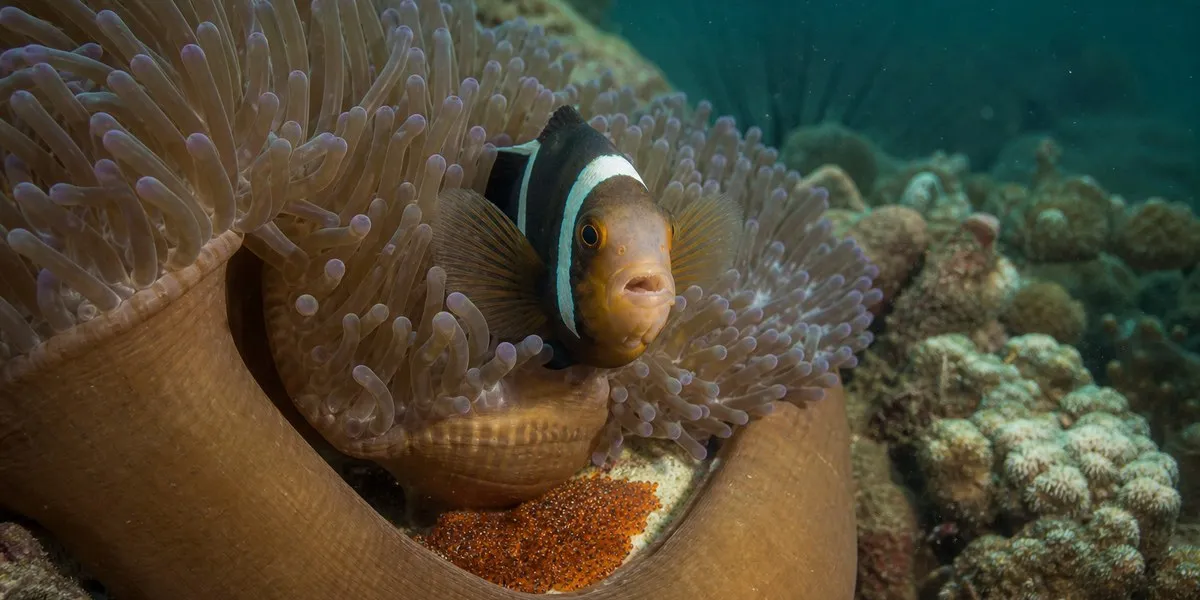
Singapore has lost about 65% of its coral reef habitats due to land reclamation. Against this backdrop, several islands south of Jurong Island may be merged into a new Western Island for industry, defense and power generation, Mongabay reports.
In August, Prime Minister Lawrence Wong announced that several islands could be merged into Western Island. The boundaries of the future island have not yet been determined. Singapore’s Ministry of National Development told Channel NewsAsia that the plans would be influenced by environmental and engineering studies, while consultations with stakeholders would be held before studies and works begin.
A reef buried in 2006
In 2006, scientist Debbie Ng and her team documented life on Terumbu Bayan reef south of Singapore before it was buried. During a dive, she saw a pair of false clownfish in a sea anemone. The female attacked and bit the diver several times while defending a clutch of eggs, through whose membranes tiny eyes were already visible.
Shortly afterward, the researchers were called out of the water by an alarm signal. From the boat, they watched barges begin dumping rocks and fill material into the channel, while a sediment plume spread through the shallows. The team managed to save some hard corals and a tiger-tail seahorse, but small animals, including shrimp and nudibranchs, remained on the reef.
More current news is available on the UA.News Telegram channel Telegram.
After Terumbu Bayan was buried, Bukom and Busing islands were connected for a petrochemical complex. Industrial infrastructure now occupies the site of the reef.
Changes in the marine environment
According to a study by scientists at the National University of Singapore, the country had lost about 65% of its reef habitats to land reclamation by 2017. Over roughly the same period, Singapore’s area increased by more than one-fifth. Underwater visibility declined from about 10 meters in the 1960s to less than two meters at the time of the study due to suspended sediment.
Over the past five decades, Singapore has also lost more than 45% of its original seagrass cover because of coastal development and land reclamation. Some of the largest continuous seagrass meadows remain at Cyrene Reef near the Pasir Panjang Terminal and at Chek Jawa on Pulau Ubin. Twelve seagrass species have been recorded in Singapore’s waters, where dugongs still feed.
Among the islands being considered for Western Island is Pulau Hantu, a popular diving destination. Divers and local dive operators are awaiting clarification of the project boundaries and possible restrictions on access to waters.


