
The heat in Asian cities is taking a toll on the health and incomes of informal workers
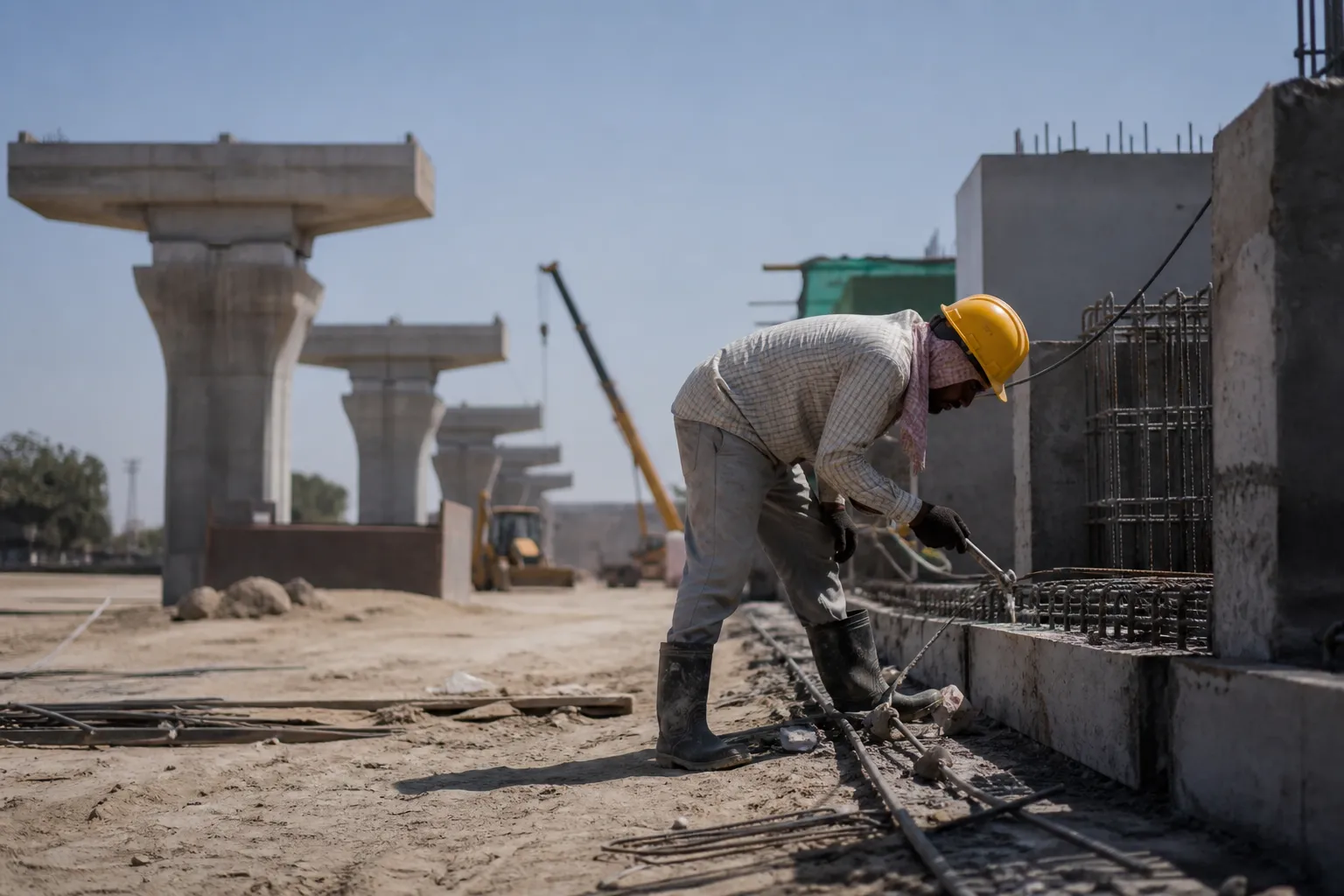
Extreme heat in Asian cities poses an increasingly serious threat to the health and incomes of workers in the informal sector, who often have to choose between working in hazardous conditions and losing their daily earnings. In Noida, an industrial satellite city in India’s National Capital Region, construction workers continue to work even when temperatures exceed 45°C, according to Deutsche Welle English.
Bridgepal Singh, a 51-year-old construction worker, said that after his shift, he experiences a racing heartbeat, dizziness, dehydration, and physical exhaustion. At the same time, he cannot afford to miss a day of work: his daily wage is 500–600 rupees, or about 6–7 U.S. dollars. This income supports his wife and three children, who live in a village in the state of Uttar Pradesh.
Approximately 5 million people work in the informal economy of the Delhi region, accounting for roughly 80% of the total workforce. The organization People’s Courage International surveyed informal workers in five Asian cities. According to its data, during the hottest months, tasks that previously took eight hours can take 10–12 hours, as people are forced to slow down due to hazardous conditions.
For more breaking news, follow the UA.News Telegram channel.
One study cited by DW indicates that rising temperatures could cost informal workers the equivalent of 2% of their countries’ GDP each year—nearly $80 billion. Workers have also reported health problems, including respiratory and gastrointestinal illnesses, strokes, and kidney disease. As a result, they spend more money on over-the-counter medications and visits to clinics or hospitals.
After work, many migrant workers are unable to recover due to their living conditions. They live in densely built-up areas with poor ventilation, a lack of green spaces, and heat-absorbing concrete surfaces. Singh returns to a single, poorly ventilated room where, during the hottest months from April to June, frequent power outages prevent the room from cooling down.
Women who juggle paid work with unpaid caregiving for children and elderly relatives are particularly vulnerable. In Noida, 36-year-old Shanti Devi, the sole breadwinner of her family, sometimes misses work during heat waves because schools are closed and she needs to care for her four children. Researchers note that India has heat response plans in place, and Quezon City in the Philippines is developing its own measures; however, protections for workers in the informal sector remain limited and are implemented unevenly.


