
Holiday on August 15, 2026: Madrid Celebrates the Day of the Virgin of Paloma
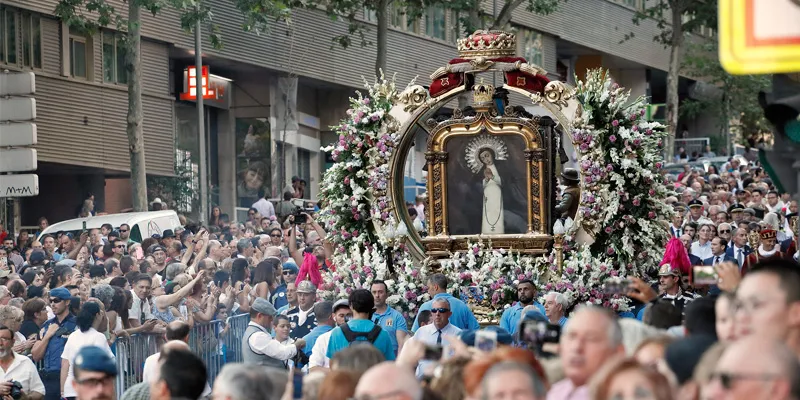
On August 15, Madrid celebrates the Day of the Virgin of Paloma—one of the most famous city festivals in the Spanish capital. It combines religious tradition, street festivities, music, dancing, and a long history dating back to the 18th century. In 2026, the main day of celebration falls on Saturday, August 15, and the festivities will last several days.
The history of the Virgin of Paloma began in Madrid in the late 18th century. According to legend, around 1787, children found a small painting depicting the Virgin Mary among some firewood in an old courtyard. At first, the painting might have simply been lost among other items, but a local resident named Isabel Tintero took notice of it. She bought the painting, restored it, framed it, and placed it near the entrance to her home on Paloma Street.

Very quickly, the painting became the object of special veneration. People began coming to her with prayers, and various stories of miraculous healings began to be associated with the image. The stream of people eager to see the painting grew, so before long, the rooms in Isabel Tintero’s house were no longer enough to accommodate everyone. In 1795, a separate chapel was built for the image. Later, in the 19th century, a church was erected on this site, which is now officially known as the Parish of San Pedro el Real, but in Madrid it is well known as the Church of Paloma.

There is an important detail: the image, which is known in Madrid as the Virgin of Paloma, actually depicts Our Lady of Solitude. The name “Paloma” stuck because of the street where the painting was kept. It was around this small canvas that one of the capital’s most beloved folk traditions eventually developed.
Why Is the Festival Held on August 15?
The main day of celebration for the Virgin de Paloma is August 15. In Madrid, this is not just a day of religious veneration of the image, but a major city-wide event that has been traditionally celebrated for centuries. City officials call the Paloma festival the largest and most popular of Madrid’s three major August neighborhood festivals.

The festivities take place in the La Latina neighborhood, one of the capital’s most traditional districts. They are part of Madrid’s major August festival cycle, which also includes the festivals of San Cayetano and San Lorenzo. Paloma is the final and most spectacular festival in this cycle.
The festival holds special significance for the residents of Madrid. The Virgin of Paloma is not the official patron saint of the entire city, but she is traditionally considered one of Madrid’s most revered saints. She is even referred to as the patron saint of Madrid’s firefighters.
Why is the Virgin of Paloma associated with firefighters?
There is another well-known Madrid legend associated with this image. According to legend, during a major fire in the Plaza Mayor, the flames could not be extinguished for a long time. People brought various images of the Virgin Mary, hoping for help. When the painting of La Paloma was brought to the scene of the fire, the flames were supposedly brought under control.

This story is not a documented fact but rather part of the city’s traditions and legends. However, it explains the special connection between the Virgin of Paloma and firefighters. Every year, representatives of the fire department take part in the main celebrations. For one of Madrid’s firefighters, it is a great honor to personally bring the painting down from its place in the church.
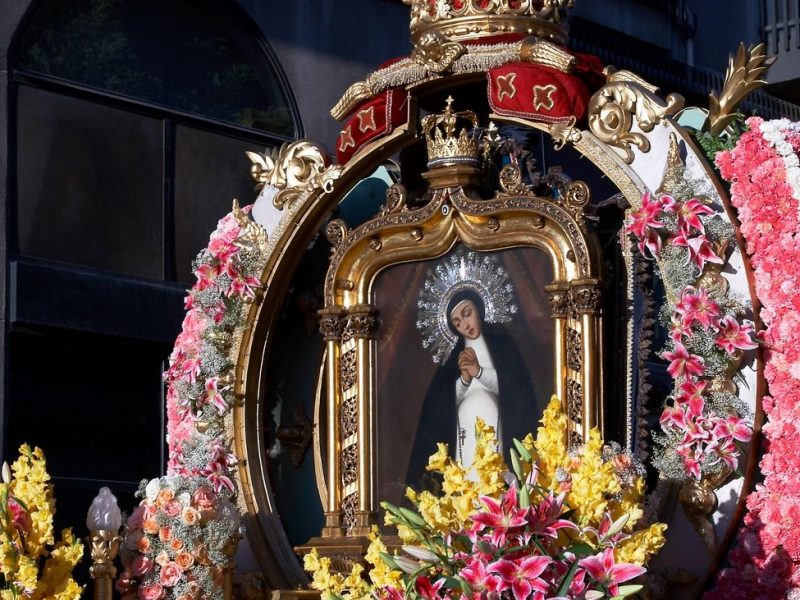
This tradition has survived to this day and has become one of the festival’s most famous moments. Therefore, for Madrid, the Day of the Virgin de Paloma is not only a religious holiday but also a day when the city’s connection to its fire department is particularly evident.
How the Day of the Virgin of Paloma Is Celebrated
In Madrid, the celebration is by no means limited to a visit to church. For several days, the La Latina neighborhood transforms into a vast space for concerts, dancing, performances, contests, and street festivities. The streets are decorated, music plays, and entertainment venues offer a variety of activities. Not only locals but also visitors to the city can join in the festivities.
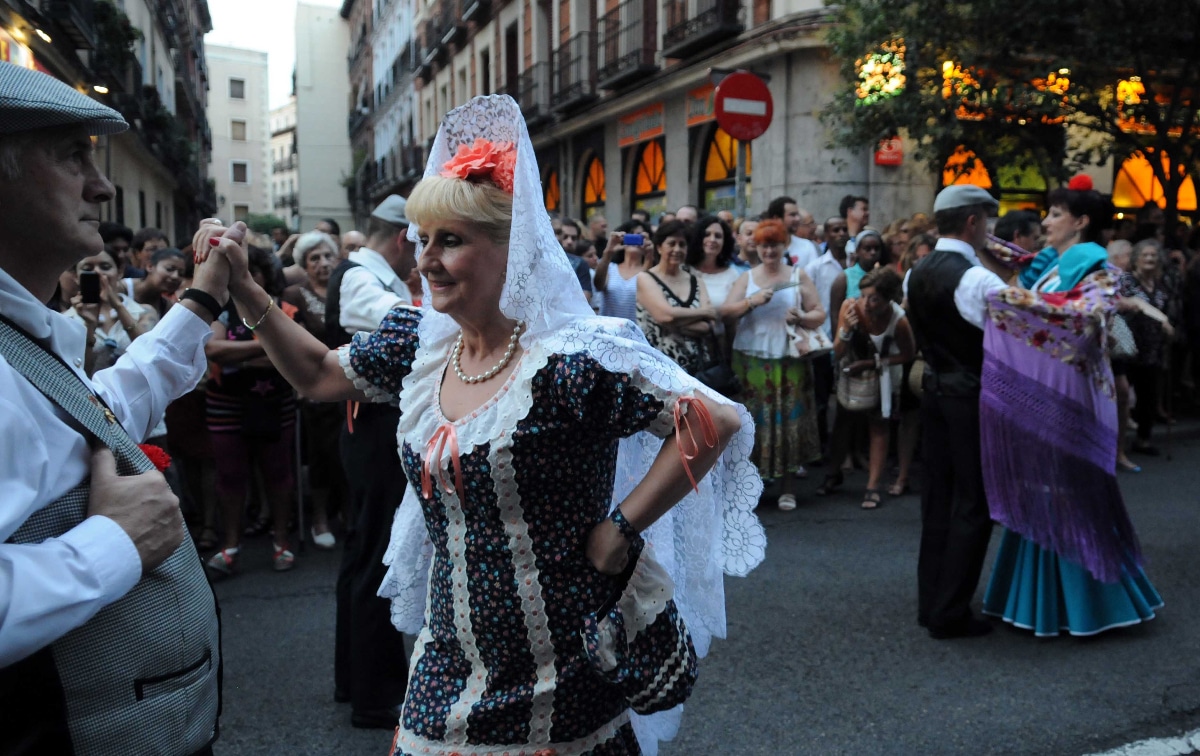
Traditional Madrid figures—chulopas and chulopas, that is, men and women in traditional attire—create a special atmosphere. On the streets, you can see festive scarves, fans, decorated houses, and colorful lanterns. One of the symbols of Madrid’s festivities is the chotis—a traditional city dance. Dance competitions are also held during the festivities, including chotis and paso doble contests, as well as fan and traditional Manila shawl competitions.

An important part of the festival is outdoor entertainment for everyone. The program may include concerts, children’s events, street performances, contests, culinary events, and evening dances. Another distinctive tradition is the communal recitation of the “Salve a la Virgen de la Paloma” prayer at midnight.
What Happens on August 15
The main religious events take place on August 15. Traditionally, the day begins with a floral offering to the Virgin of La Paloma. Then, a solemn Mass is held in the church. After the service comes one of the most anticipated moments—Madrid’s firefighters ceremoniously lower a painting depicting the Virgin Mary.

Afterward, the procession of the Virgin of Paloma winds through the streets. The icon is carried out of the church, and people follow it along the district’s main streets. A marching band accompanies the procession, and large crowds of Madrid residents and visitors gather along the streets.

In 2026, the Day of the Virgin de Paloma falls on August 15, and the festivities are scheduled for August 13–16. The main venues are the Las Vistillas Gardens and La Paja Square in the La Latina neighborhood. The program includes concerts, traditional performances, family activities, contests, and religious ceremonies.
Interesting Facts About the Festival
Virgen de Paloma is the patron saint of firefighters. That is why the fire department’s participation is one of the most prominent parts of the festival program. The firefighters’ descent of the painting is considered a particularly honorable tradition.
The festival has a very unusual history. At its heart is a small 18th-century painting that, according to legend, was once found among a pile of firewood. Today it is kept in a church that has become one of the most important sites of religious life in Madrid.
The celebration has been going on for several centuries. Madrid city officials note that the tradition of marking the Day of La Paloma with grand festivities dates back to the 18th century. Over time, the festival has become one of the capital’s major summer events.
La Paloma is associated not only with religion but also with Madrid’s culture. By the end of the 19th century, the popularity of the celebrations had grown so much that they became part of the city’s cultural identity. And the famous Spanish zarzuela “La verbena de la Paloma,” composed by Tomás Bretón and Ricardo de la Vega, has forever linked the festival’s name to the capital’s musical history.
The festival is open to everyone. Despite its religious origins, the modern Paloma is a major city-wide celebration where religious services, processions, concerts, dancing, and folk entertainment all take place side by side. It is precisely this blend of faith and everyday city life that has made it one of Madrid’s most recognizable traditions.
When Is the Day of the Virgin of Paloma in 2026?
In 2026, the Day of the Virgin of Paloma will be celebrated on Saturday, August 15. The main festivities in Madrid will take place as part of the program from August 13–16. The main day will be dedicated to religious ceremonies, the descent of the icon by firefighters, and a procession, as well as a large number of concerts and folk festivities.

Thus, the Day of the Virgin of Paloma is a festival in which ancient religious history is intertwined with Madrid’s distinctive culture. It features prayers, a procession, firefighters, traditional attire, chotis, and evening concerts. That is why, for Madrid, August 15 is not just a religious holiday, but one of the most vibrant events of the summer.


