
Holiday on July 17, 2026 — Slovakia's Independence Day
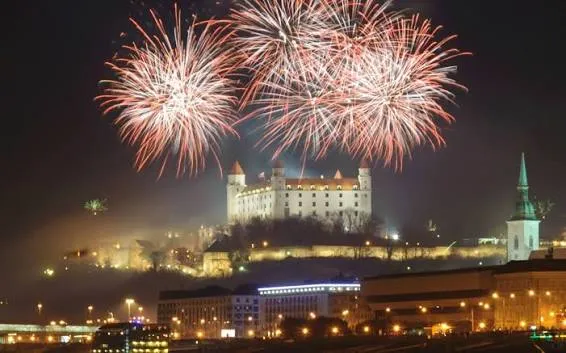
On July 17, Slovakia celebrates Independence Day—a date that marked an important milestone on the country’s path to statehood. It was on this day in 1992 that the parliament adopted the Declaration of Sovereignty, which paved the way for the peaceful dissolution of Czechoslovakia and the emergence of the independent Slovak Republic.
Every year on July 17, Slovakia commemorates one of the most important events in the country’s modern history—the adoption of the Declaration of Sovereignty of the Slovak Republic. Although this day is not an official holiday, it has come to symbolize the beginning of the path to independence.

It is important to understand that July 17 is not the day independence was declared, but the date when Slovakia asserted its right to determine its own future. Just a few months later, the process of the peaceful division of Czechoslovakia began, and on January 1, 1993, the independent Slovak Republic officially appeared on the world political map.
How Slovakia Achieved Independence
The history of Slovak statehood has been long and complex. For centuries, the territory of modern-day Slovakia was part of the Kingdom of Hungary, and after World War I, it became part of the newly formed Czechoslovakia.

Despite sharing a common state, the Czechs and Slovaks gradually began to envision the country’s future development differently. This became particularly evident after the Velvet Revolution of 1989, when the communist regime fell and Czechoslovakia began its transition to democracy. In 1990, the state became a federation of two republics—the Czech Republic and the Slovak Republic. This gave Slovakia greater autonomy, but at the same time intensified discussions about full independence.
Why July 17?
Following the 1992 parliamentary elections, the National Council of the Slovak Republic adopted the Declaration of Sovereignty. This took place on July 17, 1992. The document did not immediately declare independence, but it effectively asserted the Slovak people’s desire to independently determine their own political course.
That is why historians consider this day to be the beginning of modern Slovakia. By the end of 1992, politicians in the Czech Republic and Slovakia had agreed on the so-called “Velvet Divorce”—one of the few examples in the world of a peaceful division of a state without war or armed conflict. On January 1, 1993, Czechoslovakia ceased to exist, and in its place emerged two independent states—the Czech Republic and Slovakia.
How Independence Day Is Celebrated
Despite the significance of the date, July 17 remains a workday in Slovakia. Stores, government offices, and businesses operate as usual. However, commemorative events are held in many cities. The Slovak flag is raised at government buildings, and there are ceremonies to lay flowers at monuments, as well as historical exhibitions, lectures, and gatherings dedicated to the establishment of statehood.

Officials and the president traditionally highlight the importance of sovereignty, democracy, and the country’s peaceful development. Schools, museums, and libraries host themed events that introduce young people to the history of independence and the political events of the early 1990s.
Interesting Facts About This Day
One of the most interesting facts is that Slovakia gained independence without a war. The peaceful division of Czechoslovakia is often cited as one of the most successful examples of a civilized resolution of political differences in modern Europe. Another interesting point is that many foreigners confuse July 17 with the country’s main national holiday. In fact, the official Day of the Establishment of the Slovak Republic is January 1, when independence took legal effect.
Parliament adopted the Declaration of Sovereignty by a majority vote following lengthy political debates. It served as a signal not only to the country’s citizens but also to the international community of Slovakia’s intention to become a separate state. After declaring independence, Slovakia gradually integrated into European structures. Subsequently, the country joined the European Union, NATO, and the eurozone.
Why This Date Remains Important
For Slovaks, July 17 serves as a reminder of the moment when the country took its first official step toward independence. It was on this day that the foundation was laid for modern Slovak statehood, which today is a full-fledged member of the European Union and NATO. Although the celebration takes place without large-scale festivals or military parades, the date holds great historical significance. It symbolizes the people’s right to determine their own future, build a democratic state, and develop peacefully.
As Slovak historians emphasize, “July 17 became the day when the aspiration for independence was first given official political form,” and “it was the Declaration of Sovereignty that paved the way for the birth of the modern Slovak Republic.” That is why this date still holds a special place in the country’s historical memory today.


