
Holiday on August 24, 2026 — Vesuvius Day: The History of the Eruption, Pompeii, and Interesting Facts
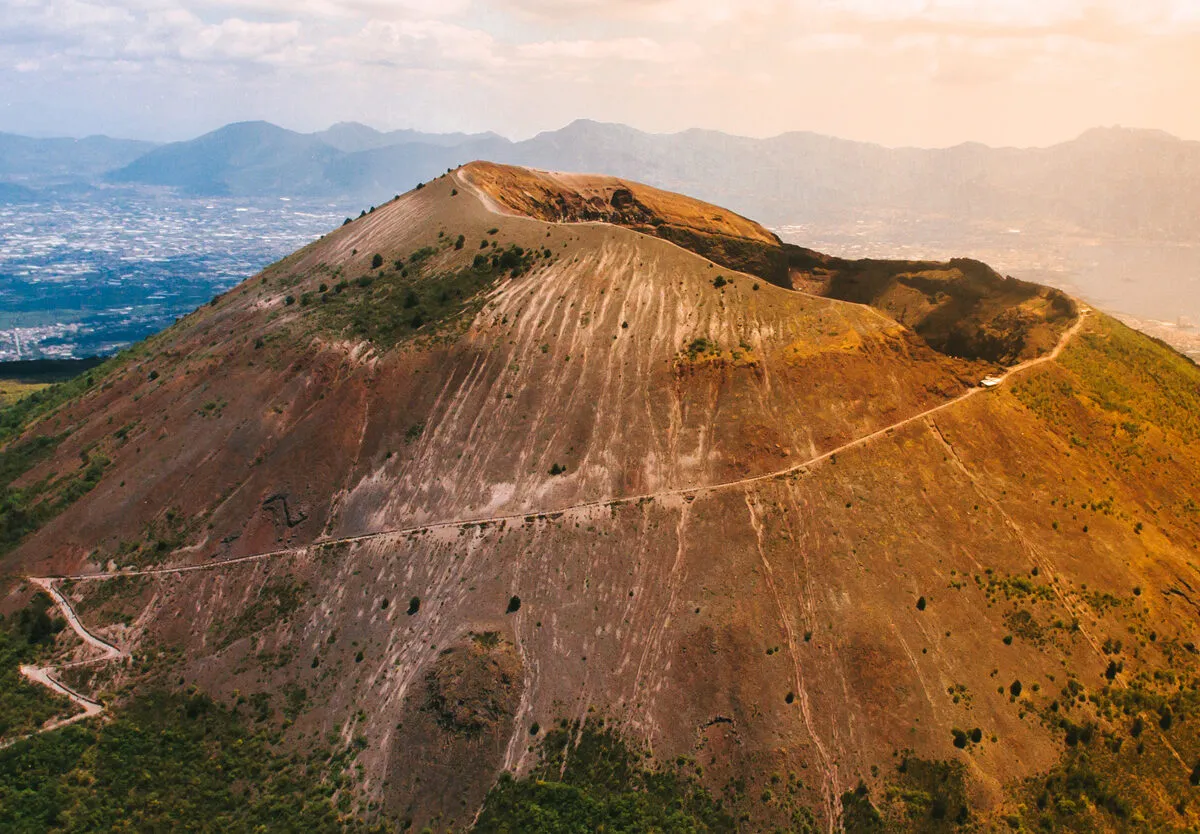
August 24 marks Vesuvius Day—a commemorative date dedicated to one of the world’s most famous volcanoes and the catastrophic eruption that forever changed the history of Pompeii. On this day, people remember the victims of that ancient tragedy, reflect on the power of nature, and commemorate the cities that were buried under volcanic ash nearly two thousand years ago. In 2026, Vesuvius Day falls on Monday, August 24.
Vesuvius Day is not one of the major official international holidays, such as Earth Day or World Environment Day. It is a commemorative and educational date that calendars of commemorative days mark on August 24—the traditional date of the start of the famous eruption of Vesuvius in 79 AD. Its main purpose is to commemorate the tragedy of Pompeii, Herculaneum, and other settlements near the volcano and to draw attention to the dangers of volcanic disasters. The day also provides an opportunity to learn more about volcanoes, geology, and how science today is trying to predict natural disasters.
Therefore, it would be incorrect to describe Vesuvius Day as a high-profile public holiday with established traditions. It is most often observed through educational materials, documentaries, stories about Pompeii and the eruption, as well as visits to the region’s archaeological and natural sites. In its modern form, it is more a day of remembrance and science than a celebration in the traditional sense.
What Happened Nearly 2,000 Years Ago
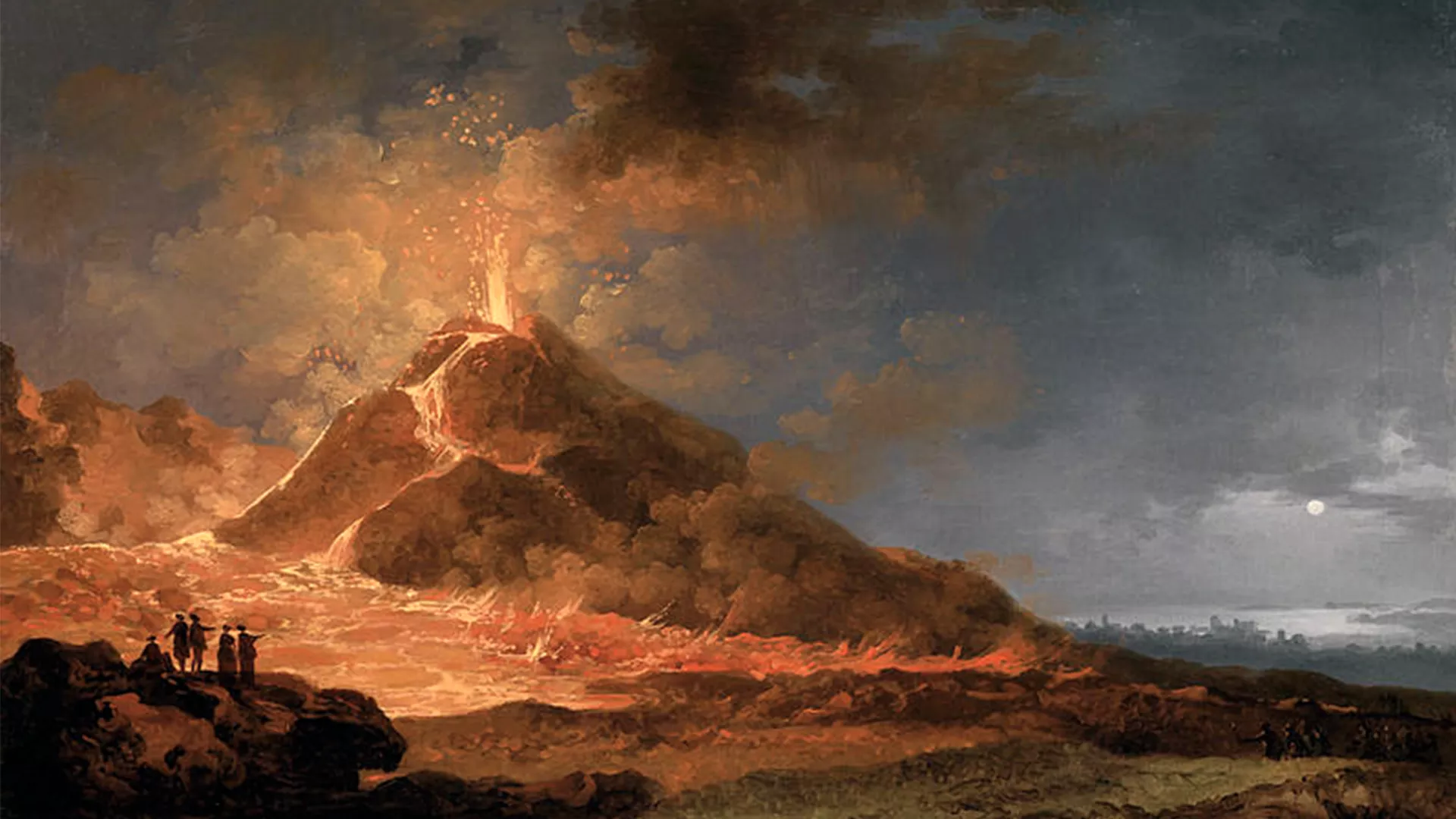
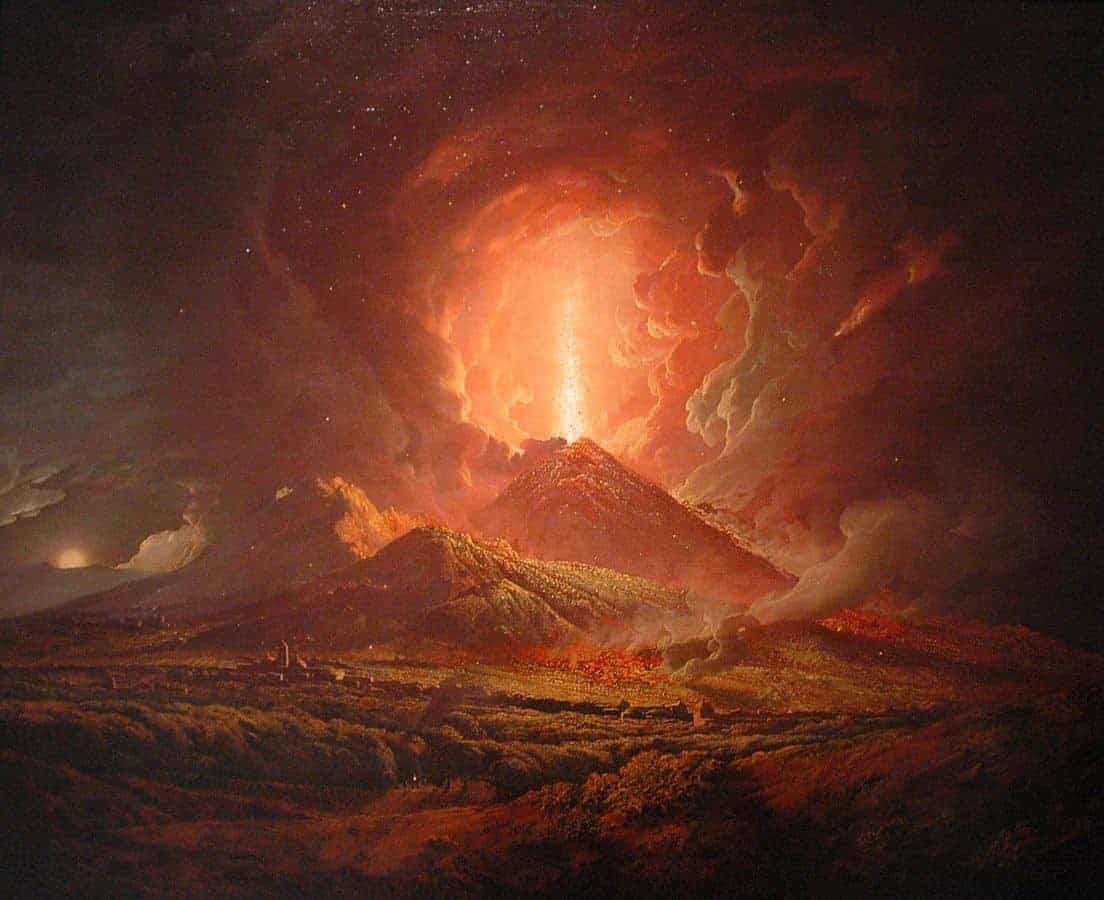
Mount Vesuvius is located near Naples in southern Italy. In Roman times, there were prosperous cities, villas, and agricultural settlements around it. Among them were Pompeii, Herculaneum, Stabiae, and Oppontis. People lived near the mountain and had no idea how dangerous it could become. The eruption of 79 AD became one of the most famous volcanic disasters in history. The volcano spewed out a massive amount of ash, pumice, and hot volcanic material. Pompeii was buried under a thick layer of debris, while Herculaneum was engulfed by powerful flows of hot volcanic material. The disaster did not last just a few minutes—the eruption unfolded over a long period of time and was accompanied by earthquakes, explosions, and a massive cloud of ash.

It is particularly significant that an eyewitness account of the disaster has survived. Pliny the Younger described the events in letters to the Roman historian Tacitus. He recounted a massive dark cloud, falling pumice, earthquakes, and the panic among the people. His writings became one of the most important historical sources on the eruption and effectively gave the eruption type its name—“Plinian.”
Did Vesuvius Really Erupt on August 24?
And this is where the story gets much more interesting. For many years, it was believed that the catastrophe began precisely on August 24, 79. This date was linked to a letter by Pliny the Younger, in which one of the manuscript versions specifies a date traditionally translated as August 24. That is why “Vesuvius Day” became associated with this date.
But modern research has forced historians and volcanologists to seriously question this date. Archaeologists found a charcoal inscription on a wall in Pompeii that indicates October 17. This means that the inscription existed shortly before the city’s destruction or, at the very least, helps establish that the disaster could not have occurred before this date, assuming the inscription truly dates back to A.D. 79. There are other arguments in favor of an autumn date. Fruits typical of autumn, including nuts and other seasonal produce, were found in the archaeological layers. Researchers also noted the clothing of the victims and the presence of items related to heating. All of this is inconsistent with a hot August day.
Therefore, the scientific debate continues today. Studies published in recent years indicate that the eruption most likely occurred in the fall of 79, rather than on August 24. At the same time, the traditional date of August 24 continues to be used in calendars and popular culture, as it has been associated with the story of the disaster for centuries. In other words, August 24, 2026, is the date of Vesuvius Day, but it is not the indisputably established date of the eruption itself. This is an important detail to keep in mind so as not to present the historical account as a definitively proven fact.
Why Pompeii Became One of the World’s Most Famous Cities
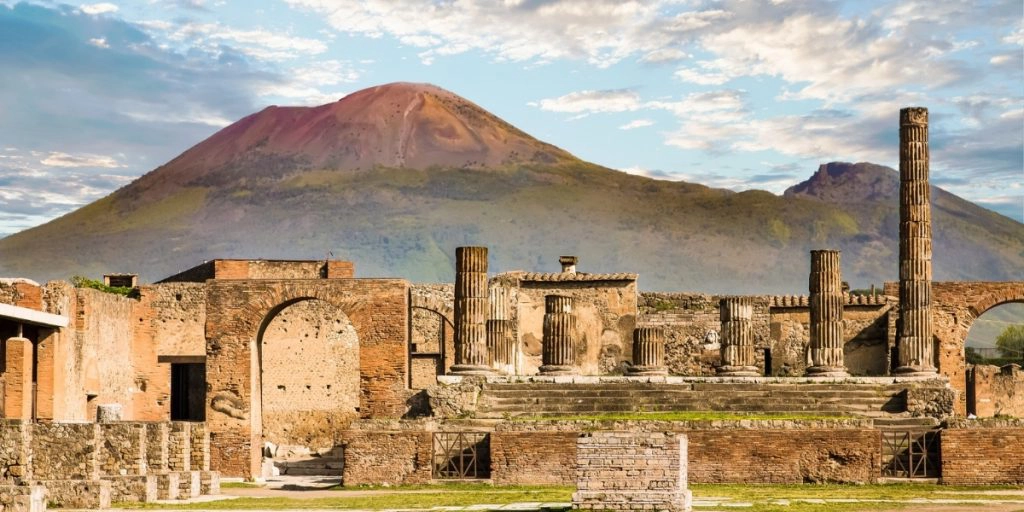
The disaster destroyed the city, but at the same time turned it into a sort of “time capsule.” Ash and volcanic deposits buried houses, streets, shops, frescoes, household items, and even inscriptions on the walls. That is why, centuries later, archaeologists have been able to see what everyday life was really like for the Romans. In Pompeii, they have uncovered residential buildings, bakeries, thermal baths, temples, workshops, and public buildings. Inscriptions, advertisements, political slogans, and everyday phrases remain on the walls. Thanks to this, archaeologists can study not only emperors and military commanders but also the ordinary people who lived here nearly two thousand years ago.
What makes Pompeii unique is that the city wasn’t simply destroyed; it was preserved under volcanic debris. This is precisely what allowed for the preservation of a vast number of details that in other ancient cities would have long since disappeared due to the passage of time, rain, reconstruction, and human activity.
Pliny the Younger and the First Major Account of the Volcanic Catastrophe
Pliny the Younger was a teenager when he witnessed the eruption. He was in Misenum, about several dozen kilometers from Vesuvius. He later described the events in detail in letters to Tacitus. It is thanks to these texts that we have an idea of what the eruption looked like through the eyes of someone who was nearby.
His uncle, Pliny the Elder, was a renowned scholar and commander of the Roman fleet. Upon seeing a massive cloud above Vesuvius, he set sail toward the disaster. At first, his goal was to observe this unusual natural phenomenon, but the situation quickly turned into a rescue operation. Pliny the Elder died in the Stabiae area. It was Pliny the Younger’s account that later became one of the fundamental sources for studying the eruption. And in modern volcanology, the term “Plinian eruption” is used to describe very powerful explosive eruptions with a high column of ash and gases.
Vesuvius’s story did not end in 79
It is a mistake to think that Vesuvius simply fell dormant forever after the destruction of Pompeii. The volcano has erupted many times since. One of the most famous was the eruption of 1631, which claimed thousands of lives. It served as a reminder to the residents of the Neapolitan region that Vesuvius remains dangerous even centuries after the ancient catastrophe. The most recent eruption occurred in 1944, during World War II. It lasted several weeks and caused significant damage to the surrounding area. People lost their lives, and volcanic material damaged homes and infrastructure. Since then, Vesuvius has been dormant, but that does not mean it is considered extinct.

That is precisely why the volcano remains under constant observation. Scientists monitor seismic activity, ground deformations, gases, and other indicators that may signal changes inside the volcano.
Vesuvius Today
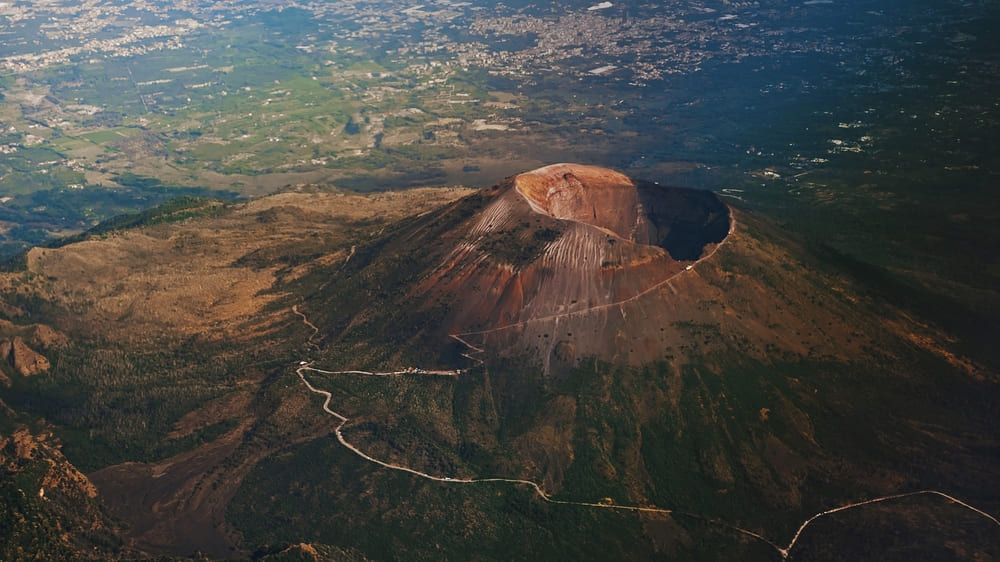
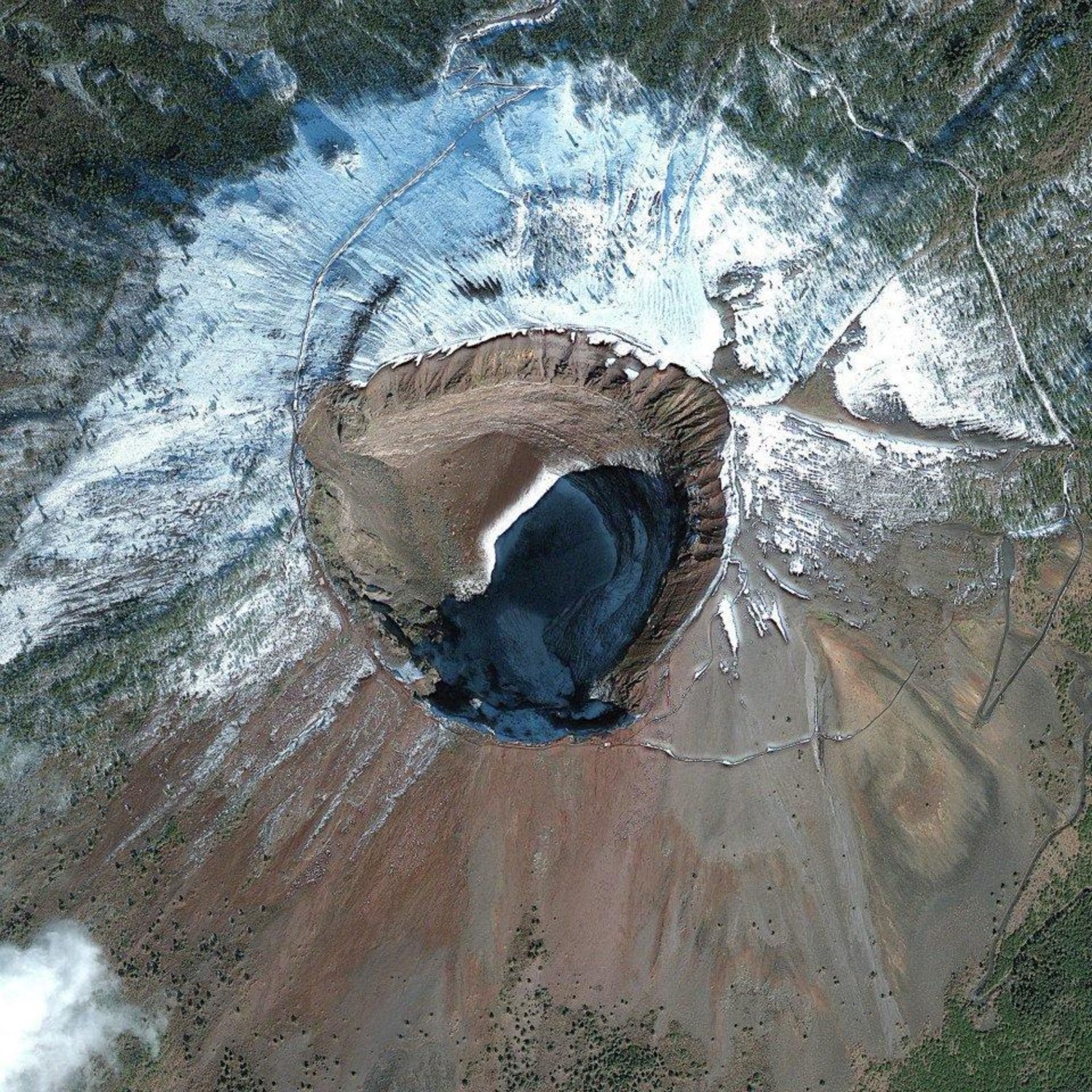
Today, the Vesuvius National Park surrounds the volcano. It was officially established in 1995. The park covers approximately 8,500 hectares and holds natural, geological, archaeological, and historical significance. The park’s mission is not only to preserve nature but also to protect the region’s cultural heritage. Vesuvius is one of the world’s most famous volcanoes and one of the most dangerous due to the large number of people living in its vicinity. Naples and numerous other settlements are located nearby. Therefore, studying the volcano is important not only for historians and tourists but also for modern civil safety.

Today, visitors can climb Mount Vesuvius via designated hiking trails. People come here not only for the scenery but also to see the crater of the famous volcano. From the summit, visitors can enjoy a panoramic view of the Gulf of Naples and the areas that have been home to communities living near the volcano for thousands of years.
How Vesuvius Day Is Celebrated
Since this is not an official national holiday with a single international program, there is no universal celebration plan. One of the most common ways to spend this day is to watch a documentary or read about Pompeii, Herculaneum, and Vesuvius. This allows people not only to remember the tragedy but also to understand how it changed science and people’s perceptions of volcanoes.

Another option is to study the history of Pompeii through archaeological materials. Today, thanks to digital reconstructions, you can see what the streets, houses, and public spaces of the ancient city looked like. For children and schoolchildren, Vesuvius Day can be an opportunity to conduct a simple science experiment with a volcano model and discuss why eruptions occur. For those in Italy, the most obvious option is to visit the Vesuvius National Park or the archaeological sites of Pompeii and Herculaneum. At the same time, you should not approach the volcano’s danger zones on your own without following the rules. Vesuvius is not just a tourist attraction but an active volcano that experts continue to monitor.
Interesting Facts About Vesuvius
Vesuvius has become one of the symbols of volcanology. Thanks to Pliny the Younger’s detailed description, the eruption of 79 AD became one of the best-documented volcanic disasters of antiquity.
The date of August 24 may be incorrect. For centuries, it was considered accurate, but archaeological findings and modern research increasingly support an autumn date. An inscription in Pompeii indicates that the eruption could not have occurred before October 17, if the inscription is dated to the year 79 itself.
The volcano is not considered extinct. Its last known eruption occurred in 1944. Vesuvius has not erupted since then, but it remains an active volcano.
Pompeii has preserved a vast number of everyday artifacts. Thanks to volcanic deposits, archaeologists have gained a unique insight into the lives of ordinary Romans.
The Vesuvius National Park was established as recently as 1995. Its territory encompasses natural and historical sites around the volcano and is of vital importance for the preservation of this area.
Vesuvius is located near one of Italy’s most densely populated areas. This is precisely what makes it a particularly important site for ongoing monitoring and the planning of civil defense measures.
Vesuvius Day in 2026
In 2026, Vesuvius Day will be observed on Monday, August 24. In calendars of commemorative dates, it is listed as a day dedicated to the memory of the eruption of Vesuvius and its aftermath. But this year in particular, it is especially important to bear in mind one historical revision. The traditional date of August 24 is no longer accepted by scholars as indisputable. Recent research indicates that the tragedy likely occurred in the fall of 79. Therefore, Vesuvius Day is interesting today not only as a commemorative date but also as an example of how new archaeological discoveries can change what we once considered established historical fact.

The history of Vesuvius reminds us of a simple truth: nature does not always warn people the way they expect. Nearly two thousand years ago, an entire city vanished in a matter of hours, but it is precisely because of this tragedy that we have an incredibly detailed portrait of life in antiquity. Today, Vesuvius is no longer just a symbol of catastrophe—it is a vast natural laboratory, an archaeological site, and a reminder of just how important science, observation, and preparedness for natural hazards are.


