
August 6, 2026 — World Shorebird Day: How These Migratory Birds Live and Migrate
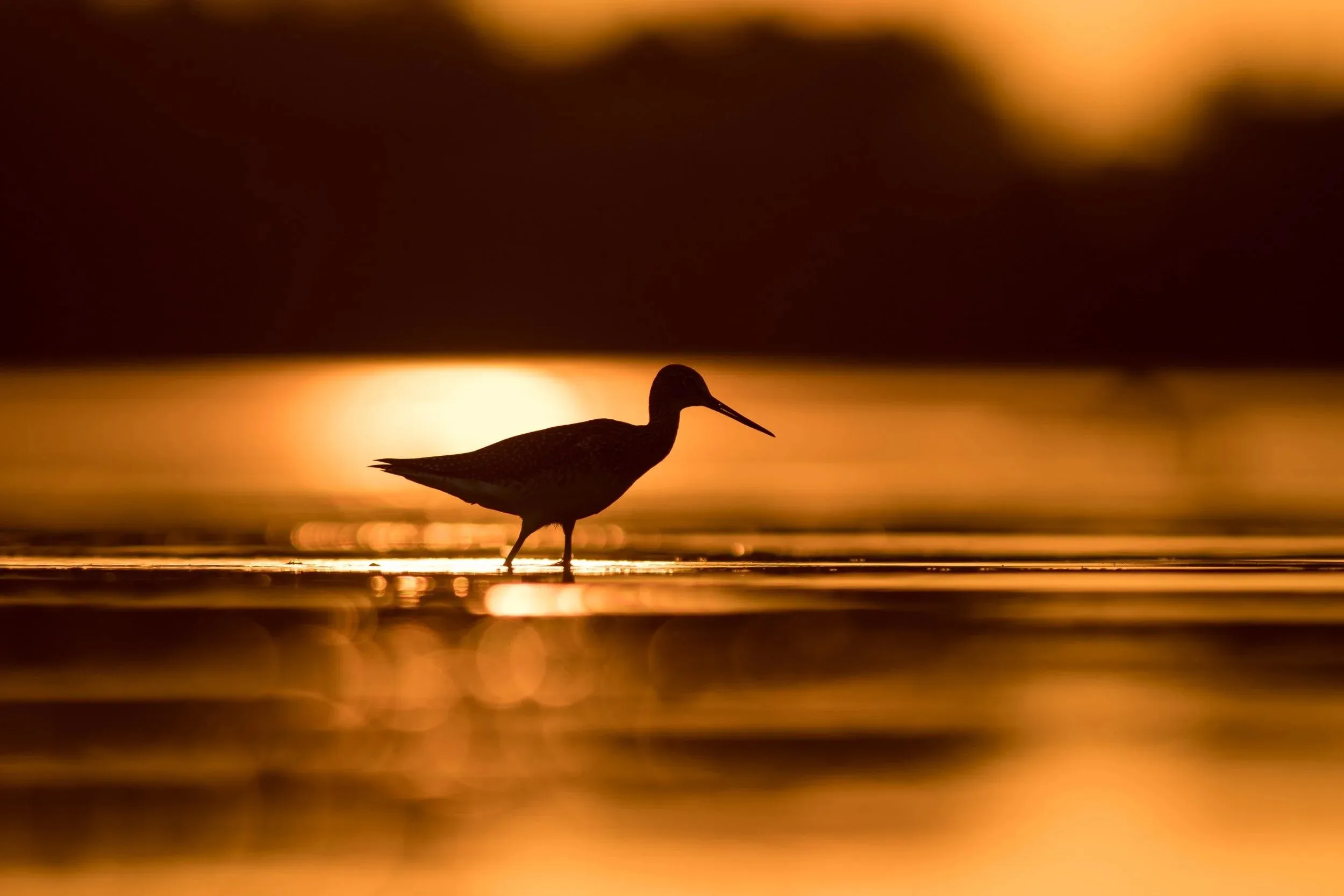
On September 6, the world celebrates World Shorebird Day—a day dedicated to birds that travel thousands of kilometers during their migrations and depend on bodies of water, wetlands, estuaries, and coastlines. In 2026, this day will coincide with the Global Shorebird Count—an international shorebird census that will take place from September 1 through 7. Participants count birds in various countries to better understand changes in their populations and the condition of the sites where they stop during migration.
World Shorebirds Day is celebrated annually on September 6. It is not a national holiday but an international conservation initiative dedicated to shorebirds, their migrations, and the habitats on which their survival depends. The initiative was launched in 2014. The main idea behind this day is simple: to protect birds, we must first understand what is happening to them. That is why great emphasis is placed on birdwatching, counts, and citizen science. People head out to bodies of water, watch the birds, identify the species, and share their findings with experts.
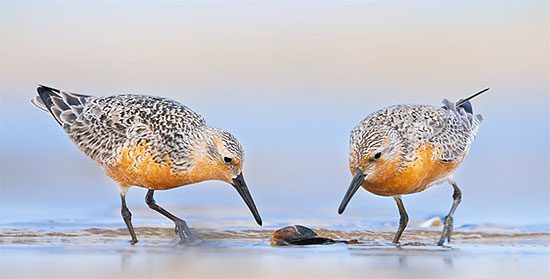
Over the years, World Shorebirds Day has evolved from a single initiative into an international community that brings together birdwatchers, scientists, photographers, conservationists, and volunteers. The organizers emphasize that it’s not just professional ornithologists who can participate in the observations. A shorebird spotted near a local body of water can also become part of a large international dataset.
What Are Shorebirds?
Waders are a large group of birds that includes, among others, shorebirds, sandpipers, snipes, curlews, plovers, plovers, and oystercatchers. They can vary greatly in size, color, and bill shape. But many of them share a life near water and the ability to undertake very long migrations. Some species spend part of the year in Arctic or sub-Arctic regions, where they breed. When the cold season arrives, they fly south—sometimes across several countries and even continents. To do this, the birds need safe places where they can stop, rest, and find enough food.
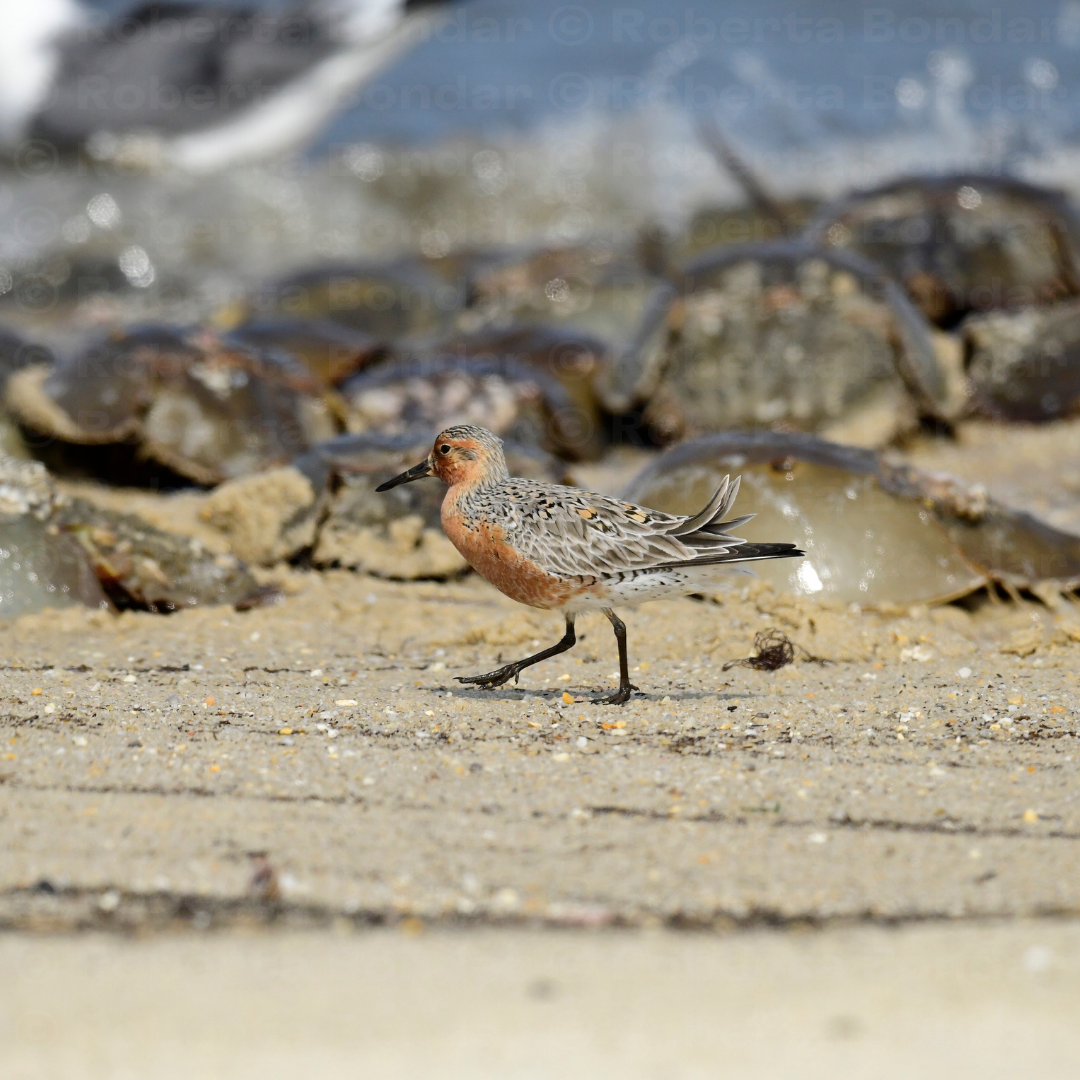
This is especially important during migration. A shorebird can fly a tremendous distance, but it cannot make the entire journey without stopping. It needs marshes, estuaries, shoals, river floodplains, lakes, and other wetlands. Therefore, the loss of a single important body of water can affect more than just local birds. If that place served as a stopover on a migration route, its loss can create a problem for birds arriving there from very distant regions.
Why do shorebirds travel thousands of kilometers?
The migration of shorebirds is one of the most remarkable features of this group of birds. Every year, they travel between northern regions, where they breed, and tropical or southern territories, where they spend the cold season. During such a journey, the birds need to constantly replenish their energy reserves. That is why they stop at places rich in food. Mudflats, estuaries, and other shallow areas are particularly important.

There, shorebirds search for worms, insects, mollusks, crustaceans, and other small animals. The long or curved bills of many species are specifically adapted to this feeding method. Some species can increase their body weight by tens of percent before a long-distance flight. For example, studies of migrating shorebirds in Australia show that they need to build up large energy reserves before migration.

There are also true record-breakers. The Bar-tailed Godwit is capable of nonstop flights spanning thousands of kilometers. BirdLife Australia cites a distance of 13,560 km for one such migration route—from Alaska to Australia.
How World Shorebirds Day Came to Be
The World Shorebirds Day initiative began in 2014. Its goal was to draw more attention to shorebirds and the challenges they face during migration. The organizers emphasized not only professional research. An important part of the movement has been the participation of ordinary people who observe birds in their regions.
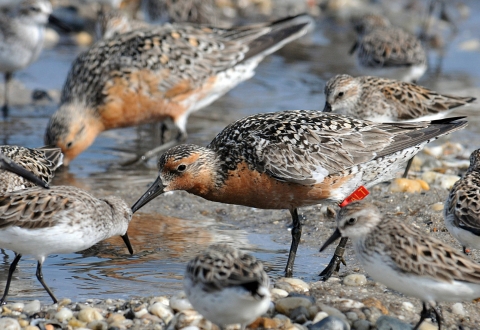
This approach is known as citizen science. A person may not be a biologist or an ornithologist, but their observations can still have scientific value. If many people regularly record birds in one location, over time it becomes possible to observe changes in their population size and behavior. That is why World Shorebird Day is not only about educational activities but also about actual data collection. The organizers emphasize that even a short list of birds from a local body of water can become part of the global picture.
Global Shorebird Counts 2026
The centerpiece of World Shorebirds Day is Global Shorebird Counts—an international shorebird census. In 2026, it will take place from September 1 to 7. Throughout that week, observers from various countries head to local bodies of water to count shorebirds. They record which species they saw, how many birds were in a specific area, and exactly where the observation took place.
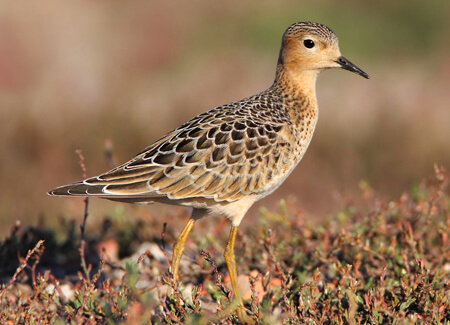
The organizers specifically emphasize that you don’t have to travel to a huge nature reserve or search for a flock of thousands of birds to participate. You can observe even at your usual local body of water. If there aren’t any shorebirds there today, that’s also information worth recording. In 2026, the organizers are encouraging participants to submit their observations via eBird, adding them to the corresponding international World Shorebirds Day tally. The value of this approach lies precisely in its repeatability. If people return to the same locations every year, scientists gain the ability to compare data and observe long-term changes.
Why Simply Counting Birds Isn’t Enough
At first glance, it might seem that counting birds is simply an observation for statistical purposes. In reality, such data helps us understand much more. If the number of shorebirds at a particular body of water remains stable over many years, this may indicate relatively normal conditions for them. If, however, the number of birds drops sharply, this is a reason to investigate the cause.
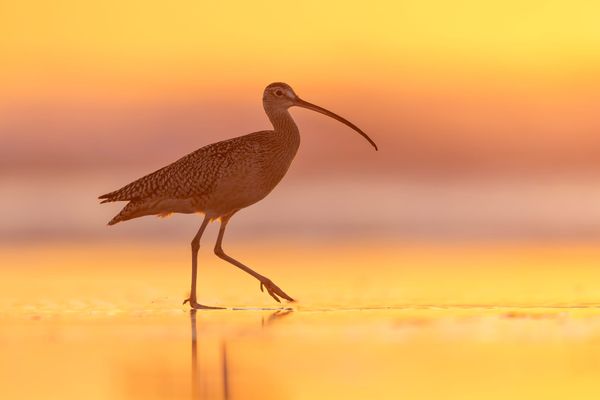
The problem may be related to the loss of food sources, water pollution, coastal development, wetland drainage, excessive tourism, or other changes. Sometimes birds react to such changes before they become apparent to humans. That is why shorebirds are called environmental indicators. Researchers use changes in their population sizes and behavior to assess the condition of wetland and coastal ecosystems.
Why Shorebirds Are Threatened with Extinction
One of the main problems for shorebirds is the loss of the places where they live and stop during migration. Wetlands and coastal areas are often used for construction, agriculture, industry, and other purposes. The birds are also harmed by pollution, human disturbance, hunting, and climate change. For migratory species, the problem is particularly complex because they depend on multiple territories across different countries.
In its analysis of the Red List update, BirdLife International notes that in 2024, 16 species of migratory shorebirds were moved to higher threat categories. In total, 21 of the 137 migratory sandpiper species are now considered globally threatened, and another 26 are classified as near threatened. This means that 34% of these species now fall into categories requiring global conservation attention. Moreover, the problem is not limited to a single continent. A bird may nest in northern Eurasia, stop over in Ukraine during migration, and winter in a completely different part of the world. If one of the key areas along this route disappears, populations living thousands of kilometers away may feel the consequences.
Wetlands are not just for birds
Waders depend on marshes, estuaries, floodplains, and coastal shallows, but these areas are also important for people. Wetlands play a role in natural water regulation, support biodiversity, and can help protect areas from the effects of flooding. These places are home to more than just birds. They provide a habitat for fish, amphibians, insects, mollusks, plants, and a wide variety of other organisms.

Therefore, preserving the places where shorebirds feed also helps the entire ecosystem. BirdLife International identifies wetlands as crucial for water supply, food security, the carbon cycle, and climate regulation. A good example is the Yellow Sea in East Asia. Its tidal flats are an extremely important stopover for millions of migratory waterfowl. At the same time, a significant portion of these areas has been lost in recent decades due to coastal development, and the populations of many species continue to decline.
What role do shorebirds play in nature?
Sandpipers don’t just look beautiful in photographs and attract the attention of observers. They are part of the complex food webs of wetland ecosystems. Most species feed on small invertebrates. The birds forage for food in mud, sand, shallow water, and among vegetation, using their various beak shapes. Their presence also indicates whether there is enough food in the area. If a body of water loses its natural structure or becomes polluted, this can affect the prey organisms and, in turn, the birds themselves.
At the same time, shorebirds are part of the diet of other animals. Juvenile and adult birds can fall prey to birds of prey and other predators. Scientists therefore view waders as a kind of “witness” to what is happening in nature. Changes in the state of the environment can be observed based on their population size, behavior, and distribution.
Which shorebirds are found in Ukraine
Ukraine lies along important migration routes for many birds. Routes used by waterfowl and semi-aquatic species pass through the country’s territory. During spring and fall migrations, shorebirds can be seen near estuaries, lakes, rivers, reservoirs, wetlands, and other areas with readily available food. Among the species found in Ukraine are curlews, snipes, sandpipers, plovers, dunlins, and other waders. Some of them are migratory, while others may remain for the winter, depending on the species and weather conditions.
Places where birds can feed and rest undisturbed are particularly important. If a body of water becomes heavily overgrown, polluted, drained, or if people constantly disturb the birds, its importance for migration may diminish. That is why observing shorebirds in Ukraine can also be useful for understanding the overall picture of their migrations. Data from one country complements the information collected at other points along the migration route.
How to Participate in World Shorebird Day
The easiest way to celebrate this day is to get out into nature and watch the birds. You don’t need an expensive camera or professional binoculars to do this. You can head to the nearest lake, river, pond, estuary, or other body of water. The main thing is not to get too close to the birds and not to try to startle them into flight just to take a photo.

If possible, bring binoculars or use a bird guide. Mobile apps that identify species based on photos, sounds, or physical characteristics are helpful for beginners. You can record the birds you’ve seen and submit the data to eBird, provided the sighting complies with the platform’s rules and those of Global Shorebird Counts. It’s precisely these routine observations that form a large database.
Another option is to join a local conservation organization or a group of birdwatchers. There, you can learn where the best places to watch shorebirds are in your region and how to correctly identify different species.
How to Observe Shorebirds Properly
The main rule is not to disturb the birds. Migratory shorebirds expend a lot of energy flying, so every stop along the way is important to them. If a person gets too close, the flock may take flight. At first glance, this may seem like a minor issue, but constant disturbance forces the birds to expend energy that they should be using to rest and feed.
Don’t run after the birds, throw objects at them, or try to lure them with food. It’s also best not to bring unleashed dogs to areas where large flocks are resting. It’s best to stay at a distance, use binoculars, and observe quietly. A good observation isn’t one where you managed to get as close as possible to a bird, but one after which the bird continued to feed or rest undisturbed.
Interesting Facts About Shorebirds
Shorebirds do not always live near the sea. Despite their English name, “shorebirds,” many species live far from the coast. They can be found near rivers, lakes, marshes, meadows, steppes, and other open areas.
Some species undertake incredible flights. The Bar-tailed Godwit can travel over 13,000 kilometers nonstop along one of the longest known migration routes.
Sandpipers have very different beaks. Their shape is related to how they forage for food. One species may dig for invertebrates in mud, another may catch prey at the water’s surface, and a third may forage in shallow water.
A stopover site may be more important than it seems. During migration, birds often depend on a relatively small number of particularly productive areas. That is why the disappearance of a single body of water can have consequences far beyond its boundaries.
Waders are used to study changes in nature. Their numbers and behavior can reveal how wetland and coastal ecosystems are changing.
What’s Changing in the World of Shorebirds
Current data show that the decline in shorebird populations is a global problem. BirdLife International reports that many migratory species are experiencing long-term population declines. In North America, long-term data analyzed by researchers showed population declines in 26 of the 28 species studied. In Australia, population declines have also been recorded for many species that use local wetlands.
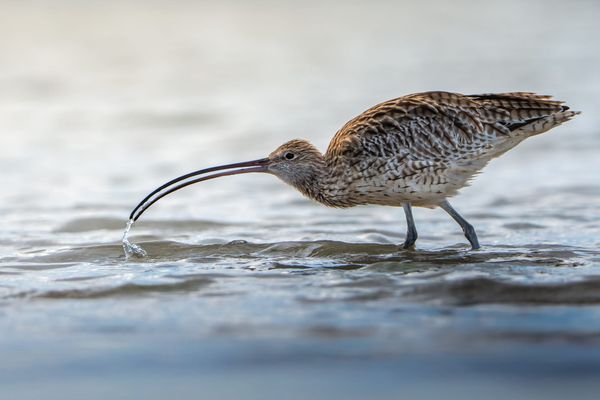
A separate problem is the rapid change in the locations along which migration routes pass. Coastal development, land reclamation, pollution, and climate change can reduce the number of available resting and foraging sites. That said, there are positive examples as well. In some regions, increased protection of wetlands, restoration of natural areas, and international cooperation are helping to reduce these losses. That is why conservationists emphasize that protecting just one nature reserve is not enough to safeguard shorebirds. We need to preserve an entire network of sites along migration routes.
Why World Shorebird Day Is Important
World Shorebird Day reminds us of a simple fact: migration does not end at a country’s border. A bird may be born in the north, fly through several countries, and spend the winter thousands of kilometers away from its nesting site. Therefore, protecting such species requires cooperation among different countries. If one section of the route is destroyed, even well-protected sites on the other side of the world may no longer be enough to save the population.

Ordinary observations by people are no less important. A single observation may seem insignificant on its own, but thousands of such observations over the years reveal patterns. This is precisely the main idea behind World Shorebirds Day: to observe, count, study, and protect. The more we know about birds and their migration routes, the better our chances of preserving the habitats they cannot do without.
When is World Shorebirds Day in 2026?
In 2026, World Shorebird Day will be celebrated on September 6. This year, the date falls on a Sunday. At the same time, from September 1 to 7, the Global Shorebird Counts 2026 will take place. Participants from around the world will count shorebirds at local water bodies and submit their results to an international database of observations.
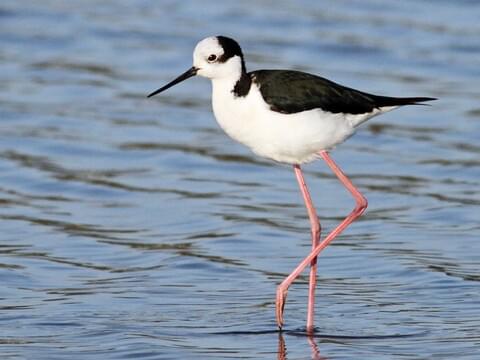
Anyone can participate—from experienced birders to those just beginning to take an interest in birds. All you need to do is find a suitable location, observe the birds without disturbing them, and accurately record what you see. World Shorebird Day is not just a date for bird lovers. It is a reminder of how interconnected different parts of the planet are and how important it is to preserve the bodies of water, wetlands, and coastlines through which ancient migration routes pass.


