
Oil prices are rising amid escalating tensions in the Middle East — Reuters
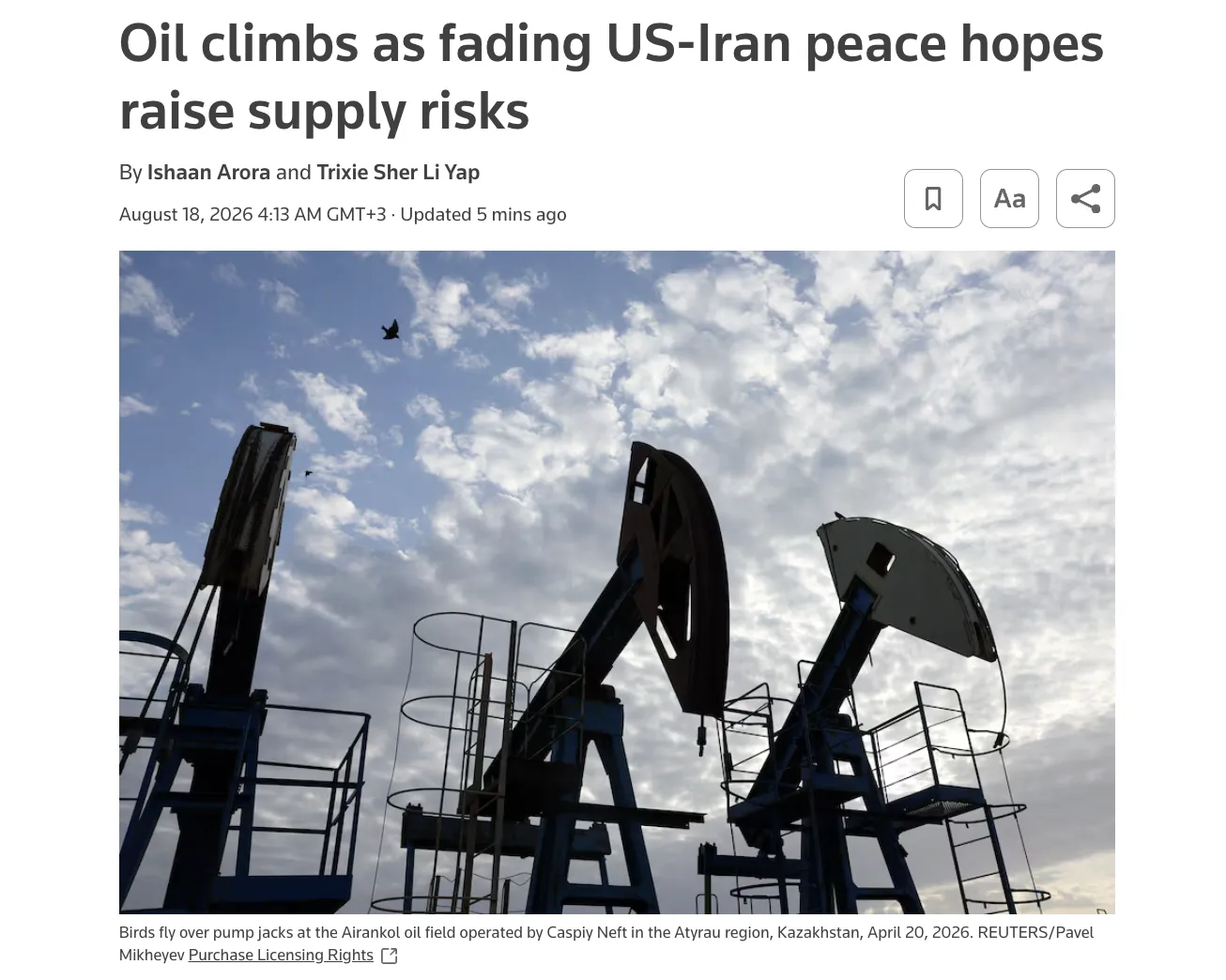
On August 18, global oil prices continued to rise amid dimming prospects for a deal to end the war in the Middle East. Markets fear that a protracted conflict could lead to disruptions in energy supplies, which is driving up oil prices.
Brent crude futures rose 62 cents, or 0.7%, to $91.49 per barrel, while futures for U.S. West Texas Intermediate (WTI) crude rose 75 cents to $85.25 per barrel.
On Monday, Iran announced that the country would shift to a “fully offensive military posture” as efforts to bring the war to a definitive end had reached an impasse.
For its part, the United States has ruled out extending the ceasefire agreement with Tehran.
“Oil prices rose at the start of the week as relations between the U.S. and Iran appear increasingly precarious. An agreement to resume shipping through the Strait of Hormuz still does not appear to be on the horizon, and the volume of shipping traffic remains negligible,” said Tim Waterer, chief market analyst at KCM.
According to Suvro Sarkar, head of energy research at DBS Bank, the lack of any agreement will affect expectations for oil prices going forward—in the fourth quarter and even in 2027.
This was reported by Reuters.
Read also:
Hardline Iranian leaders may have developed a plan to prepare for a new phase of the war. According to The Wall Street Journal, Tehran is tightening control over the military, increasing production of missiles and drones, and attempting to expand the conflict zone.
The heavy losses of Reaper drones in the war with Iran highlight one of the main challenges of modern warfare: even an expensive, high-tech drone can quickly become vulnerable when operating against an enemy with a powerful air defense system. The Washington Post reports on this.
The U.S. has sufficient military resources to maintain a naval blockade of Iran indefinitely. U.S. Secretary of Defense Pete Hagseth stated that American ships can continuously rotate in the region, so Washington is capable of maintaining pressure on Tehran for as long as necessary.




