
A sanctuary more than 6,500 years old, older than Stonehenge, found in Czechia — Jerusalem Post
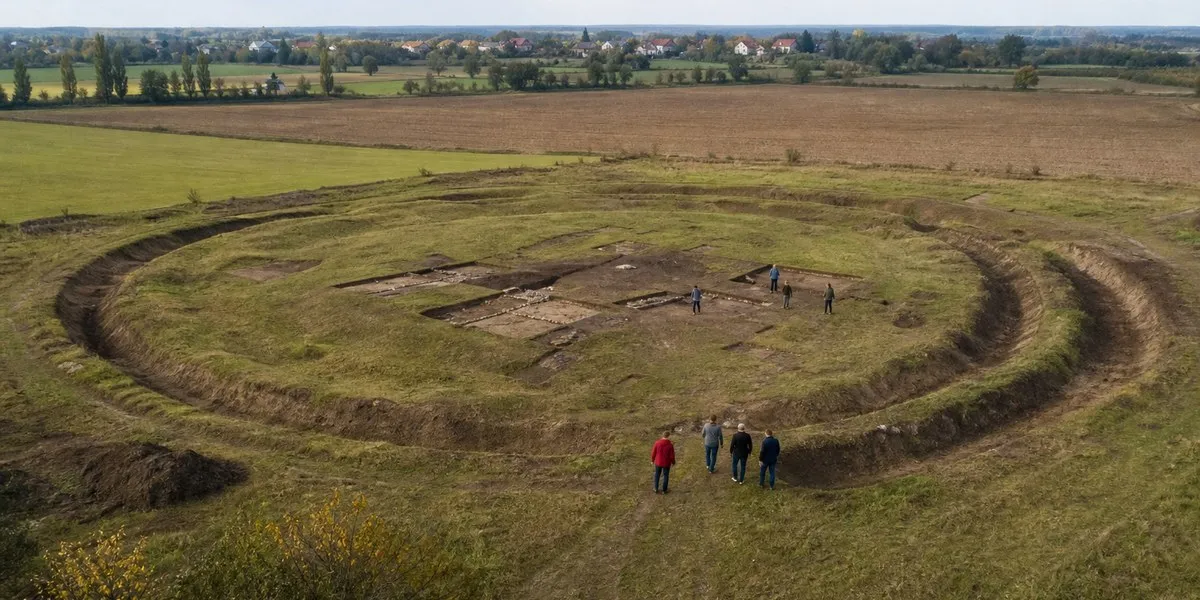
Near Chleby in Czechia, archaeologists are studying a prehistoric circular sanctuary that is more than 6,500 years old. According to researchers’ estimates, the site is about a thousand years older than Stonehenge. The Jerusalem Post reports on the findings, citing the University of West Bohemia.
A circular structure with 12 entrances
The structure has a diameter of about 230 meters. It features a ditch more than 2.5 meters deep and 12 unevenly arranged entrances. Petr Křivš, head of the research at the Department of Archaeology of the University of West Bohemia, said that circular enclosed structures from this period had not previously been known in the region.
According to him, a detailed analysis of the entrances’ placement showed that it was not random. Researchers believe that the geometry of the complex made it possible to observe key moments in the solar and lunar cycles.
Alignment with the Sun and Moon
Archaeologists identified two main observation points. One connects the sunrise on the day of the summer solstice with the sunset during the winter solstice. The other is aligned with the Moon’s extreme positions above the horizon during its approximately 18-year cycle.
More current news is available on the UA.News Telegram channel Telegram.
A similar principle of alignment was also used at Stonehenge. At the same time, radiocarbon dating of materials found near Chleby showed that the Czech sanctuary is significantly older than the British complex. Křivš explained that for early farming communities, the sunrise on the day of the summer solstice may have symbolized a beginning, while the sunset on the day of the winter solstice may have represented an end.
Burials and the site’s later use
During previous excavations, the remains of about 18 people were found in the ditch and were later identified as burials of the Bronze Age Únětice culture. According to the team’s preliminary conclusions, the site lost its original significance in the Iron Age: the ditch was gradually filled in, and an ordinary settlement emerged on the site of the former sanctuary.
The next stage will involve soil analysis, which may help determine how the area was used during different periods of prehistory. The study involves the University of West Bohemia in Pilsen, Charles University, and the University of Hradec Králové.




