
Denmark has formed its first government with a female majority – Bloomberg
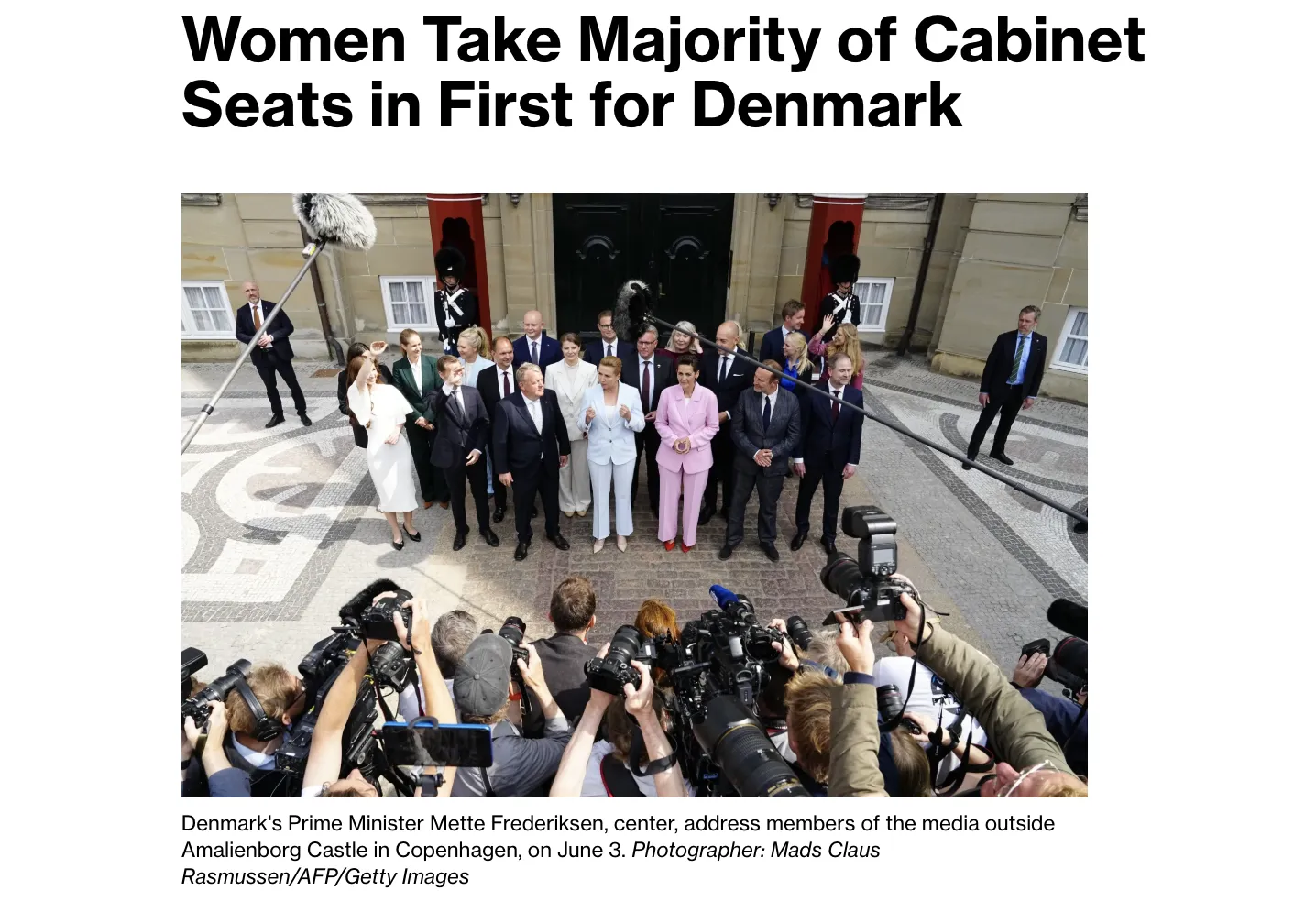
In Denmark, the new government has set a historic record for gender representation. Prime Minister Mette Frederiksen announced a cabinet in which women hold a majority of positions for the first time—11 out of 21 ministerial posts. In total, this accounts for 52% of the government.
“For the first time in Danish history, there are more female ministers than male ones,” Frederiksen said while presenting the new cabinet in Copenhagen. This is her third term as prime minister—she became the first woman in Denmark to lead the government three times.
Coalition talks lasted longer than ever before in the country’s history. Ultimately, Frederiksen brought together the Social Democrats, the Green Left, the Social Liberals, and the Moderates into a minority government with the support of left-wing parties.
The new result is a stark contrast to the previous one: four years ago, women made up only 35% of the cabinet, and at the beginning of last year, their share dropped to about 30%—at that time, Denmark ranked only 60th in the world in terms of women’s representation in government.
In terms of gender parity in the cabinet, Denmark has now caught up with Finland, slightly ahead of Sweden (50%) and Norway (45%). The highest rate in the region is in Iceland (54%).
Among the new ministers is Pija Olsen Dir, leader of the “Green Left,” who has taken on the role of Minister of Economy. Samira Nawa of the Social Liberals became Minister of Climate and Energy—the first woman from an ethnic minority to hold a ministerial position in Denmark.
In the March elections, women won a record 48% of seats in the Danish parliament—and this played a role in forming a cabinet with a record number of women.
Denmark has a long tradition of promoting women in politics. As early as 1915, women gained the right to vote, and in 1924, the country became the first democracy in the world to appoint a female minister: Nina Bang headed the Ministry of Education. However, Denmark did not have its first female prime minister until 2011—Helle Thorning-Schmidt, according to a Bloomberg report.
As a reminder, the U.S. is opening a new consulate in Greenland’s capital, Nuuk, and this has already sparked protests from local residents, who view the increased American presence as political pressure. At the same time, Washington is actively increasing its interest in the island due to its strategic importance in the Arctic.
The U.S. has stated that Greenland could serve as an alternative to oil routes through the Strait of Hormuz, which are currently under threat due to tensions with Iran. Washington believes the island has the potential to significantly influence the global oil market.


