
Disagreement has arisen in the EU over who should negotiate with Putin — Politico
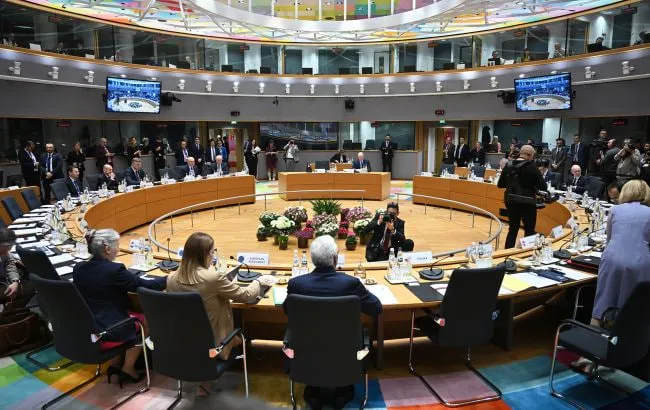
The European Union cannot agree on whether to appoint a separate representative for negotiations with Russia or who exactly should fill that role. Some European countries view such an initiative as a dangerous trap set for the EU by Vladimir Putin. Others, however, are convinced that Europe should become more actively involved in the negotiation process as the U.S. gradually steps back from its role as the primary mediator.
This is reported by Politico.
Details of the disagreements among bloc members were made public ahead of an informal meeting of EU foreign ministers.
Why part of the EU is opposed
The countries that most actively support Ukraine oppose the idea of a mediator. Their argument: Kremlin leader Vladimir Putin is not serious about a ceasefire, and appointing an envoy could undermine the pressure of sanctions on Russia.
"We don’t want Ukraine to perceive us as someone who is pressuring them to make compromises," said Polish Foreign Minister Radosław Sikorski at the GLOBSEC conference in Prague.
The foreign ministers of Estonia and Lithuania expressed a similar position. They warned of a potential “trap” set by the Kremlin—to drag out negotiations and extract concessions from the EU.
EU High Representative for Foreign Affairs and Security Policy Kaja Kallas is also skeptical of this idea.
Who could become the negotiator
Despite the resistance, a list of candidates is already being drawn up. Among those mentioned behind the scenes are:
European Council President António Costa;
Finnish President Alexander Stubb;
former ECB President Mario Draghi;
former President of Finland Sauli Niinistö;
former European Commission President Jean-Claude Juncker.
Stubb confirmed his interest in the position but set a condition: he would agree only at the request of EU leaders and only after a firm ceasefire is achieved.
Ministers will discuss this as early as this week
The issue of direct contact with Russia is on the agenda of an informal meeting of EU foreign ministers, which will take place in the coming days.
According to the Financial Times, they will discuss not only candidates but also what Europe will demand from post-conflict relations with Russia and what conditions it sets for the start of negotiations.
Some governments fear that the discussion itself will only highlight divisions within the bloc.
Putin signed a law regarding participants in the war against Ukraine.
Russia has stated that it intends to appeal to the UN International Court of Justice regarding the situation of the Russian-speaking population in the Baltic states.
What Xi and Putin agreed onin Beijing and whether there were any breakthroughs — Reuters.
Prior to this, on May 19, the Chinese Foreign Ministry denied a Financial Times report that Xi Jinping had allegedly spoken negatively about Russian President Vladimir Putin’s actions during talks with Donald Trump.
Earlier, Trumppointed out the catastrophic consequences of a mistake in choosing a successor — Fortune.
On May 18, U.S. President Donald Trump posted an AI-generated image in which he is allegedly depicted alongside an “alien” and accompanied by “space forces.”


