
Finnish port of Hanko studies alien species brought into the Baltic Sea by ships
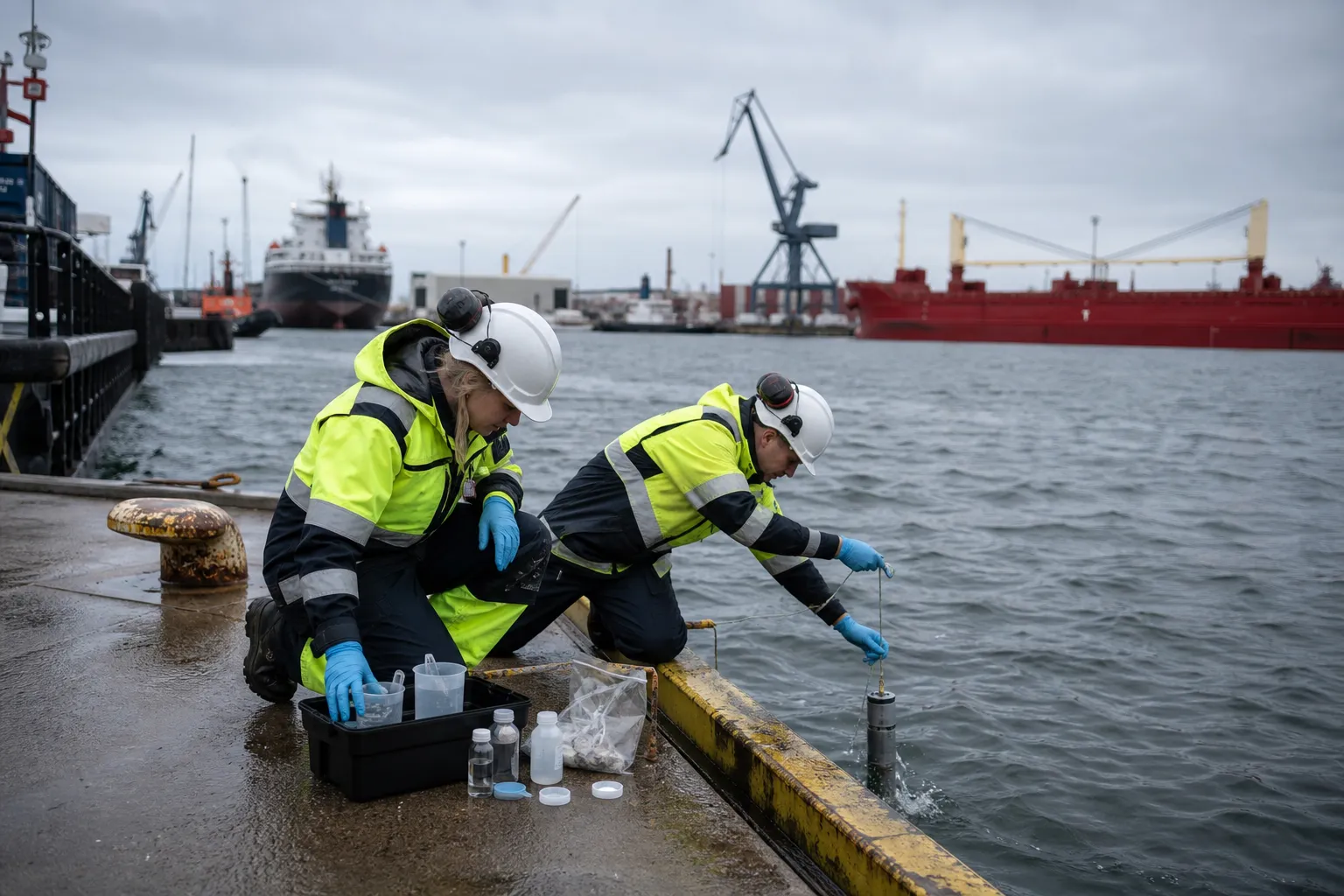
At the Finnish port of Hanko, specialists from the Finnish Environment Institute are studying marine alien species that enter the Baltic Sea mainly aboard cargo ships. Samples collected in the port waters contained both native species and organisms introduced from other regions of the world, YLE News reports.
Researcher Okko Outinen and senior researcher Riikka Puntila-Dodd surveyed Finnish ports throughout the summer and mapped the distribution of alien species. They collect plankton using nets, bottom sediment with a special grab sampler, and crustaceans and fish with traps submerged in water. Such research helps assess the distribution of organisms, their lifestyles, habitats and potential harm to the ecosystem.
Findings in bottom sediment
Samples from Hanko revealed blue mussels and mud clams. According to Puntila-Dodd, a large number of mud clams is a sign of good seabed condition: they are sensitive to oxygen deficiency and serve as food for many fish.
At the same time, the samples contained red mud tube worms of the genus Marenzelleria. They originate from North American estuaries and entered the Gulf of Finland with ships' ballast water in the 1990s. These worms have spread across the Baltic Sea from the Polish coast to Oulu.
More current news is available on the UA.News Telegram channel Telegram.
In various areas, researchers also find predatory water fleas, mud crabs, round gobies, isopod crustaceans and invasive snails. Some organisms found in Hanko can only be definitively identified in winter after examination under a microscope.
Prevention instead of eradication
In the 2020s, estuarine and predatory amphipods have been found in Finnish ports. Specialists are particularly concerned about a large predatory amphipod that threatens native algae-dwelling amphipods, small crustaceans important to the marine ecosystem.
The Finnish Environment Institute has been monitoring ports since 2012. Once an alien species enters the sea, it is virtually impossible to combat it, as the sea cannot be drained or poisoned. An important preventive measure is an international agreement on the treatment of ballast water, signed by 86 countries. At the same time, organisms can be carried on ship hulls, so specialists recommend cleaning the bottoms of ships and small boats, ropes and other equipment.
According to YLE News, most new alien species that have arrived in Finland's marine areas have already become established in the ecosystem. The volume of maritime cargo transportation has increased tenfold compared with the 1950s, and around 2,000 cargo ships now operate in the Baltic Sea.


