
In Gaza, displaced people are forced to use improvised toilets — Al Jazeera English
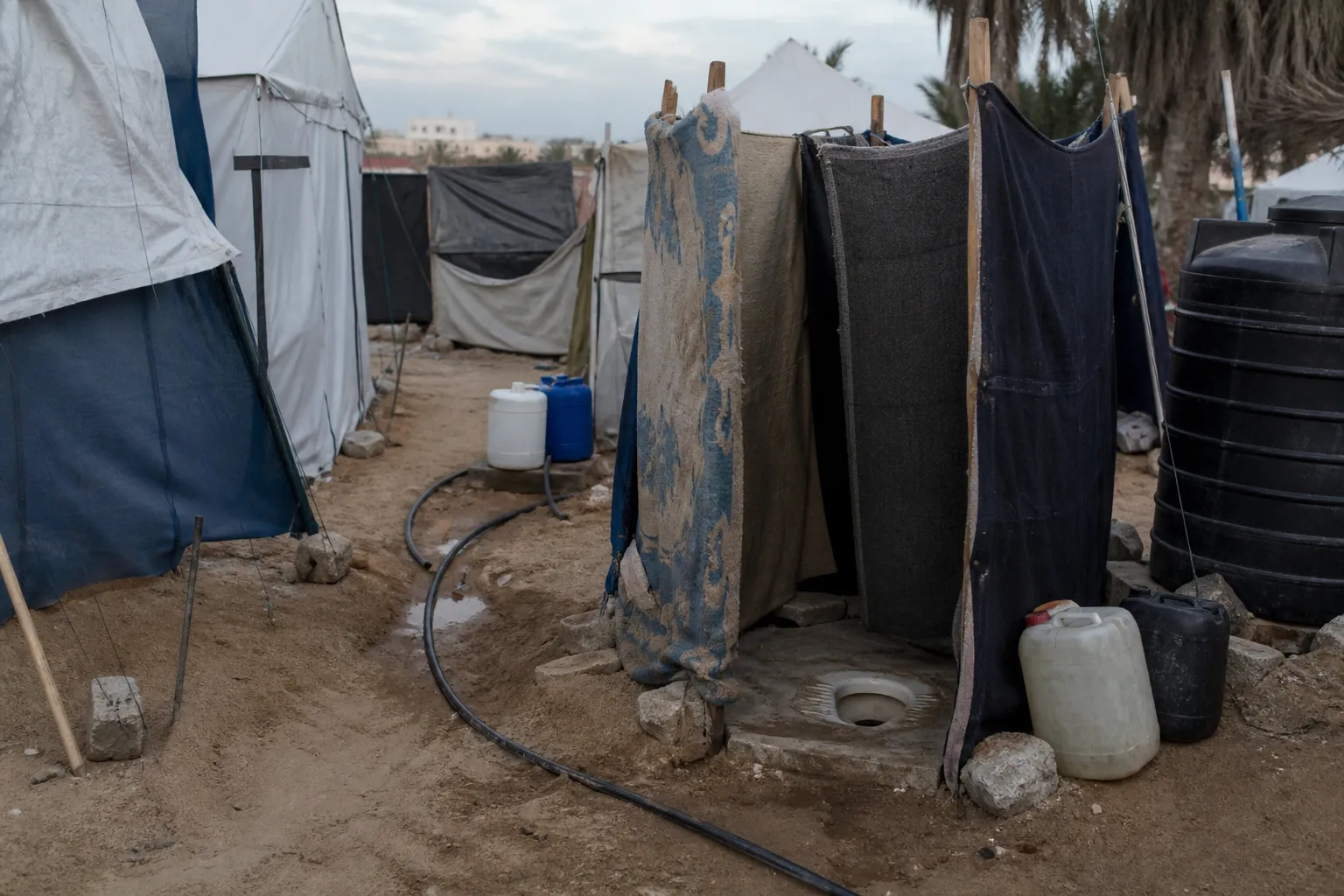
Displaced residents of the Gaza Strip are setting up improvised toilets in tent camps due to a lack of sanitary equipment, while access to basic sanitation remains limited for many. This is reported by Al Jazeera English.
Thirty-three-year-old Iman Mahmoud Shamia has been living in a tent in Deir el-Balah with her husband and five children after several displacements. According to her, camp residents set up a shared toilet with the help of a worker who digs underground drainage pits. It offers almost no privacy, and her husband, who has late-stage lung cancer, finds it difficult to use such a facility.
Shortage of sanitary equipment
Economist Omar Salyoha linked the crisis to a sharp reduction in supply due to restrictions on the import of toilets, sanitary goods, and materials for water supply and sewage systems. According to Al Jazeera, a used toilet seat costs between 1,500 and 2,000 shekels — approximately $503 to $671.
Due to high prices, some residents cut holes in plastic chairs and use them over a layer of sand. Mohammad al-Hanouti, a resident of the Al-Bureij refugee camp who lives in an unfinished apartment without proper utilities, said he is saving money for a toilet. He estimates that basic needs for setting up the home will cost about $2,000.
More current news is available on the UA.News Telegram channel Telegram.
Salyoha noted that more than nine out of 10 Palestinians in Gaza have been displaced, and more than 90% of homes have been damaged or destroyed during the war. According to him, 20 to 25 people may use one shared toilet in camps, and separate facilities for men and women are usually unavailable.
Health risks
Many camps lack full sewage networks, so residents dig pits near shared toilets to drain wastewater. In some areas, water is available only once a week, while hand sanitizer and toilet paper have become luxuries for people.
An assessment by the UN Office for the Coordination of Humanitarian Affairs in the areas of water, sanitation and hygiene found that only half of those surveyed in Gaza have access to basic sanitation. About 60% of respondents had been exposed to wastewater or human waste within 10 metres of where they live.
Ahmed al-Jedi, an emergency department doctor at Al-Aqsa Martyrs Hospital, reported recurring cases of diarrhoea, skin diseases, and gastrointestinal illnesses among children, women, and elderly people. He linked these cases to difficult conditions in tents, limited opportunities for hygiene, and the proximity of toilets to residential areas.


