
Three species of non-parasitic lampreys have been discovered in Queensland
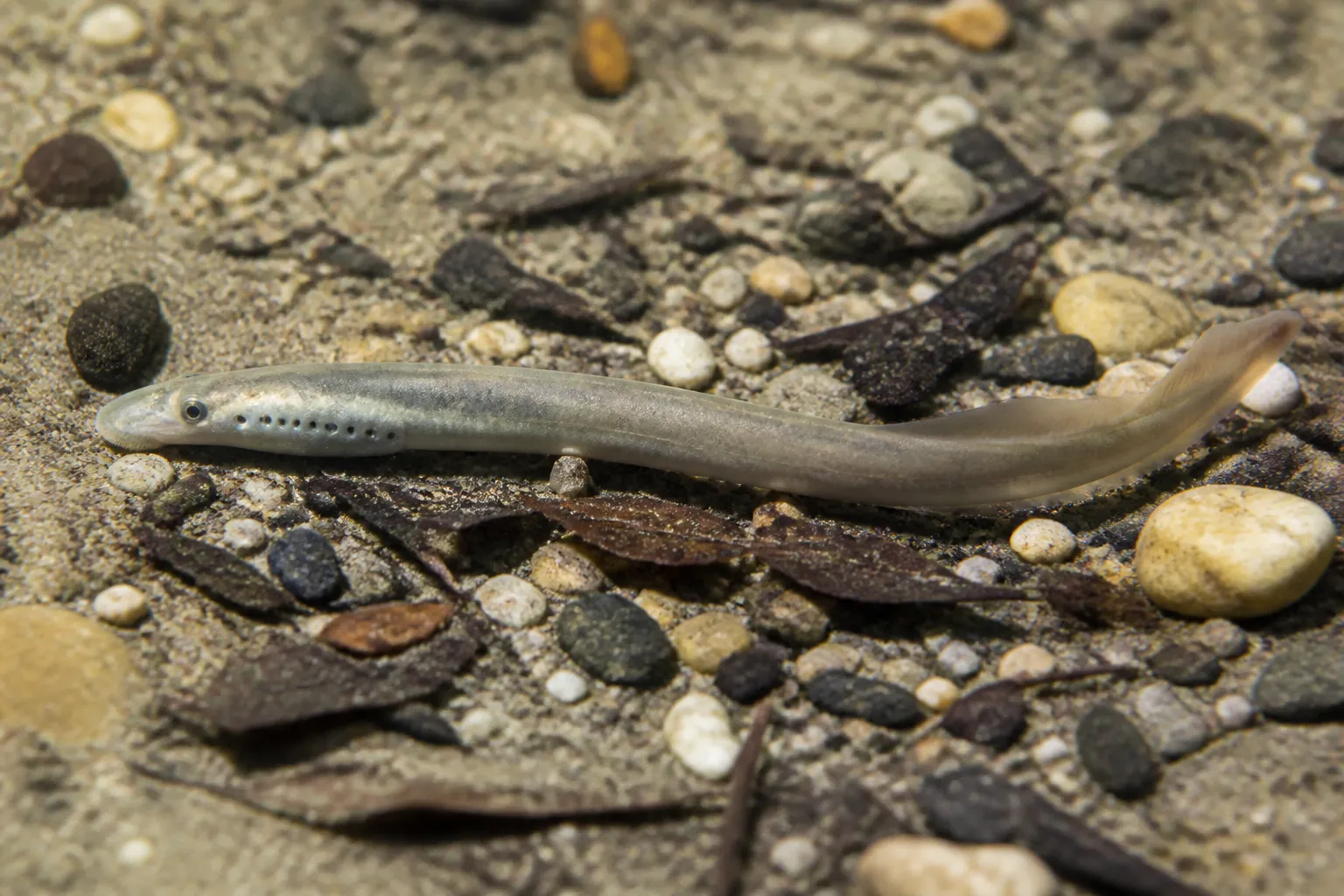
Scientists in the Australian state of Queensland have discovered three species of non-parasitic lampreys. One of them—the Australian stream lamprey, Mordacia praecox—feeds on organic debris at the bottom of streams rather than on the blood or tissues of other fish. Its discovery was officially confirmed only in 2024, according to ABC News Australia.
The Australian stream lamprey, which is about 10 centimeters long, was discovered by chance in 2022 by Luke Carpenter-Bundhu, an aquatic ecologist at Griffith University. This happened on K’gari Island, where the researcher was studying the impact of the Black Summer wildfires on the local ecosystem.
Afterward, Carpenter-Bundhu began working with David Moffatt, chief scientist at the Queensland Department of Environment, Tourism, Science, and Innovation. Subsequently, the researchers discovered two more, slightly smaller species of non-parasitic lampreys, which have not yet been named.
Moffatt first encountered these lampreys in the Noosa River basin in 2004. At first, he assumed they were isolated individuals from Australia’s southern states. However, over the next eight years, the fish were found repeatedly, confirming the presence of a local population.
For more breaking news, follow the UA.News Telegram channel.
Researchers have also found tropical lampreys on the Sunshine Coast, specifically under the Bruce Highway, as well as further north—as far as Rockhampton. According to Carpenter-Bundhu, such fragmented freshwater populations are vulnerable because the fish cannot migrate between streams across the ocean or over land.
The Australian stream lamprey is listed as a species at risk of extinction. There are five known species of lampreys in the Southern Hemisphere. Scientists received a grant of 90,000 Australian dollars from the Queensland government to expand their research and determine the range of these inconspicuous animals.
Lampreys are considered living fossils. According to Carpenter-Bundhu, their anatomy has remained virtually unchanged for 150 million years. They also serve as model organisms for genetic research on vertebrates.


