
In Mangheim, Catholics and Protestants share the same church
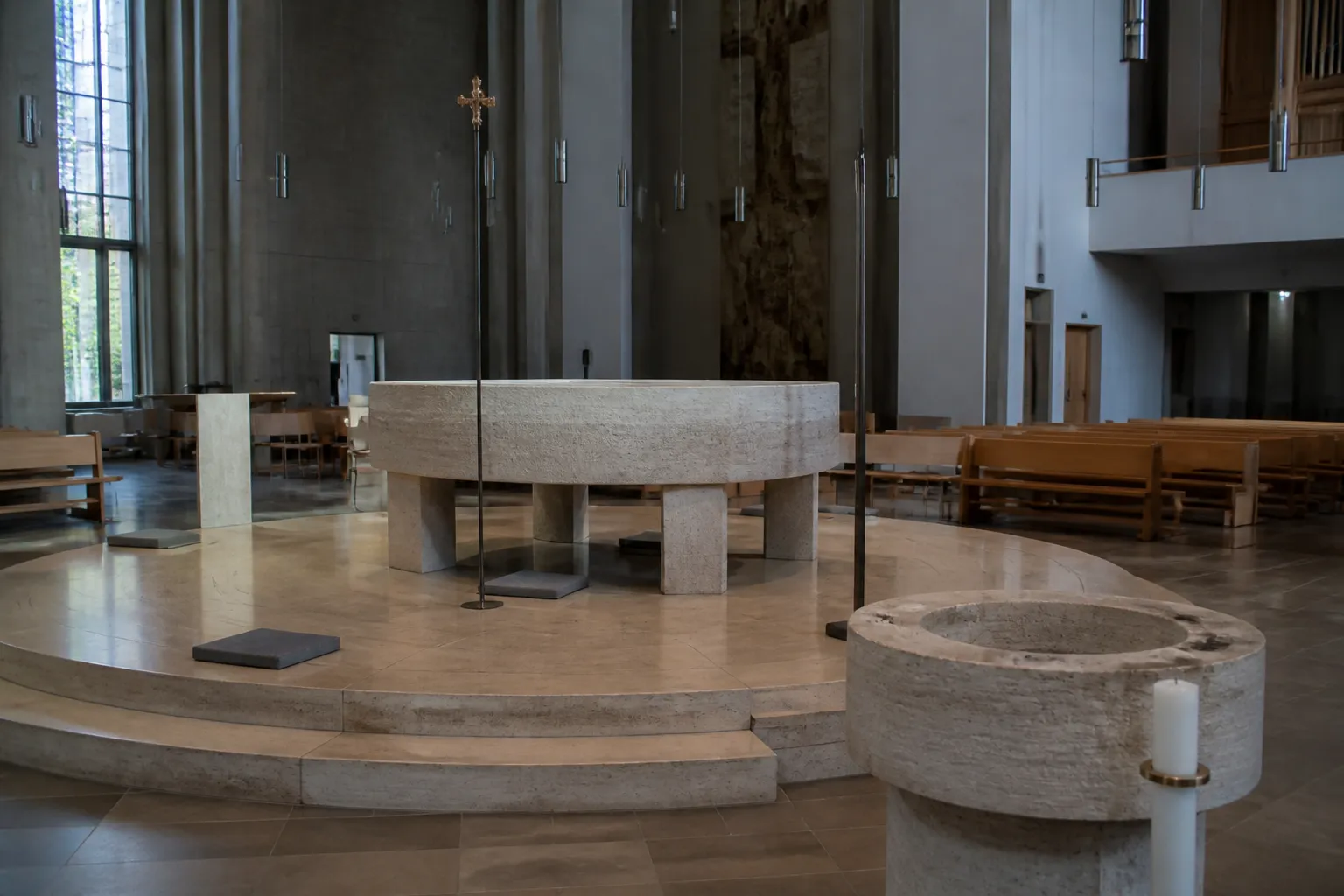
At St. Pius Church in the Neuestheim district of Mannheim, Germany, the Catholic and Protestant congregations hold services under one roof and take turns using the shared altar. The collaboration began with ecumenical services in 1970, and became permanent after the neighboring Protestant Church of St. Thomas suffered significant water damage in late 2009 and was deemed beyond repair, according to Deutsche Welle.
This temporary solution evolved into a long-term collaboration between the two congregations. During the renovation of St. Pius Church from 2020 to 2022, the former altar site was converted into a baptismal font, which became a shared focal point for both churches. The new altar in the central part of the church was crafted from the red sandstone of the Protestant altar and the gray travertine of the Catholic one. The stone was crushed and cast into a single structure.
In Germany, there are 65 so-called Simultankirchen—churches for shared use. Their shared use was introduced by secular rulers following the Reformation and the division of the church. Today, this practice—common in hospital and airport chapels—is increasingly spreading to regular parish communities as well.
Read more breaking news on the UA.News Telegram channel.
Among the factors driving these decisions are a decline in the number of church buildings, a decrease in church membership, financial constraints, and a shortage of clergy. According to official church statistics for 2025, there were 24,500 Catholic and 21,100 Protestant churches in the country—ranging from small chapels to cathedrals. Every year, dozens of churches are decommissioned, demolished, or converted.
A similar partnership exists in Kiel, where, since 1980, the Catholic parish of St. Birgitta and the Protestant Thomas Congregation have been sharing a church and parish hall. In Mannheim, the St. Pius Church also houses the Cyril and Methodius Eastern Church Center: once a month, a Catholic liturgy of the Byzantine Rite is celebrated there. Following the renovation, an area featuring icons and a symbolic iconostasis was set up near the entrance.


