
More than 5,000 people remain missing after floods in Nepal
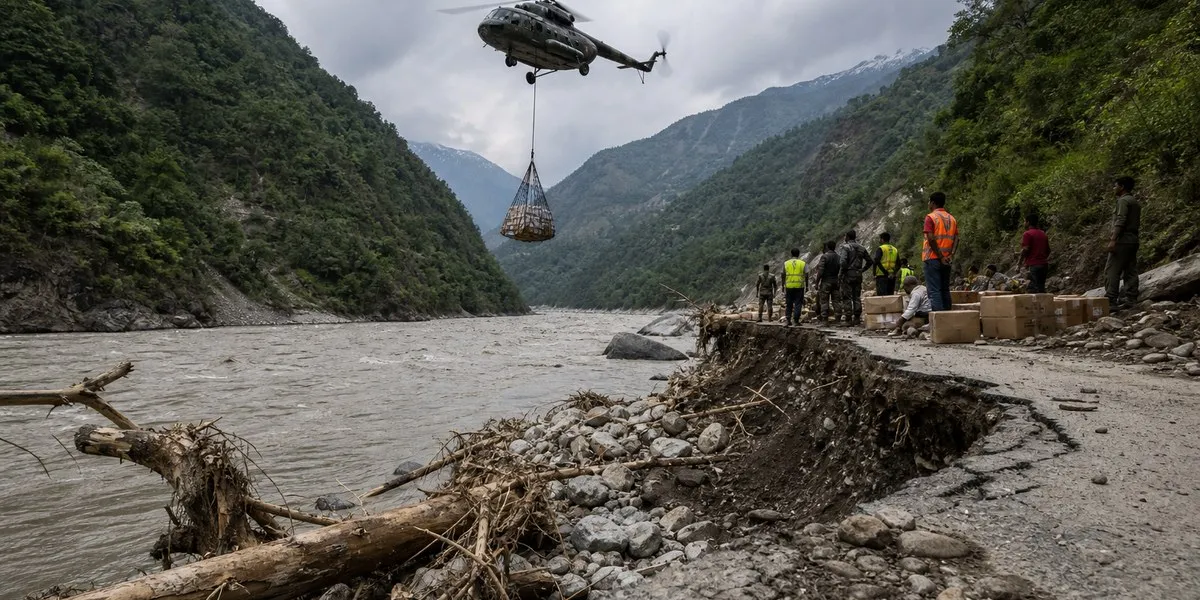
In Nepal, in the Bhote Koshi–Trishuli river corridor near the border with China, more than 5,130 people are considered missing after sudden floods. Nearly three weeks after the disaster, authorities are shifting from search-and-rescue operations to providing aid and reconstruction, Deutsche Welle English reports.
At least 1,386 bodies have been found in five affected districts. Those missing include 587 foreigners and around 900 workers in hydropower tunnels and other energy facilities. According to authorities, the floods were caused by a glacier collapse. The water destroyed communities and swept away more than a dozen hydropower facilities.
Destroyed villages and isolated communities
In the upper reaches of the rivers, entire settlements disappeared within minutes. Destroyed roads and bridges have complicated access to some areas, so rescuers and humanitarian services are delivering essential supplies by helicopter. Searches continue in flooded tunnels and along silt-covered banks.
More current news is available on the UA.News Telegram channel Telegram.
In Uttargaya, in Rasuwa district, at least 618 houses were washed away or buried, and 877 people have still not been found. Only 12 bodies have been recovered there. Chameli Gurung, deputy head of the local municipality, said that public land in the area has either been washed away or become unsafe, forcing relatives of the dead to travel to the Pashupati Aryaghat cremation complex in Kathmandu. Local authorities are considering renting private land to accommodate displaced families until winter.
Reconstruction will cost billions
According to local media reports, a preliminary rapid assessment of damage and recovery needs put reconstruction needs at approximately 723.3 billion Nepalese rupees — about $4.78 billion. According to the RDNA assessment, nearly two-thirds of this amount may be needed to restore energy and transport networks, as well as educational institutions.
Hydropower provides almost all of Nepal's electricity and has become an important source of the country's export revenue. According to Reuters, India approved electricity exports to Nepal for 18 hours a day at least until December 31. Nepal has also sought assistance from the Loss and Damage Fund supported by the UN Framework Convention on Climate Change and says it intends to build infrastructure more resilient to climate risks.


