
Panama discusses new rules to protect sharks and rays
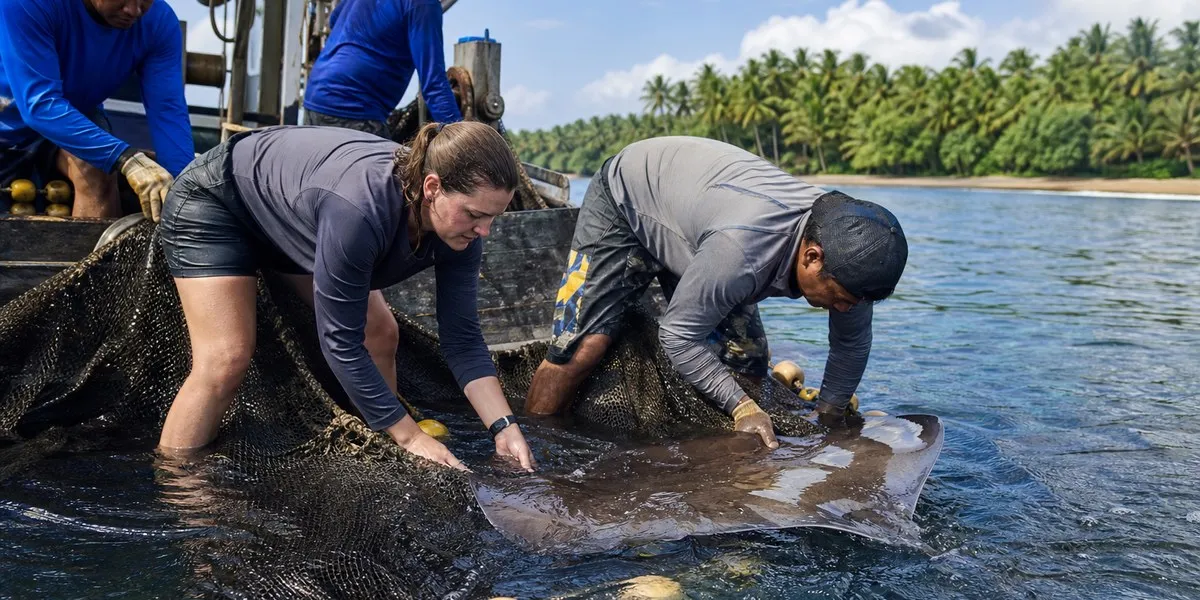
In Panama, parliament is discussing a bill on restoring and conserving shark and ray populations. The document proposes banning the targeted catch of these animals, imports of their meat and processed products, and requiring fins to remain naturally attached to the animal’s body until landing. Mongabay reports.
The initiative also provides for tougher penalties and for data on catches and violations to be entered into the National Fisheries Information and Statistics System. Lawmaker Valkiria Chandler, who supports the bill, said that live individuals whose survival can be guaranteed must be released immediately. Animals that cannot be released are proposed to be kept on board for inspection; their weight must not exceed 10% of the total catch weight, and they may be used only for crew consumption.
Biologists on fishing vessels
At the same time, programs to reduce bycatch—the accidental capture of marine animals in nets—are operating in the country. On industrial fishing vessels, biologists teach crews how to release sharks, rays and other animals, and collect scientific data. Marine biologist Yehudi Rodríguez, a professor at the University of Panama and head of the non-governmental organization Shark Defenders, works on vessels of Promarina S.A. every two weeks.
Before releasing an animal, Rodríguez records the coordinates of the bycatch location, identifies the species, takes measurements, collects a tissue sample and attaches a tag. If the rescued animal is in critical condition, it is released immediately. Over five years, nearly 407 animals, including sharks and rays, were tagged as part of the project. According to a Promarina representative, the bycatch share on the company’s vessels is 1.2%, while Marine Trust certification requires it not to exceed 5%.
More current news is available on the UA.News Telegram channel Telegram.
Rodríguez notes that in small-scale fishing using gillnets, sharks can account for between 30% and 60% of bycatch. About 95% of these sharks, in her assessment, are newborns and juveniles of the critically endangered scalloped hammerhead shark.
Lack of data and illegal trade
Experts support the bill but point to a lack of scientific data on shark and ray populations, including their breeding grounds. Rodríguez believes that the 10% limit on shark bycatch is unrealistic and should take into account the type of fishing gear, fishing areas and season.
In January 2026, Panama established an indefinite zero export quota for all shark and ray species listed under CITES. At the same time, in April 2026, 162 kilograms of dried shark fins were seized at Hong Kong airport in a shipment from Panama. According to the report, the fins likely belonged to protected species, and their value was estimated at about $280,000.
Another area of work has been the Shark-Free Ceviche initiative of the MarViva Foundation. Program participants undergo random DNA testing of their products to confirm that ceviche contains no meat from sharks, rays or other species not recommended for consumption. Thirteen restaurants and companies participate in the program, while inspections cover 51 outlets on Panama’s Pacific coast.


