
Poland Reports a Wave of Fake News Following the Crash of a Russian Rocket
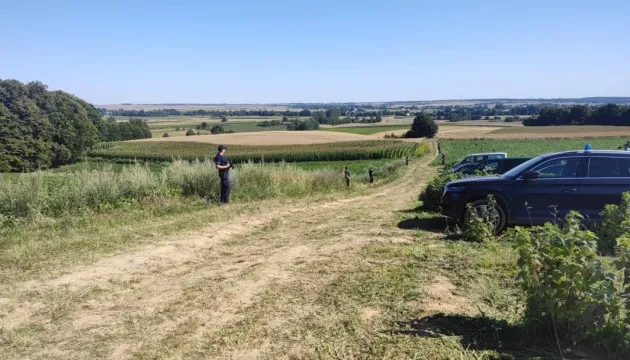
After a Russian Kh-101 cruise missile crashed in the Lublin Voivodeship, fake news began to spread widely in the Polish media. According to the state-run NASK institute, one campaign is directed against Ukraine, while the other aims to undermine trust in the Polish government.
The Polish state institute NASK, which analyzes information threats and conducts fact-checking, reported two large-scale disinformation campaigns following the crash of a Russian X-101 missile in the Lublin Voivodeship. Malgorzata Szumna, head of the narrative analysis and fact-checking team, said that the first wave of fake news is attempting to shift responsibility for the incident onto Ukraine.
According to her, false claims began circulating on social media alleging that Ukraine was to blame for the missile’s appearance on Polish territory. Conspiracy theories have also emerged linking the incident to Ukrainian President Volodymyr Zelenskyy’s recent visit to Lublin. However, the expert emphasized that such claims have no basis in reality. They completely ignore the key fact—that during a massive Russian missile strike on Ukraine, one of the cruise missiles violated Polish airspace.
In addition, baseless claims are circulating online about an alleged Ukrainian provocation and attempts to drag Poland into the war. “Such claims do not correspond to reality,” emphasized Malgorzata Szumna.
She also noted that these reports contradict the official position of the Polish authorities. Polish Prime Minister Donald Tusk stated that the object that fell in the Lublin Voivodeship is most likely a Russian Kh-101 cruise missile.
According to the NASK representative, the second disinformation campaign is now directed against the Polish government. Conspiracy theories are being actively spread on social media claiming that the authorities are allegedly deliberately exaggerating the threat to intimidate the population and manipulate public opinion. “Such narratives can undermine trust in state institutions and hinder an effective response to crisis situations,” Shumna noted.
The expert also warned that this incident will likely continue to be exploited by Russian propaganda to heighten tensions within Polish society and deepen divisions.
NASK urged citizens to approach information with caution, verify it only against official statements from government agencies, and rely on media outlets that engage in fact-checking. Poles are also asked to critically evaluate emotional posts on social media, as these are the most common channels through which disinformation spreads. Malgorzata Szumna, head of the narrative analysis and fact-checking group at the Polish state institute NASK (Scientific and Academic Computer Network—ed.), reported this to the PAP news agency.
A Ukrainian expert has traveled to Poland to assist in identifying the Russian missile that fell in the Lublin Voivodeship. Preliminary reports suggest it is an X-101 cruise missile.
Polish authorities did not warn residents about the missile threat.
In Poland, during the massive Russian missile attack on Ukraine on the night of July 29–30, an air raid alert was issued in part of the Lublin Voivodeship. After the attack ended, a crater approximately 10 meters in diameter and debris from an unidentified object were discovered in a field near the villages of Tarnava-Kolonia and Tokary.
Polish Defense Minister Władysław Kosiniak-Kamysz commented on the missile strike in the Lublin Voivodeship and stated that the country is very close to the war zone. According to him, hostilities are ongoing near Poland, but some people have already stopped taking this threat seriously.
Poland scrambled fighter jets and activated sirens in response to Russia’s massive attack on Ukraine.


