
More than 1,700 car dealerships have closed in Russia over the past eight months
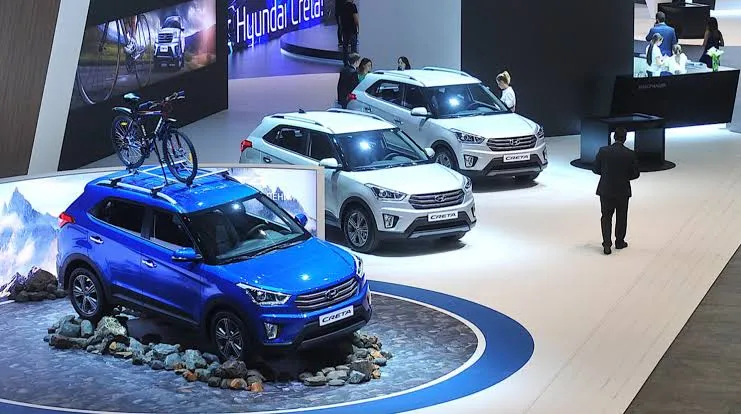
The Russian car market has seen a significant decline in the number of dealers. Between January and August 2026, 1,728 companies exited the market, while only 1,222 new entrants were registered. Experts attribute this situation to weaker demand and high interest rates on auto loans.
This year in Russia, car dealerships began closing en masse. According to Kontur.Focus, 1,728 car dealerships exited the market between January and August 2026. During the same period, 1,222 new companies emerged. In other words, the number of businesses that closed was 41.4% higher than the number of new market entrants.
The situation is noticeably different from last year. In the first eight months of 2025, the number of car dealerships in Russia, on the contrary, increased by 1.8%, or 26 companies. Now the trend has reversed.
The number of dealers is declining in the largest regions
The decline in the number of car dealerships is noticeable even in regions where the automotive industry has traditionally been well-developed. Fewer companies are now operating in Moscow and the Moscow Region, the Krasnodar and Primorsky Krais, Tatarstan, and other regions that are considered leaders in terms of the number of companies in this sector.
At the same time, the number of dealerships has increased slightly in some regions. One new dealership was added in Dagestan, Chechnya, Adygea, and Kabardino-Balkaria. Two new dealerships were added in Udmurtia, the Tomsk Region, and Ingushetia.
The number of companies increased by three in Kirov Oblast and Kalmykia. Four new participants each appeared in Novgorod Oblast and the Jewish Autonomous Oblast. Among the regions mentioned, the largest growth was recorded in Buryatia. There, the number of companies in the industry increased by six in just eight months. However, these local changes do not offset the overall market decline.
Why Car Dealerships Are Closing
Anastasia Mokshantseva, an analyst at Kontur.Focus, attributed the situation to two main reasons: declining demand for cars and high interest rates on auto loans. Due to expensive loans, it is more difficult for buyers to purchase a car on an installment plan or with borrowed funds. As a result, some people are postponing their purchase or giving up on it altogether.
For dealers, this means fewer customers and, consequently, lower sales volumes. “The market situation is challenging due to declining consumer demand and high interest rates on auto loans,” Mokshantseva stated.
According to her, the market downturn may continue in the near future. “The downturn will continue. As a result, only large companies capable of defending their positions will survive,” the analyst noted. The point is that large dealer networks have more resources to operate in an environment of expensive credit and weaker demand. It may be more difficult for small companies to sustain their businesses under such conditions.
What’s Happening in the Auto Market
The decline in the number of dealers is occurring against the backdrop of a general slowdown in Russia’s auto market. When demand falls, sellers are forced to compete for fewer buyers. At the same time, they have to cover expenses for staff, rent, warehouses, and other business needs.
High interest rates on loans add to the problems. This is particularly significant for the auto market, as a significant portion of vehicles are sold using borrowed funds. As a result, a dealer may have cars on the lot but be unable to find enough buyers willing to take out a loan at a high interest rate.
Fewer new companies are opening
An important indicator is not only the number of closures but also the number of new companies. In the first eight months of 2026, 1,222 new automotive market participants were registered in Russia. This is 506 fewer companies than the number that ceased operations.
Thus, the market is not merely losing individual dealers—fewer new players are entering than are leaving. By comparison, in January–August 2025, the number of auto dealers increased by 26 companies, or 1.8%. In other words, over the course of a year, the situation has shifted from a slight increase to a noticeable decline.
Large dealers may strengthen their positions
As some companies exit the market, large dealership networks may gain more customers and a larger share of sales. At the same time, this will depend on future trends in demand, lending, and car prices. An analyst at Kontur.Focus forecasts a further decline in the number of market participants and believes that large organizations will have an advantage under such conditions.
So far, statistics show a clear difference between the number of companies that have closed and those that have opened. From January through August 2026, 1,728 dealers left the Russian auto market, while 1,222 opened. If this trend continues, the structure of the Russian auto market may gradually change: some small dealers will exit the business, and the majority of sales will be concentrated in large dealer networks. This is reported by “Izvestia,” citing data from “Kontur.Focus.”
The Main Intelligence Directorate of the Ukrainian Ministry of Defense has identified another 38 vessels which, according to intelligence reports, Russia is using to circumvent international sanctions. They fly the flags of 12 countries and territories, including Barbados, Panama, Turkey, Liberia, Hong Kong, and Palau.




