
Russia has proposed destroying Starlink along with its satellites
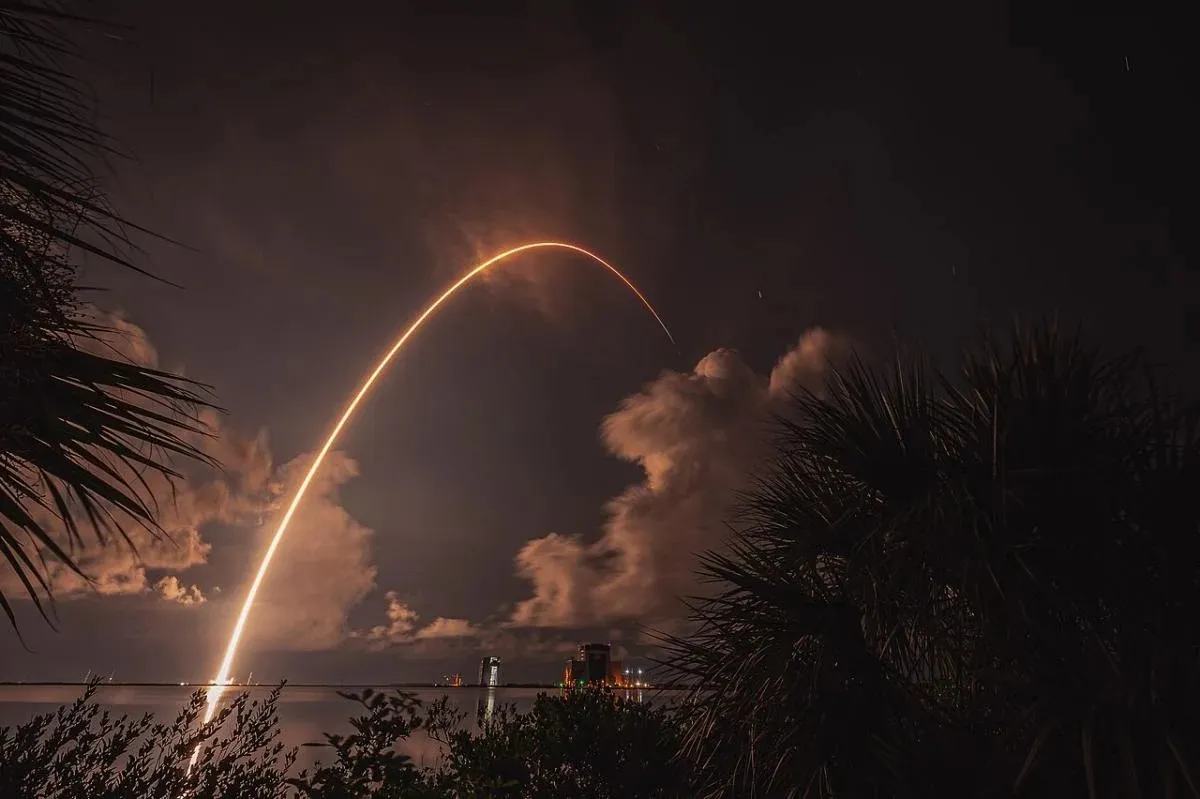
Sergey Glazyev, an academician of the Russian Academy of Sciences, and Russian oligarch Konstantin Malofeev proposed several ways to disable the Starlink satellite system used by Ukraine. Among the options they mentioned were electronic jamming, the physical destruction of satellites, the creation of space debris, and even a nuclear explosion in space.
In Russia, radical scenarios for combating the Starlink satellite network are being discussed. Sergey Glazyev, an academician at the Russian Academy of Sciences, and Konstantin Malofeev, founder of the Russian publication “Tsargrad,” have made their proposals public. The military portal “Military” reports on this. The authors are considering not just one specific method of attack, but a whole range of options. They propose targeting ground-based infrastructure, disrupting communication channels and data centers, and attempting to disable the satellites themselves.
Glazyev and Malofeev believe that one option could be cutting communication cables on the ocean floor. In their view, this could create problems for the operation of part of the Starlink infrastructure. Another approach involves directly targeting the satellites. The authors note that Starlink consists of a large number of satellites in low Earth orbits. Therefore, as they themselves write, it is impossible to disable only those satellites that are above Ukraine. They propose targeting the system as a whole.
“Starlink is not a geostationary satellite constellation; its satellites move at tremendous speeds. It is impossible to destroy only the satellites over Ukraine. The entire system must be targeted,” the authors state.
Electronic Warfare Against Starlink
One option they are considering is the use of Russian electronic warfare systems. Specifically, they refer to the “Volna-Kupol-Garant” complex. According to “Military,” this system is designed to jam Starlink satellite communications. Its antennas can direct jamming signals at a satellite located over a specific territory. The Ukrainian military has previously reported the destruction of such systems. In June 2026, satellite imagery showed that a “Volna-Kupol-Garant” system had been destroyed in occupied Kerch. In August, the destruction of a similar system in the Gelendzhik area was reported.
According to “Military,” a single such system can create jamming over an area of about 20 square kilometers. At the same time, the manufacturer does not disclose all of the system’s technical specifications.
Glazyev and Malofeev also mention the Russian “Tobol” and “Tirada-2” systems, as well as the “Alabuga” project. They view these as tools that could potentially be used to jam satellite communications over large areas. At the same time, “Military” notes that there is no evidence these systems have been used for this specific purpose in actual combat.
They Want to Shoot Down Satellites
The Russian authors did not stop there. Among the options they mention is the physical destruction of satellites. To this end, they propose using the A-235 “Nudol” and S-500 “Prometheus” anti-missile systems. The authors claim that such systems can engage targets in low Earth orbit.
At the same time, they acknowledge the cost issue. Using an expensive anti-satellite missile against a single satellite may not be cost-effective, especially given the number of satellites in a satellite network. “But spending one expensive anti-missile on a single cheap satellite is an insane luxury,” the article states. Therefore, the authors are considering an even more ambitious scenario—creating a large amount of debris in orbit.
They Want to Create Space Debris
Glazyev and Malofeev propose using special platforms that could release a huge number of metal components into orbit. The idea is for these objects to collide with satellites at high speed and damage their electronics or solar panels. Such a scenario could trigger the Kessler effect. This is a hypothetical chain reaction in which debris from collisions damages other satellites, which in turn create new debris, causing the amount of space debris to continue growing.
This is precisely the effect the authors of the Russian proposal are counting on. “Most of the impacts will be on the solar panels. Their debris will also become our weapon, which will finish off the constellation,” they assert. The problem with this scenario is that the consequences could extend far beyond the fight against Starlink. Space debris does not distinguish between military and civilian satellites. Therefore, damaging a large number of satellites would pose a threat to other satellite systems.
Another option: a nuclear explosion in space
The most radical proposal involves the use of a nuclear weapon in space. The authors suggest that such an explosion could damage the electronics of a large number of satellites in low Earth orbit. This applies not only to Starlink, but in fact to any satellites that would be within the blast radius.
In other words, such a scenario would potentially affect Russian satellites as well. However, judging by their statements, this does not deter the authors. “We can no longer strike at Musk’s brainchild at no cost to ourselves. But this is still the best option. The legal consequences of such a decision are insignificant,” they write.
At the same time, the proposed scenarios remain just that—proposals from the authors. There is no confirmation that Russia has decided to implement such a plan or is already preparing a specific operation to destroy Starlink.
Starlink Is Important for Ukraine
Russia is already attempting to counter the Ukrainian military’s use of Starlink. In July, there were reports of Russian electronic warfare systems being used to jam Starlink satellite communications, which are utilized, in particular, by Ukrainian unmanned aerial vehicles. Ukraine, for its part, has also raised the issue of using Starlink during operations against Russian targets. Satellite communications remain a vital component of Ukraine’s military infrastructure.
Therefore, Russia views Starlink not merely as a civilian satellite internet service, but as a technology that is significant for Ukraine’s military capabilities. At the same time, the complete physical destruction of the satellite network is a much more ambitious task than temporarily jamming the signals of individual terminals. Starlink’s very structure involves a large number of satellites constantly moving in orbit. That is precisely why even the authors of the Russian proposal speak of the need to target the entire system.
For now, however, the scenarios published by Glazyev and Malofeyev remain merely their proposals. Some of the described capabilities pertain to systems whose specifications are limited in open sources, while others involve large-scale scenarios with potentially global consequences. The military portal “Military” reports on this.




