
In Tallinn, graffiti appeared over city-commissioned murals — ERR News
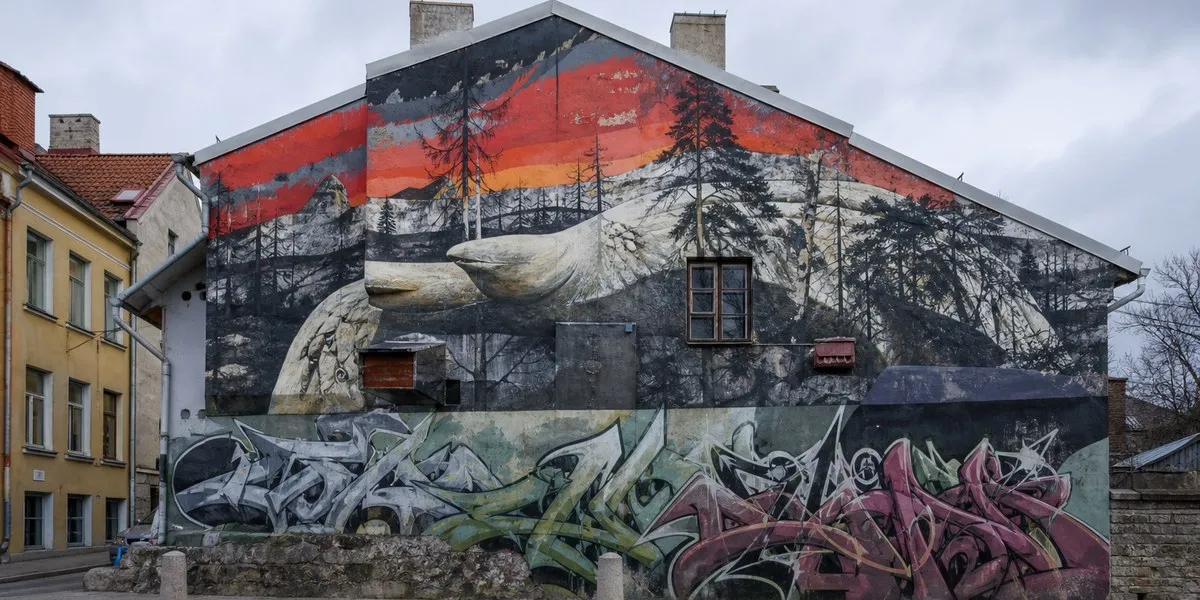
In Tallinn, Estonia, an unknown author or authors using the PASR tag have painted graffiti over several murals commissioned by the city authorities to reduce the amount of graffiti. An English-language inscription saying that the city is losing this war appeared on one of the walls in the Kadriorg district. This was reported by ERR News.
Murals and graffiti
In summer, Tallinn authorities announced that five artists were to create six murals as part of an anti-graffiti campaign. However, in recent months, the PASR tag has appeared on several city-approved works. According to ERR, a possible motive may have been the painting over of a wall that previously featured a PASR work, but there is no official confirmation of this.
On Weizenbergi Street, which leads to the presidential palace, graffiti was painted over a mural depicting Swan Lake. On another wall on Poska Street, the city authorities have already painted over the inscription. Põhja-Tallinn district head Manuela Pihlap said that the district government filed a police report the day after one of the murals was covered with graffiti. The authorities plan to clean the wall, paint it white, and are considering creating a new work on it.
More current news is available on the UA.News Telegram channel Telegram.
Tartu’s approach
Sirla, a street artist and organizer of the Stencibility festival, said that Tallinn and Tartu take different approaches to street art. According to her, Tallinn links official murals to the fight against graffiti, while Tartu supports the creation of new works in public space rather than painting over old ones.
Erge Jõgela, an urban design specialist at Tartu City Government, noted that the city considers street art a form of free self-expression and does not rush to remove works unless they are clearly obscene, criminal, or placed in an inappropriate location. Tartu has also designated city walls as available surfaces for Stencibility festival participants: artists choose the wall and the content of the work themselves. Private property owners have also reported an increase in graffiti on private buildings.




