
Turkey discusses nuclear deterrence — Cyprus Mail
Turkey is discussing the issue of nuclear deterrence amid the war with Iran and uncertainty over the region’s future security. In February 2026, Foreign Minister Hakan Fidan said that if Iran acquires nuclear weapons, Turkey may inevitably have to join a regional nuclear arms race, Cyprus Mail reports.
President Recep Tayyip Erdogan expressed dissatisfaction as early as 2019 that some states possess missiles with nuclear warheads while Turkey does not have access to them. The publication notes that the issue of Ankara’s nuclear capabilities has a much longer history than Erdogan’s rule.
Historical nuclear context
In 1955, Turkey became the first country to conclude an agreement with the United States on peaceful nuclear cooperation under the Atoms for Peace initiative. From 1959, US nuclear weapons began arriving in the country as part of NATO’s Cold War nuclear policy, while Turkish military personnel received training for a nuclear role under US control.
In 1966, a secret US State Department memorandum reported Turkey’s interest in developing an “atomic bomb.” The document also mentioned uranium exploration and Ankara’s concerns regarding safeguards for future nuclear facilities.
In the 1980s, Turkish companies were involved in covert procurement of equipment for Pakistan’s uranium-enrichment programme, according to US diplomatic cables. At the same time, this information does not prove the existence of a continuous secret nuclear weapons programme in Turkey.
More current news is available on the UA.News Telegram channel Telegram.
Civil nuclear energy
Turkey is a party to the Treaty on the Non-Proliferation of Nuclear Weapons, accepts International Atomic Energy Agency safeguards and the Additional Protocol. The country currently has no industrial capacity for uranium enrichment or spent nuclear fuel reprocessing.
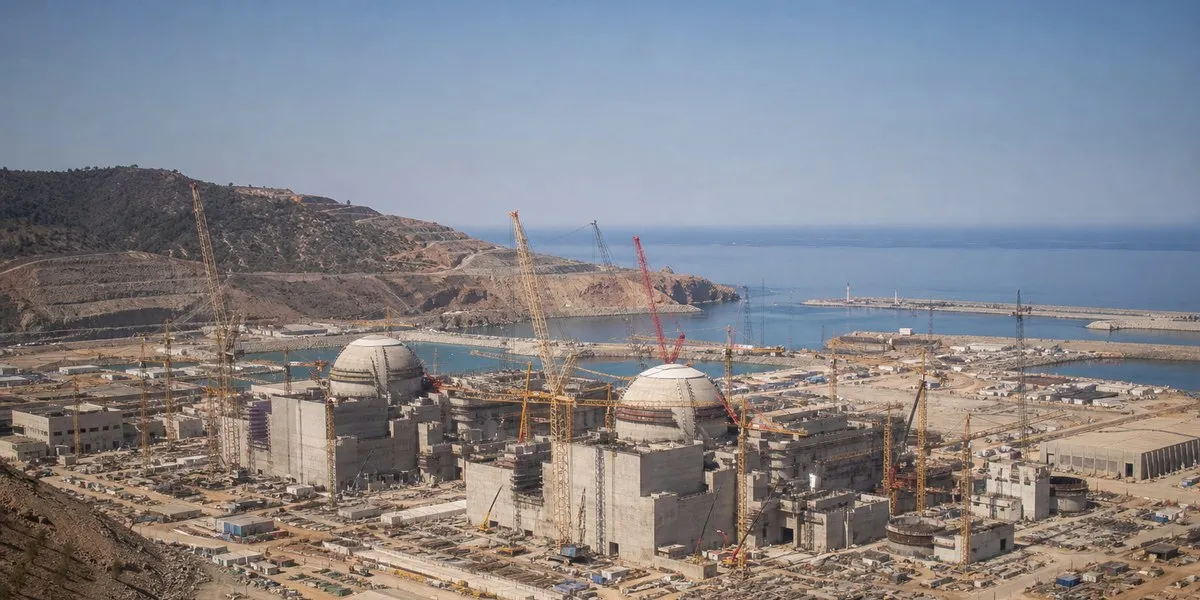
In 2010, Ankara agreed with Russia’s state corporation Rosatom to build the Akkuyu Nuclear Power Plant, Turkey’s first commercial nuclear power station. The project is civilian, and its technologies and fuel largely depend on the Russian side, but it helps Ankara develop nuclear expertise.
That same year, Turkey and Brazil mediated the Tehran Declaration, an attempt to reach an agreement with Iran on a nuclear fuel swap. Ankara also seeks to build more reactors, localize production and reduce dependence on foreign suppliers. In 2025, the Turkish Navy announced the NUKDEN programme to develop a nuclear submarine and master advanced nuclear technologies.
Cyprus Mail notes that none of these steps alone indicates a nuclear weapons programme. At the same time, the development of nuclear and missile technologies expands Turkey’s strategic options, especially if confidence in NATO’s nuclear umbrella weakens.




