
Ukraine has provided its partners with a list of more than 100 Russian ballistic weapons manufacturers
Ukraine has provided its international partners with a list of more than 100 Russian companies that manufacture ballistic missiles and their components. Kyiv expects that in September and October, these companies will be added to the allies’ sanctions lists, and that controls will be tightened on foreign components that Russia uses in its weapons.
Ukraine is calling on its partners to simultaneously impose sanctions against Russian enterprises involved in the production of ballistic missiles. This involves not only restrictions on the factories themselves but also cutting off Russia’s access to foreign components, materials, and equipment.
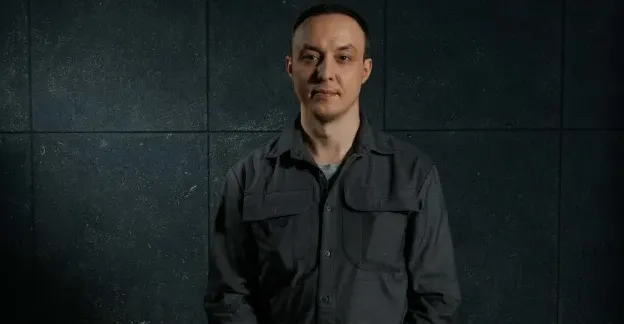
Vladislav Vlasyuk, the Ukrainian President’s Representative for Sanctions Policy, announced this at a press conference in Kyiv. According to him, the Ukrainian side has already provided its partners with the relevant materials. The list includes more than 100 Russian companies that, according to Ukraine, are involved in the production of ballistic weapons.
“One of the first points of our plan is maximum synchronization. That is, in all jurisdictions of countries imposing sanctions against Russia, all Russian manufacturers of ballistic weapons identified by us must be sanctioned,” Vlasyuk said.
Ukraine expects its allies to add all identified companies to their sanctions lists as early as September–October 2026. Kyiv believes that simultaneous restrictions in various countries will make it significantly more difficult for Russia to circumvent sanctions and continue missile production.
Ukraine wants to cut off Russia’s access to foreign components
A separate component of the Ukrainian plan is controlling foreign technologies and components that end up in Russian weapons. Vlasyuk noted that foreign-made electronic components continue to be found in Russian missiles, particularly the “Iskander-M” and missiles for the S-400 systems. He listed the United States, Japan, Germany, Taiwan, France, the United Kingdom, and Switzerland as the countries of origin for such components.
According to him, navigation and guidance systems are particularly important for Russian ballistics. These include, in particular, the “Kometa” satellite navigation system and autonomous inertial guidance systems. “Ballistics is the most demanding field in terms of product quality and performance. The main critical elements are the “Kometa” satellite navigation system and autonomous inertial guidance systems, which utilize foreign microelectronics,” Vlasyuk emphasized.
Ukraine is proposing that its partners strengthen export controls. In some cases, Kyiv wants to introduce licensing requirements or even completely ban the supply of sensitive components to third countries, through which they could ultimately end up in Russia.
In other words, it is not just a matter of banning the sale of parts directly to Russian companies. Ukraine wants to disrupt the schemes whereby the necessary technologies first end up in other countries and are then shipped from there to Russia.
Materials and equipment may be affected
The Ukrainian side has also prepared a list of critically important materials and substances necessary for Russian missile production. It includes more than 10 items. Among them, Vlasyuk mentioned ammonium perchlorate, aluminum powder, and tungsten. Separately, Ukraine is drawing its partners’ attention to numerically controlled metalworking machines.
Such equipment is needed by the Russian military-industrial complex to produce various components. Therefore, Kyiv proposes restricting not only finished products but also everything necessary for the operation of defense enterprises. According to Vlasyuk, stricter export controls could directly impact Russia’s ability to produce new missiles.
“Kinetic sanctions” against the Russian military-industrial complex
The Ukrainian plan involves more than just economic restrictions. Vlasyuk also used the term “kinetic sanctions”—the term used in Ukraine to describe strikes against facilities of the Russian military-industrial complex.
As an example, he cited the “Kamensky Plant,” which manufactures components for rocket fuel. Thus, the Ukrainian strategy involves applying simultaneous pressure on the Russian defense industry through various means.
On the one hand, this involves sanctions and export controls. On the other, it involves physically striking facilities that directly support Russia’s missile program. The goal of this approach is to make it as difficult as possible for Russia to produce and use ballistic missiles.
Ukraine Urges the EU Not to Wait Until October
Separately, Vlasyuk spoke about negotiations with the European Union. According to him, the EU is already working on the 22nd sanctions package, a significant portion of which will be directed against the Russian military-industrial complex and ballistic missile production. At the same time, Ukraine believes it is not worth waiting for a major package until the end of October.
Kyiv is proposing that its European partners first adopt a separate package specifically targeting Russian ballistic missiles, and only then supplement the sanctions with new restrictions. “The major 22nd package won’t be ready until at least the end of October. We would like them to adopt the next interim package—specifically to counter ballistic missiles—as early as September, and then another one, for example, in October,” Vlasyuk explained.
He noted that Ukraine, the United Kingdom, and Canada are already using an approach involving smaller sanctions packages. According to Kyiv, this allows for a faster response to new information about the Russian defense industry and for cutting off specific supply channels.
In this way, Ukraine aims to intensify pressure on the Russian missile industry on several fronts simultaneously. This involves sanctions against more than 100 companies, controls on foreign electronics, restrictions on the supply of critical materials and equipment, as well as strikes against enterprises in the Russian defense-industrial complex. Vladislav Vlasyuk, the President’s Representative on Sanctions Policy, announced this at a press conference in Kyiv.
Beijing has stated that it will take retaliatory measures in response to the expansion of U.S. secondary sanctions against Chinese companies that cooperate with Iran.


