
The Portuguese government is pushing ahead with labor market reforms despite opposition from trade unions – Reuters
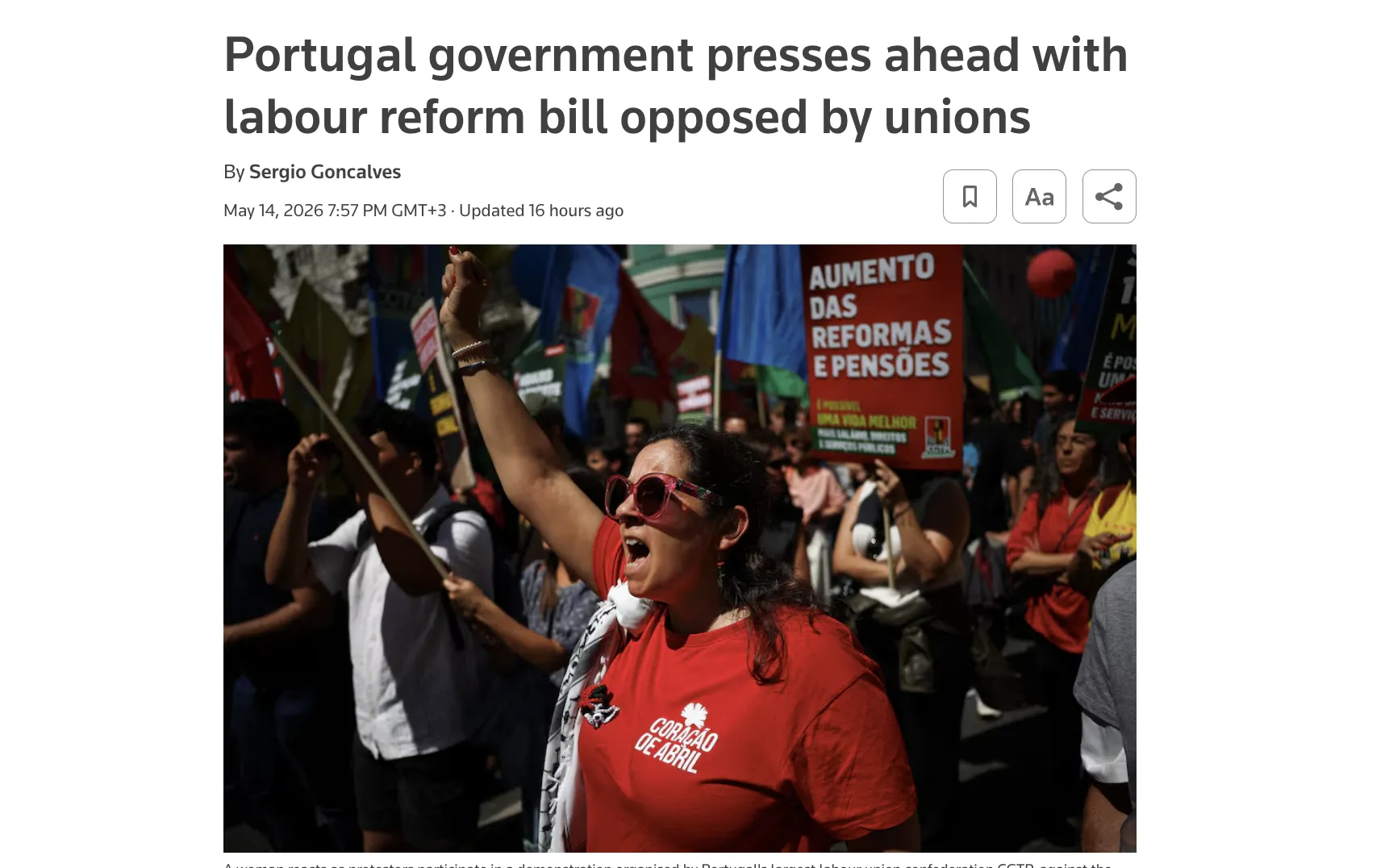
The Portuguese government, which is led by a center-right minority, has moved forward with labor market reforms by introducing a revised bill following the collapse of negotiations with labor unions. The cabinet is counting on parliamentary support, particularly from far-right parties.
Reuters reported this on May 15.
The revision of more than 100 articles of the labor code, which began in September, is a key element of the government’s program to boost productivity and growth.
Mandatory negotiations between the government, employers, and trade unions lasted nearly nine months but ended last week without an agreement.
Unions accused the government of favoring employers at the expense of workers’ rights by introducing rules that increase job insecurity.
Labor Minister Maria do Rosário Ramalho told reporters that Portugal has the second-strictest labor laws among the countries of the Organization for Economic Cooperation and Development, which “has led to the current levels of low productivity, low wages, and even poverty among workers,” a situation that must be changed.
The European statistical office Eurostat estimates labor productivity in Portugal per hour worked at 80.5% of the EU average, which is the fifth-lowest result.
Among the most controversial measures, the reform calls for simplifying dismissals for just cause, granting companies the right to deny reinstatement to employees in cases of unlawful dismissal provided compensation is paid, and lifting restrictions on outsourcing.
André Ventura, leader of the far-right Chega party, stated that he is ready for negotiations but demands a reduction in the retirement age, which currently stands at 66 years and nine months, and the restoration of three days of annual leave that were abolished after the country received financial aid in 2011.
“These are two key points on which we will not back down,” he said, without specifying his demand regarding the retirement age.
The third-largest parliamentary force, the Socialist Party, opposed the reform, and its leader, José Luís Carneiro, stated that it would “open the door to the law of the jungle” in the labor market without improving productivity.
Read also:
The EU has deporteda record number of Russian citizens.
As a reminder, 67% of Russians support the start of negotiations with Ukraine, according to a poll.
Over the past year, Ukrainians have become even more supportive of the country’s accession to the EU and NATO: 83% support the EU, and 71% support NATO. These are record figures for the entire period of observation, while about 11% and 18%, respectively, oppose membership, according to data from a sociological study prepared by the Razumkov Center at the request of the Kyiv Security Forum specifically ahead of the Munich Security Conference, which will take place on February 13–15.
The Portuguese Parliament has approved restrictions on children’s use of social media


