
Estonia tracks gray crane numbers ahead of autumn migration
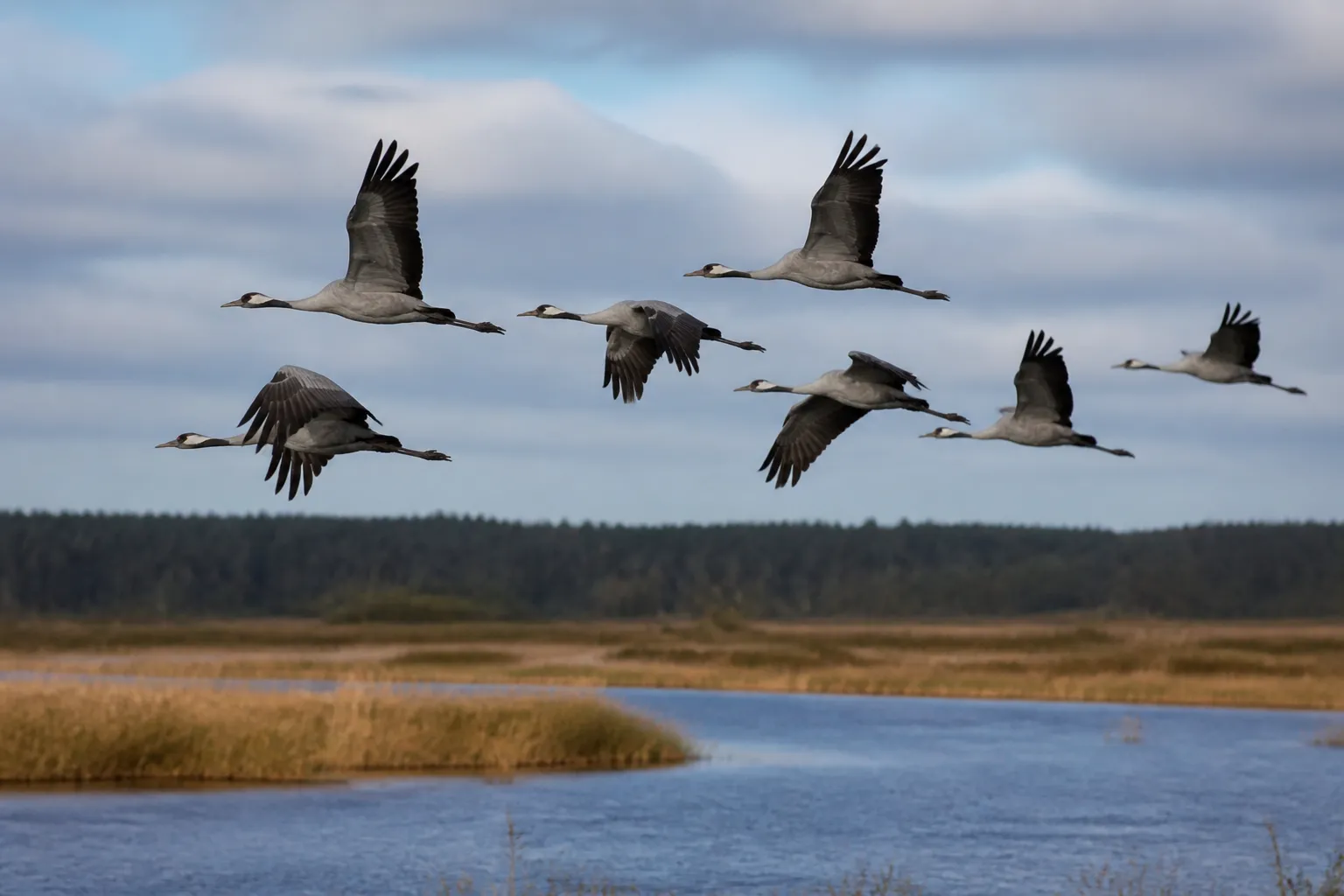
Estonia's Environment Agency, with the help of volunteers, is tracking the number of gray cranes gathering before their autumn migration south. At the end of summer, birds that nested in Estonia join cranes from neighboring countries, including Finland and russia, ERR News reports.
Birds build up energy reserves
Environment Agency specialist Jaak Tammekänd said that before the flight, cranes build up energy reserves and seek to improve their physical condition. When favorable winds and weather set in, they begin moving south.
In summer, gray cranes can often be seen in pairs or groups in open areas, including near cities. Toward the end of the season, the size of such flocks increases significantly. In winter, the birds can be found in certain areas of North Africa, Turkey, southern Spain and as far as China.
More current news is available on the UA.News Telegram channel Telegram.
Where cranes gather
The largest concentrations of gray cranes in Estonia are recorded in the Matsalu area and on the island of Saaremaa in the west of the country. Large groups also gather in Lahemaa and Jõgeva County. In eastern, southeastern and southern Estonia, flocks are closely associated with large bogs and wetlands.
During the day, cranes fly to agricultural land to feed and spend the night in wetlands. Nature enthusiasts can enter data on the birds' locations and numbers into the nature observation app maintained by the agency.
The population of the species Grus grus in Estonia has increased from around 300 in the 1970s to an estimated 7,000–8,000 pairs in recent times. At the start of migration, this number temporarily rises due to birds passing through the country. Cranes usually leave the region by October and begin returning in late February.


