
Estonia marks 87th anniversary of the Molotov–Ribbentrop Pact
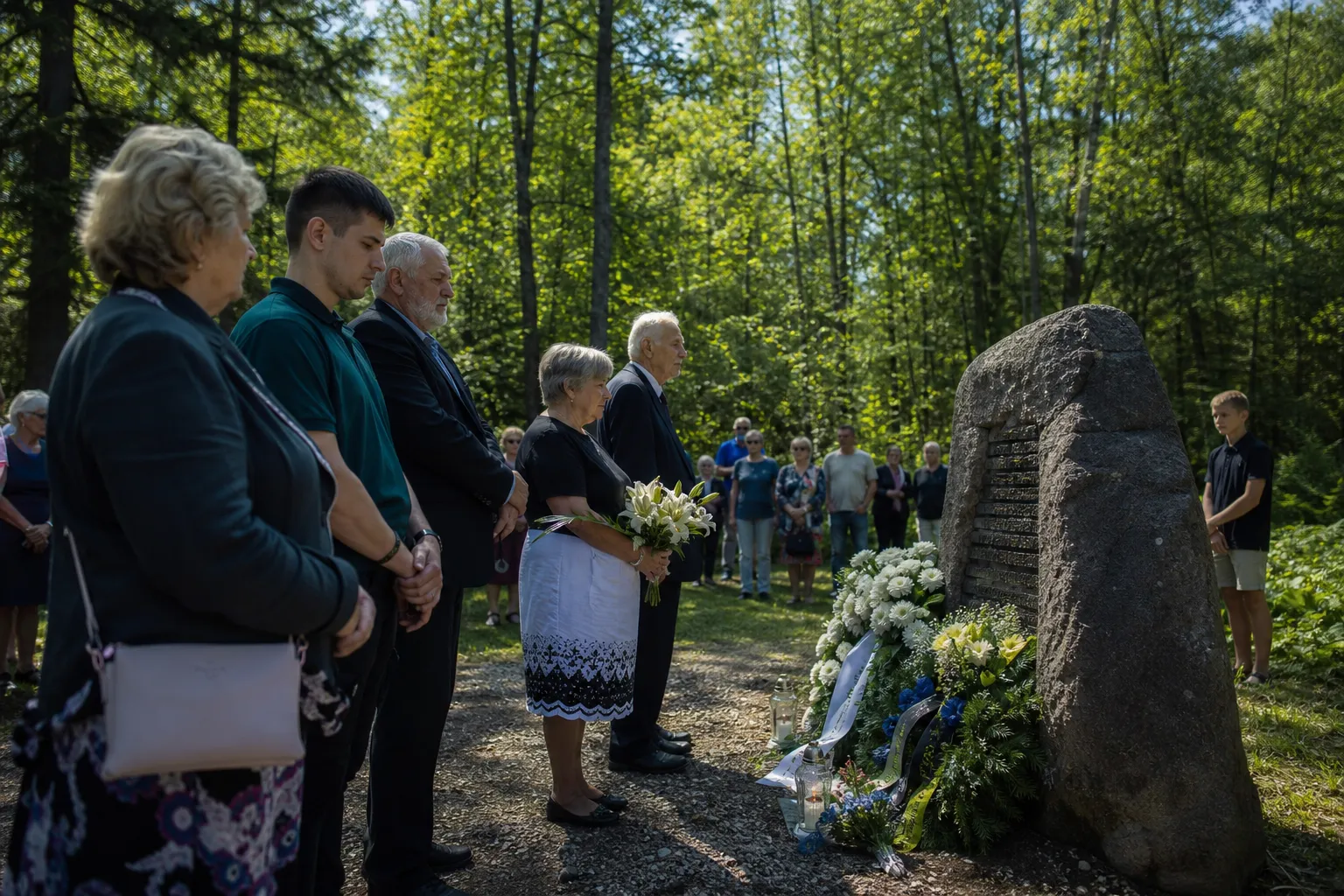
Memorial events marking the 87th anniversary of the signing of the Molotov–Ribbentrop Pact between the USSR and Nazi Germany took place in Estonia on August 23. As ERR News reports, the agreement’s secret protocols divided Central and Eastern Europe into Nazi German and Soviet spheres of influence, with Estonia falling into the Soviet sphere. The agreement paved the way for more than 50 years of Estonia’s occupation.
Events in Tallinn
A public gathering was held in Tallinn’s Hirvepark, one of the important sites of the Singing Revolution in the late 1980s, which led to the restoration of Estonia’s independence. A ceremony was also held at the Memorial to the Victims of Communism in the capital.
Justice Minister Liisa Pakosta said that the European Day of Remembrance for Victims of Totalitarian and Authoritarian Regimes is primarily observed by countries that experienced both German and Soviet occupations. According to her, the Nuremberg Trials punished only one side, while the other escaped responsibility. Pakosta linked this impunity to the current war of the Russian Federation, an aggressor state, against Ukraine.
More current news is available on the UA.News Telegram channel Telegram.
Memories of deportations
About 200 people gathered in Pilistvere, Viljandi County, for a memorial service for victims of communism and Nazism. The event was organized by the Estonian Memento Association and the local parish. Participants also shared personal memories of the deportations of Estonians to Siberia.
Viivi Lemberpuu-Tootmaa, a victim of the March 1949 deportation, said that her family was given half an hour to pack before being sent to Siberia. Arnold Aljase, chairman of the board of the Estonian Memento Association, noted that many deportees never returned to their homeland and remain buried far from their native land.
Memory for young people
Karl Erik Kirss, a representative of the Estonian Student Council Union, stressed that the consequences of the pact and the events of the 20th century also concern today’s young people, as traces of the Soviet era remain visible in the country. Anne Eenpalu, chairwoman of the board of Tallinn Memento, who was born in Siberia to a family of deportees, called for preserving the Estonian language.


