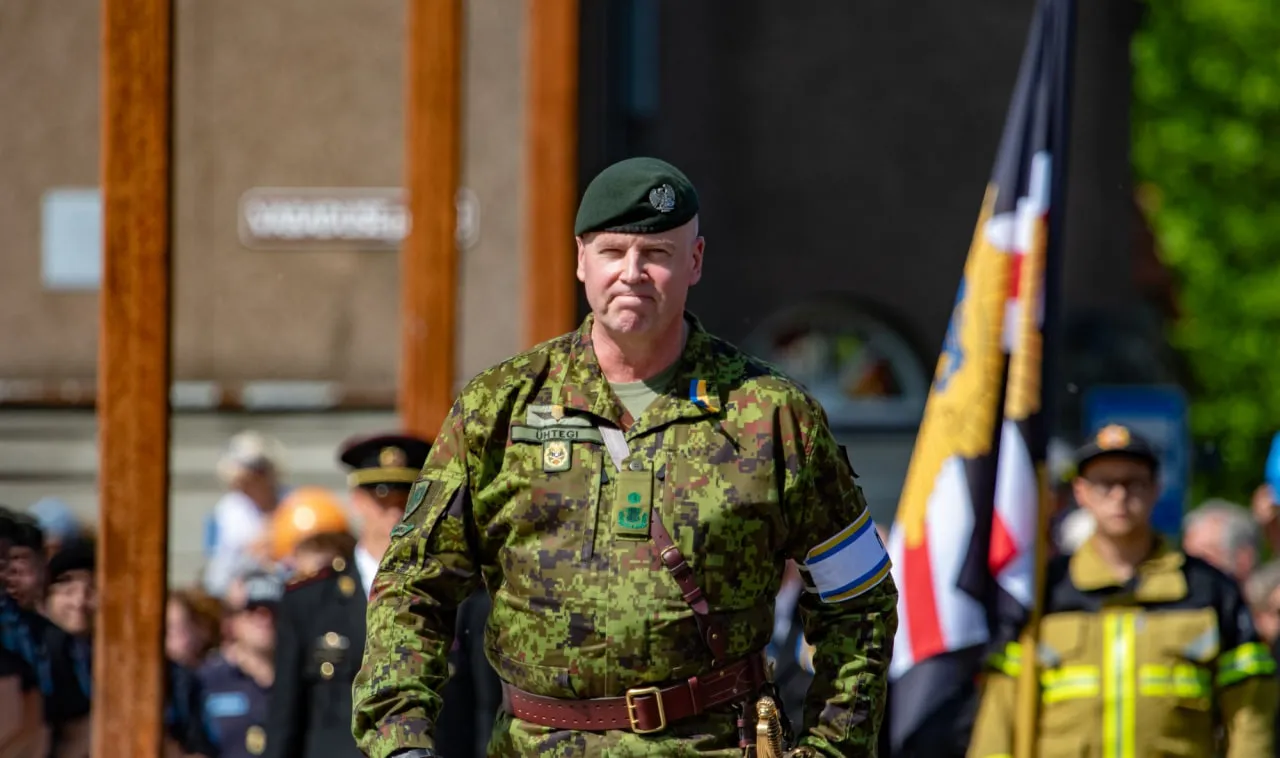
In Estonia, a group of cultural figures and business leaders has proposed nominating Riho Juhtegi, the former commander of the volunteer defense organization Kaitseliit, for the presidency. In their view, the candidate’s military experience is particularly important given today’s security challenges.
They explain their choice by noting that Juhtegi has always been a popular commander, and they appreciate his sense of humor and approachability.
“Estonia now needs a president who is not merely the lowest common denominator of party agreements, but an honest, straightforward, and experienced leader whose word carries weight, who is listened to, and who is trusted. We need a head of state who can call a spade a spade,” the statement reads.
Juhtegi himself confirmed that he is ready to run for president.
“Yes, of course. These are difficult times for Estonia, and every citizen of the republic must be ready to contribute in one way or another to improving the situation,” Riho Juhtegi replied when asked if he was ready to run for president.
According to him, it cannot be said that he has always dreamed of becoming president.
“But since various people have approached me with this proposal, and I have been serving the state for 35 years, I am ready to continue this service. Right now, it’s more like a new challenge,” he said.
It is worth noting that the president in Estonia is elected by parliament.
Estonia plans to allow voluntary service for citizens of NATO countries.
As a reminder, Ukraine and Estonia signed a joint declaration on strengthening cooperation in the fields of security and defense, which provides for expanded collaboration in air defense, the defense industry, and the exchange of expertise. Separately, the parties discussed support for Ukraine, sanctions against Russia, and the path toward EU membership.
Estonia has begun installing the first stationary systems to track drones along the border with Russia. The devices are already operational in several areas and are set to become part of a large surveillance network across the country. This is part of a gradual effort to strengthen control over airspace in border regions due to the growing risk of incidents involving drones.