
Video: Poisonous physalia have swarmed the beaches of France and Spain
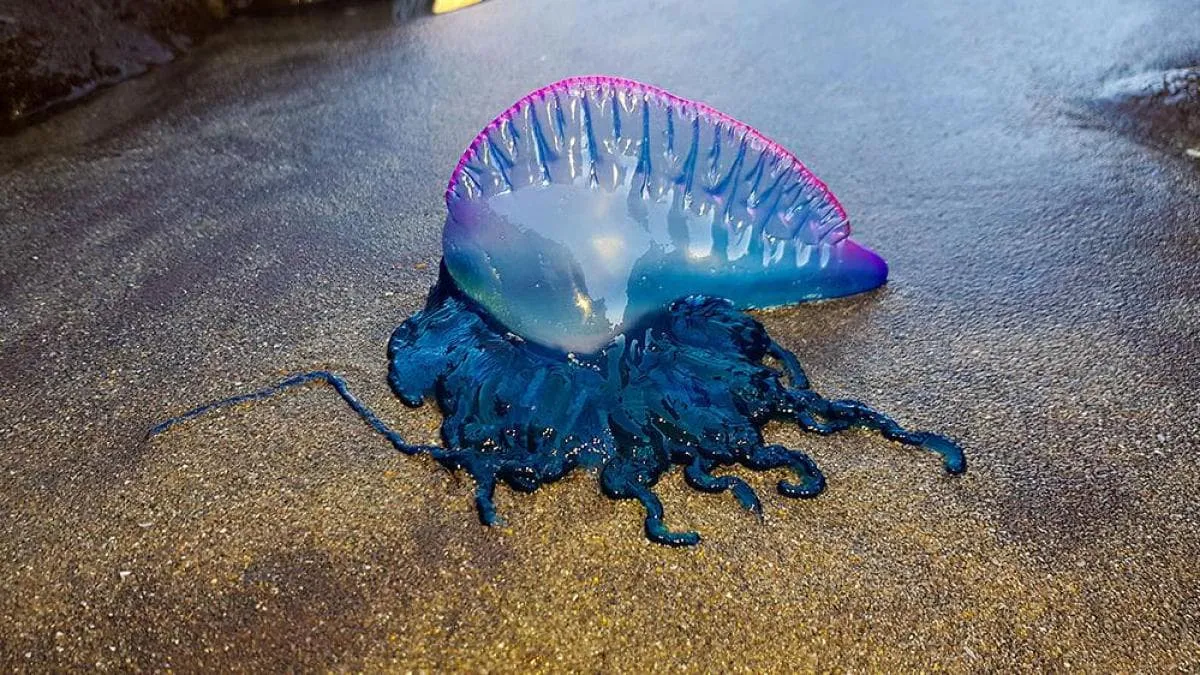
Along the coast of the Bay of Biscay in France and Spain, there has once again been a massive influx of physalia, also known as Portuguese man-of-war. These marine creatures resemble jellyfish but have long, venomous tentacles.
These creatures got their name because their transparent blue, purple, or pink inflated combs resemble the sails of 18th-century Portuguese warships.
Their stinging tentacles extend to a depth of up to 30 meters below the ocean’s surface.
In recent weeks, authorities in regions along the Bay of Biscay in the Atlantic Ocean have warned that this species, which typically inhabits tropical waters, has begun to appear on European beaches.
Along the extensive French Atlantic coast, Portuguese man-of-war have begun appearing every year, rather than once every seven or eight years, noted Elvira Antajan, who studies zooplankton at the state oceanographic institute Ifremer in Arcachon.
“We’re seeing more and more of them. We’re a little puzzled,” she said.
️⚠️ Zurriola Beach in Donostia has become one of the areas most affected by the presence of Portuguese man-of-war.#Donostia #SanSebastián #Zurriola #Gipuzkoa #jellyfish #portugueseman-of-war
#CarabelaPortuguesa@_ivancl pic.twitter.com/dyJyBQkT7z— GipuzkoaGaur (@gipuzkoagaur) August 5, 2026
According to the researcher, over the past two years there have also been massive swarms of smaller specimens, which are likely young Portuguese man-of-war. Rising temperatures in the North Atlantic and the Bay of Biscay may be contributing to their proliferation in this region.
Earlier this month, authorities in Arcachon briefly banned swimming at the city’s main beach due to the appearance of Portuguese man-of-war.
On the Basque coast of France, more than 1,000 cases of stings by these creatures have been reported over the past two weeks.
The Basque city of San Sebastián in northern Spain and the French region of the Atlantic Pyrenees have also issued warnings, and white flags with purple markings have been raised on some beaches to alert swimmers to the danger.
Portuguese man-of-war stings are not usually fatal, but about 10 percent of those stung require hospital treatment. Among the incidents this summer was a case in which a young woman suffered facial scars, as well as an incident in which an experienced lifeguard had to be rescued by colleagues after he encountered one of these creatures during a morning swim.
Each Portuguese man-of-war consists of a colony of clones that work together to swim, hunt for prey, and reproduce, sometimes moving in groups of more than 1,000 individuals.
According to the Royal Society of Wildlife Trusts, in recent years these creatures have been spotted as far north as Cumbria in the United Kingdom.
This is reported in a Financial Times article.
Jellyfish have knocked out 3.2 GW of nuclear power capacity in France.
Photo: A unique ancient Roman mosaic depicting the head of Medusa was discovered in Spain


