
Ukrainian farmers are unable to sell part of their harvest due to Russian attacks and drought
Attacks by Russia, the aggressor state, on civilian vessels have effectively brought operations at ports in the Odesa region to a halt; until recently, these ports accounted for about 90% of Ukraine’s agricultural exports. Due to limited export capacity, farmers are facing a shortage of funds to complete the harvest and plant winter crops, according to Deutsche Welle.
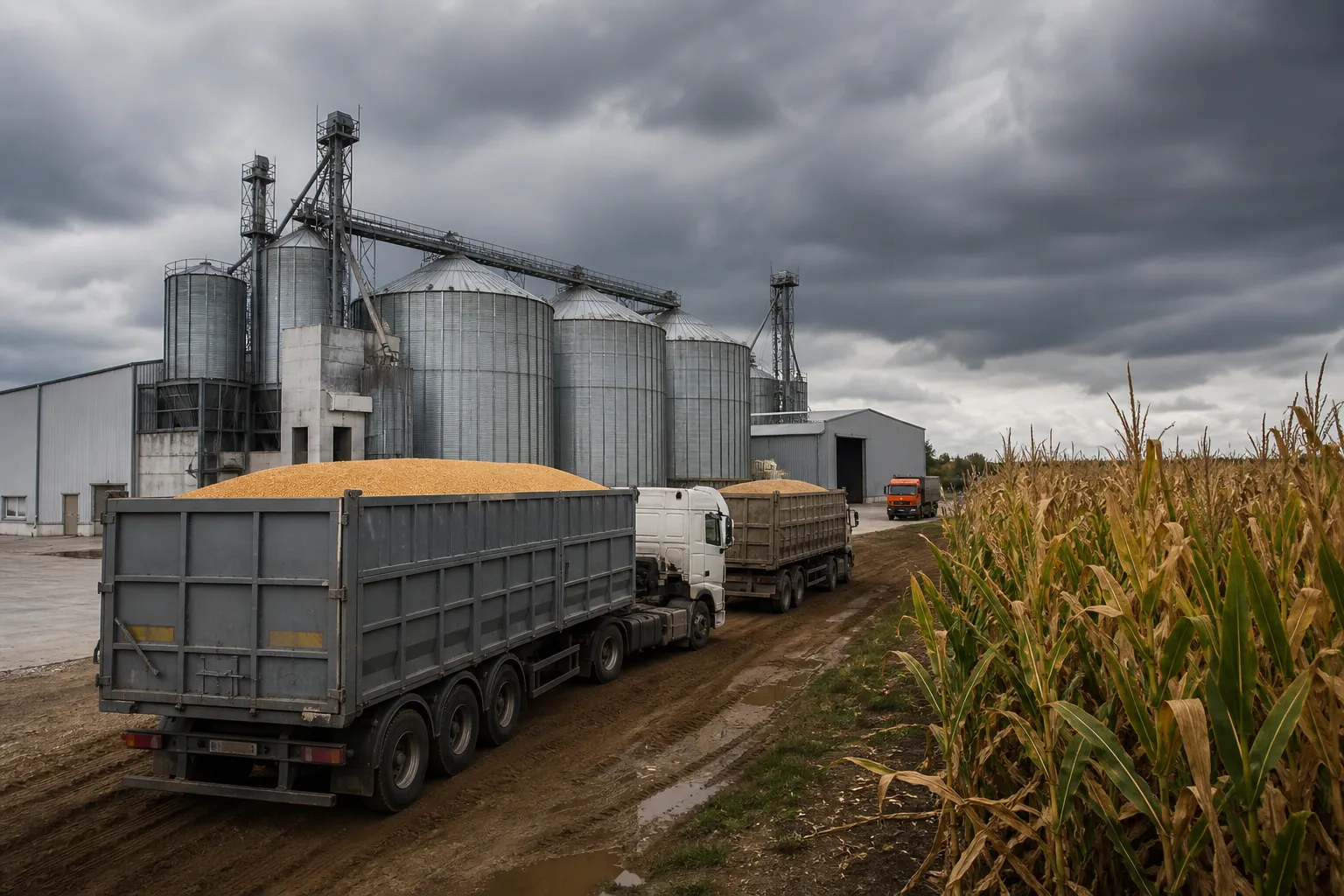
According to Denys Marchuk, deputy chairman of the All-Ukrainian Agrarian Council, Ukrainian farmers have already harvested more than 28 million metric tons of grains and legumes. A significant portion of the harvest cannot be sold, and there may be a shortage of storage capacity in the coming months. The situation is particularly dire in frontline regions, where most grain elevators were destroyed during the war.
This year’s corn harvest could reach about 33 million metric tons, while the storage capacity shortfall could amount to up to 10 million metric tons. According to Marchuk’s assessment, some farms are considering leaving the corn in the fields until spring, since drying the grain requires expensive electricity, and prices for the produce are low.
Maksym Hopka, an analyst at the Ukrainian Agribusiness Club, estimates July’s agricultural output at 3.7 million metric tons, of which 2.7 million metric tons were grain. This is about a quarter less than the previous month. He expected the figure to drop by more than 50% in August.
For more breaking news, follow the UA.News Telegram channel.
According to Gopka, the domestic price of food wheat has fallen by 30–35%. In his view, because it is impossible to export the entire harvest, prices have fallen so much that producers are increasingly unable to cover their production costs, and some farms are already operating at a loss.
The Ministry of Agrarian Policy and Food of Ukraine estimates the potential annual losses from unsold agricultural products at approximately $20.5 billion. The government is seeking alternative routes via rail, road, the Danube, and a potential corridor through Moldova. At the same time, the drought has reduced the Danube’s transport capacity, European rail infrastructure is overloaded during the harvest season, and road transport remains expensive.
According to Hopka’s estimates, Ukraine’s agricultural exports could decline by approximately 9 million metric tons in August–October, and losses could reach $1.9 billion. The government has extended a loan program for farmers and has appealed to the European Commission for €220 million in aid to support small and medium-sized agricultural enterprises.


