
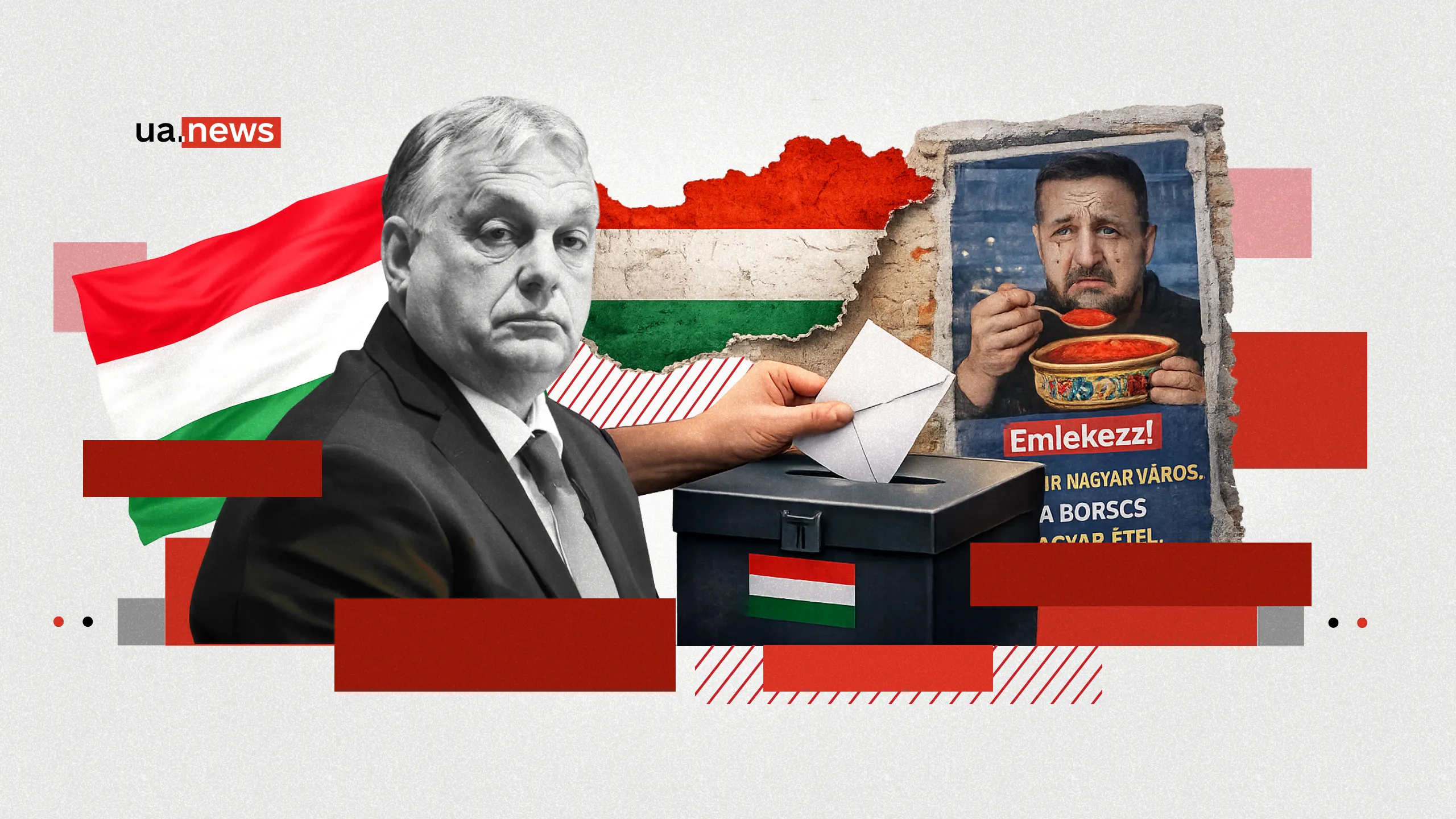
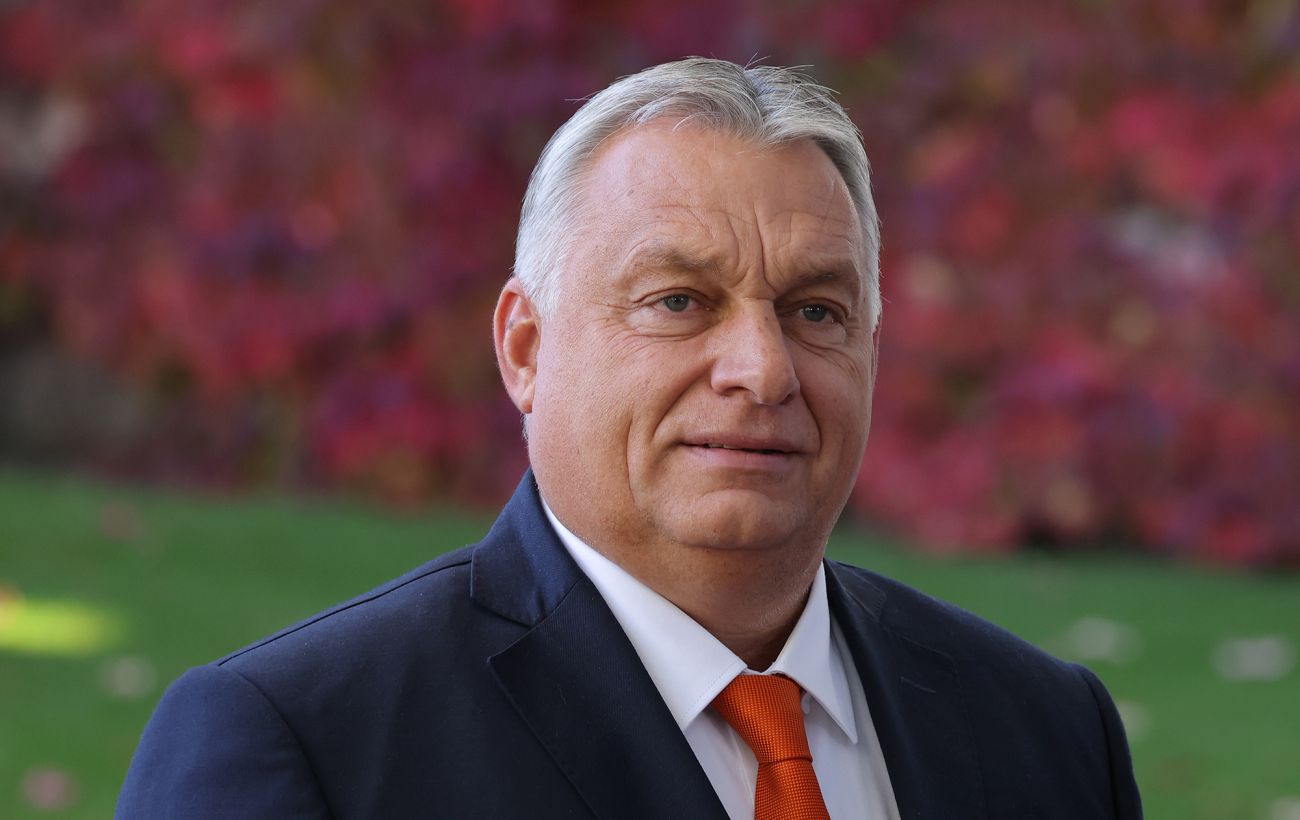
Today, with less than two weeks remaining before the parliamentary elections in Hungary, political tension in the country has reached its peak. As early as April 12, the 16-year rule of Prime Minister Viktor Orbán may come to an end — or receive a new political mandate. Never during this time has the incumbent Hungarian leader faced such a serious challenge: the opposition, represented by the Tisza party and its leader Péter Magyar, is breathing down the neck of the ruling Fidesz party — and according to a number of polls, is even significantly ahead of it.
However, these elections matter far beyond Hungary’s borders. They are being closely watched both in Brussels and in Kyiv.
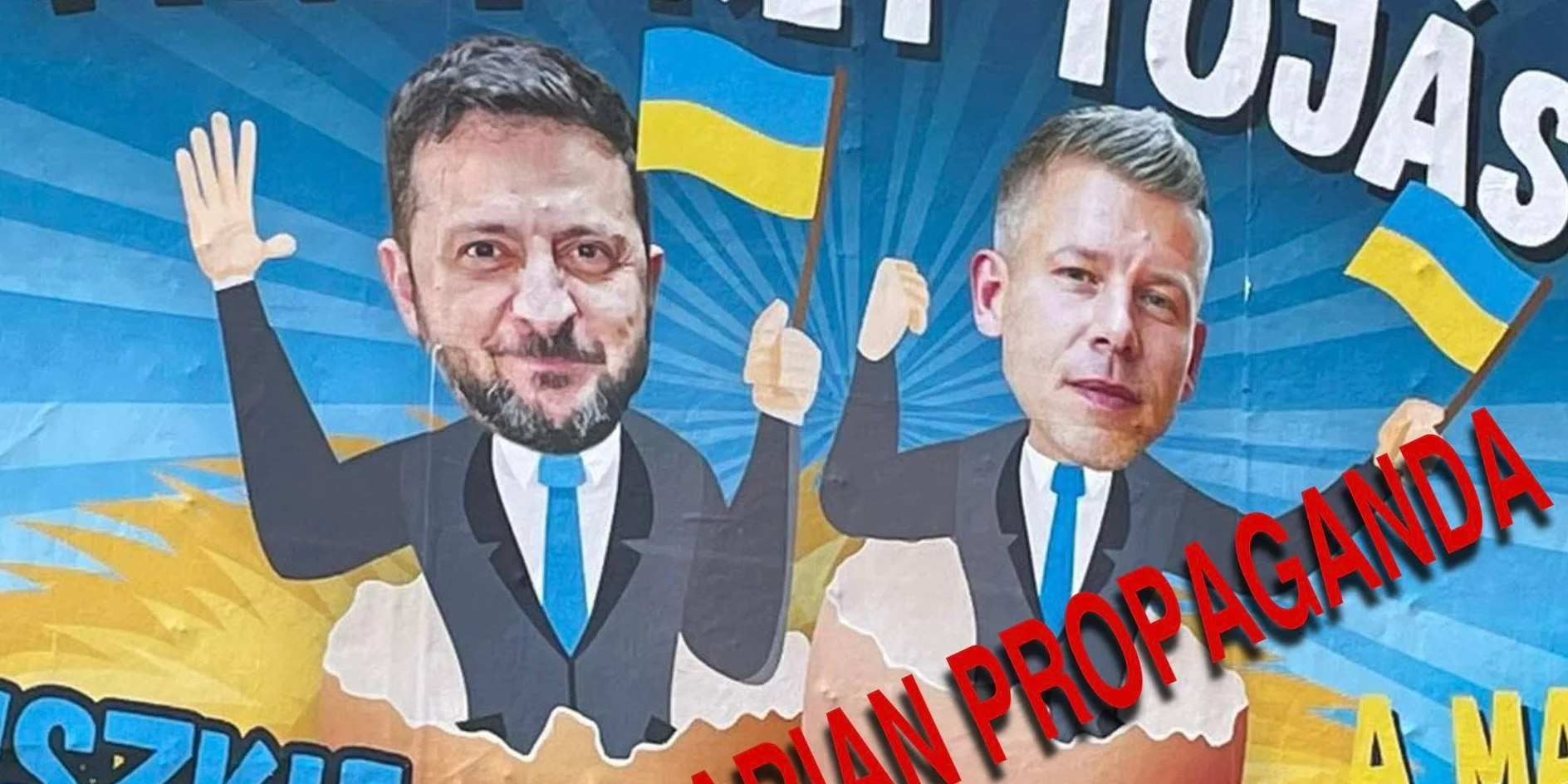
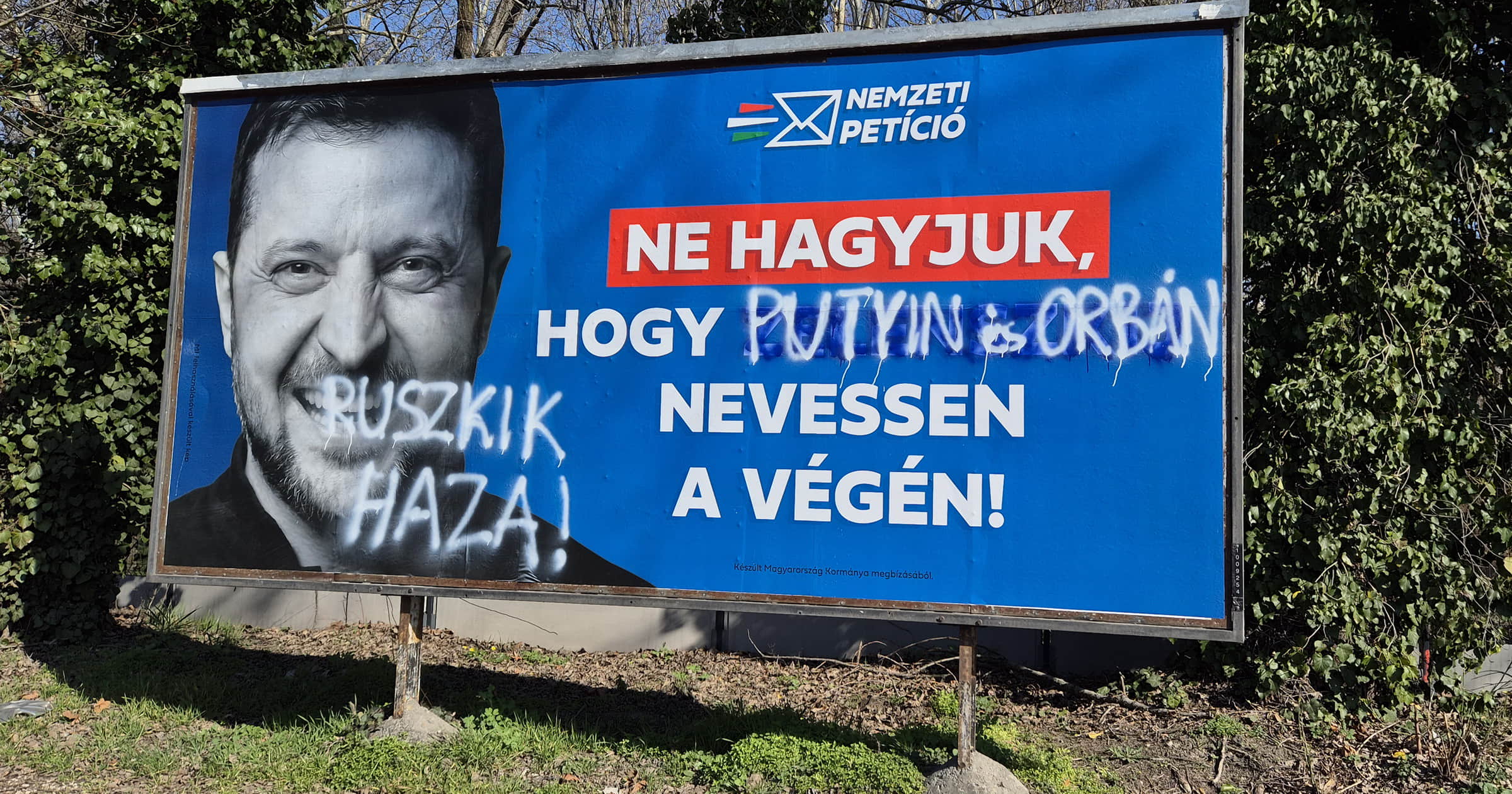
For Ukraine, they have effectively become a real political front. The face of President Volodymyr Zelensky, plastered on billboards across the country, accompanied by slogans about war, peace, and the “Ukrainian threat,” is not just an element of the campaign. It is a reflection of how deeply the Ukrainian issue matters for Hungarian society and how desperately Orbán is using the image of an external enemy in an attempt to preserve his power. The political and diplomatic conflict between Kyiv and Budapest, which has flared up again in recent months, is also directly correlated with the date of the elections — April 12.
What do pollsters say on the eve of the electoral race? Why are Hungarian streets filled with Ukrainian symbolism and the face of Zelensky? What awaits Ukraine–Hungary relations after the elections? Political observer of UA.News, Mykyta Trachuk, examined these questions.
Electoral landscape ahead of the elections in Hungary
The latest polls paint a picture that just a few years ago seemed impossible: Viktor Orbán’s party is losing ground to the opposition. However, this gap is not static, and it is precisely the dynamics of recent weeks that raise the most questions.
According to data from the 21 Research Centre dated March 11, among voters who have decided, the opposition Tisza party leads with 53%, while Fidesz is supported by 39%. The 14% gap is significant, although it has slightly narrowed compared to January’s results — 16%. According to projections, this would allow Tisza to secure about 115 seats in the 199-seat parliament, leaving Fidesz with only 78 mandates.
However, results from other research centers show variability, which only adds to the intrigue. Zavecz Research, in its poll conducted in late February–early March, recorded a 12% lead for Tisza (50% versus 38%). At the same time, the Publicus Institute provides slightly different figures: 47% for Tisza and 39% for Fidesz.
An important feature of these elections remains the high percentage of undecided voters. According to Zavecz, about 20% of respondents have not yet decided whom to support. This is a very large share. It is this electoral reserve that, two weeks before the vote, can dramatically change the balance of power.
It is also worth noting the growing support for the far-right party “Our Homeland,” which is surpassing the 5% threshold and, according to various data, is receiving between 5% and 7% of the vote. Its presence in parliament may complicate coalition formation, although both main forces — Tisza and Fidesz — currently appear quite self-sufficient.
The main intrigue lies in whether Orbán will be able to mobilize his traditional electorate in the final days by appealing to fears of war, or whether Magyar will manage to consolidate the protest electorate and supporters of European optimism. In addition, there are certain concerns regarding the use by the incumbent authorities of administrative resources to achieve the “desired” result.
Between peace, war, and the “gold convoy”: why Ukraine has become the center of the campaign
The current election campaign in Hungary appears to be the most “Ukraine-centric” in the country’s history. The face of President Zelensky today looks at Hungarians from virtually every second billboard. And on March 15, a national holiday — the anniversary of the 1848 revolution — Budapest became the arena of a grand confrontation. Two massive marches (of the authorities and the opposition) resembled two parallel realities.
Viktor Orbán, speaking to supporters, chose the main message of the campaign: an artificially imposed choice between peace and war. “Our sons will not die for Ukraine, but will live for Hungary,” the prime minister said, accusing the opposition of intending to drag the country into the conflict. This narrative is reinforced by real actions: Budapest blocked the 20th package of EU sanctions against Russia, froze the provision of a €90 billion loan to Ukraine, and initiated a scandal around the Druzhba pipeline.
The most resonant incident was the detention of the Ukrainian “gold convoy” — an armored shipment containing 9 kg of gold and money and valuables worth nearly $100 million. Hungarian authorities confiscated all these valuables, accusing the Ukrainian side of money laundering. This case became a perfect illustration of Orbán’s campaign rhetoric: the image of a decaying and corrupt Ukraine trying to drag Hungary and the entire world into its problems. By the way, according to a poll by the Nézőpont Institute, 45% of Hungarians supported the authorities’ actions in this situation.
In response, the Ukrainian side accused Hungary of “politically motivated raiding.” Tensions reached a critical level, resulting in a public exchange of accusations at the highest level. As a result, Zelensky’s rating in Hungary fell to record lows: more than 64% of Hungarians view him negatively.
Interestingly, this strategy also has a downside. Opposition leader Péter Magyar, who advocates pro-European positions and clearly calls Russia the aggressor, is forced to maneuver in his rhetoric. However, he should not be considered a “great friend of Ukraine”: he treats Kyiv more favorably and more adequately than Orbán, but his party also opposes Ukraine’s accelerated accession to the EU and especially NATO.
What will change after April 12
For Ukraine, the Hungarian elections are of enormous importance. The current conflict, which has intensified in recent months, is not just a diplomatic dispute. It is also a critically important issue of the functioning of energy infrastructure (oil transit), the possibility of receiving assistance from the EU (which Orbán systematically blocks), receiving assistance specifically from Hungary (including electricity imports during peak hours), and the issue of the future enlargement of the European Union.
In the event of a victory for Péter Magyar and the Tisza party, Budapest’s rhetoric and actions are likely to change radically. Magyar has publicly declared his intention to “unblock billions of euros of frozen EU funds,” which implies meeting Brussels’ requirements. This will automatically reduce tensions with Ukraine, as Orbán’s ultimatum of “money in exchange for concessions from Kyiv” will lose its meaning. In addition, Magyar’s team is already publicly announcing plans to bring professional managers into the future government, including from the energy sector, who intend to reduce the country’s dependence on Russian energy resources.
However, even in the event of an opposition victory, one should not expect immediate “warming.” First, a significant portion of Tisza’s voters shares a skeptical attitude toward Ukraine’s rapid accession to the EU. Second, any new government — if it emerges at all — will face the problem of Orbán’s legacy: most key institutions (the Constitutional Court, media regulators, the prosecutor’s office, etc.) are controlled by figures loyal to the current authorities, and replacing them may require a constitutional majority, which Tisza may not obtain even in the event of victory.
If Orbán wins again, Ukraine can expect more of the same as since 2014: further escalation and gradual deterioration of relations. The current Hungarian prime minister speaks about this openly. His campaign is built on maximum escalation of the conflict with Kyiv and Brussels, and after the elections he is likely to continue blocking aid to Ukraine and vetoing sanctions against Russia.

Summing up, the two weeks remaining until April 12 will be decisive for Hungary’s political future. Hungarian society is approaching the elections deeply divided, and the Ukrainian issue has become one of the main stumbling blocks.
For Ukraine, these elections are a moment of truth in relations with its western neighbor. If Péter Magyar manages to convince undecided Hungarians and win, Kyiv will get a chance to unblock European aid and improve communication with Budapest. If Viktor Orbán manages to mobilize his electorate using rhetoric of fear of war and the image of an “enemy” in the form of Ukraine and the EU, Ukrainian–Hungarian relations will almost certainly enter an even deeper crisis — although after the elections some easing of ideological rhetoric can still be expected.
In any case, on April 12, we will see whether Hungary will continue its “special path” on the periphery of the EU with a drift toward Moscow, or attempt to return to the European mainstream. Ukraine is watching the electoral process with great interest, as the outcome of these elections will directly affect its ability to resist aggression and the unity of overall European support.
