
The war in the Middle East, followed by conflicting statements about a ceasefire, triggered a sharp reversal in global stock markets: from a surge in prices to a steep decline. Ultimately, trading came to a standstill as markets awaited the conclusion of any peace agreement. According to Western traders, the market has already begun to look beyond the war.
Despite this, the risk associated with news headlines regarding the conflict in the Middle East remains the strongest driver of asset volatility. Another such risk is inflation data, which is also rising under pressure from rising energy prices.
Why is the trajectory of stock markets so dependent on every new statement by U.S. President Donald Trump? What will happen to the dollar, and who will reap windfall profits regardless of how the Middle East war unfolds? Why does trading remain the most promising, yet at the same time the riskiest and most complex profession?
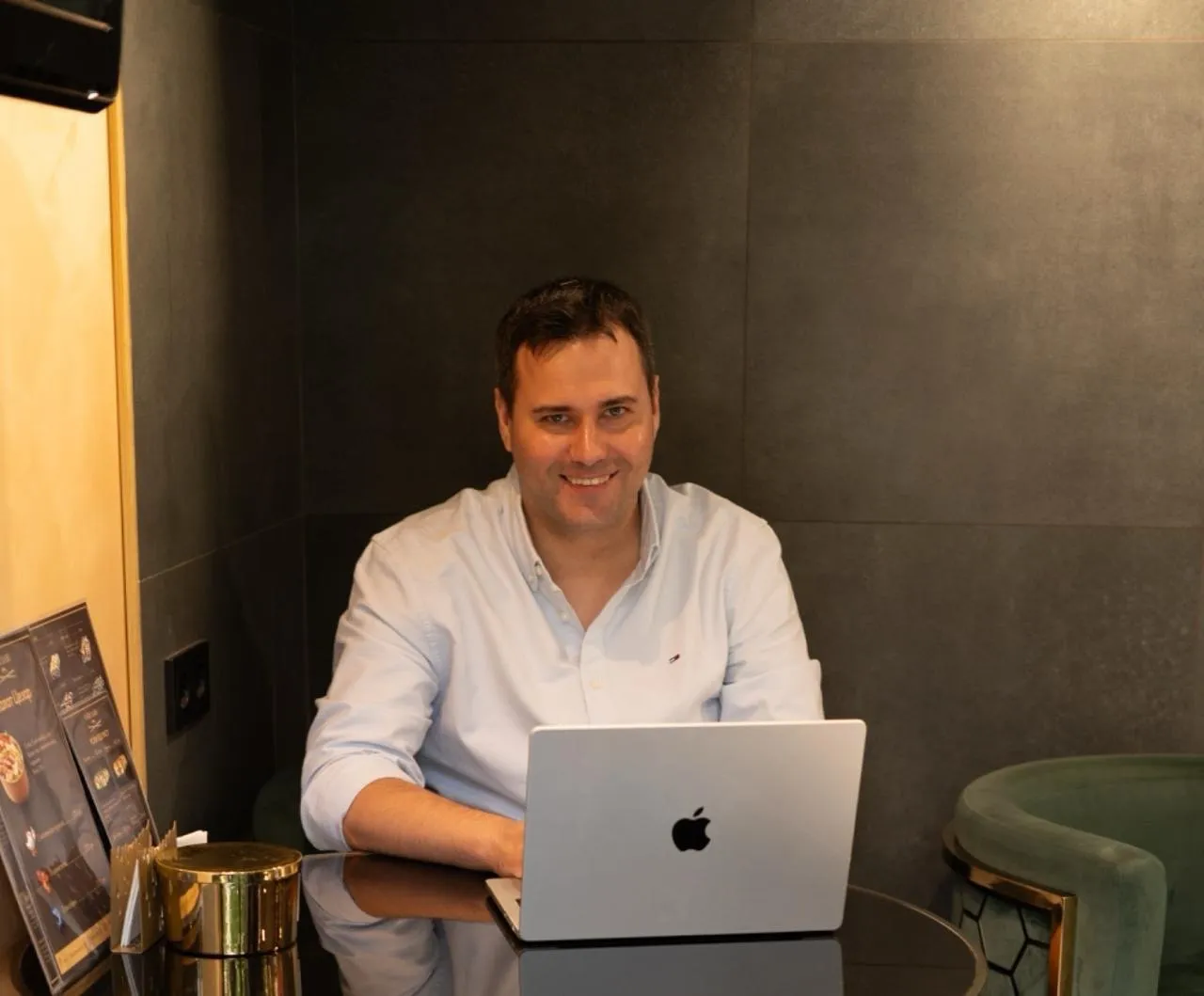
UA.News asked Igor Arapov about these and many other topics. Arapov is a practicing trader who has been active in financial markets since 2013 and is the author of a series of books on the fundamentals of trading. He also lectures to students at the National University of Food Technologies (NUFT) as part of the “Digital Business” educational program.
How I Got Into Trading
During my school years, I was seriously involved in chess and advanced to the level of Candidate Master of Sports. Chess instilled in me strategic thinking and discipline, which became the foundation of my approach to trading in the stock markets.
In general, people who want to enter this field need to have a knack for analytics. In this profession, you’ll have to analyze a lot.
I have a technical background: first, I graduated from a technical college, and then from the Oles Honchar Dnipropetrovsk National University. During my final years of study, I visited an assembly plant—the largest in Dnipropetrovsk—and spoke with employees who had worked there for decades. They told me, “Salaries aren’t going up, and there are no career prospects.” The picture was bleak. I was very disappointed: seven years of studying—for what?
Back then, brokers were very popular—they were advertised on billboards all over the city. Promises of quick money and all that “blah-blah-blah.” Naive as I was, I believed it. And so, since 2013, I’ve been working in this field—it must be fate. I never thought things would turn out this way.
Later, I got into training traders. I’m convinced that professional experience needs to be passed on—it’s a social responsibility. Anyone working in trading simply has to teach others. At the same time, you need to learn trading from professionals. That’s the first thing I want to point out.
There’s no such thing as easy money
There is no such thing as accidental, easy money—it simply doesn’t exist in the market. Unfortunately, this is the biggest mistake that novice traders or those interested in this field in general fall for. In financial markets, the only way to make money “quickly” is to lose it. There is no such thing as getting rich quick. This must be clearly understood.
The topic of traders’ financial losses has been studied for a long time. Together with the head of the Department of Economics, Professor Inna Petrivna Sytnik, we dedicated a research paper to this topic, in which we systematized the main cognitive biases of retail traders. We described most of the factors that influence them. It is worth noting that this area was already quite well-studied back in the 2000s, and during that time, Nobel laureates in economics conducted numerous studies on this topic.
How do ordinary people react to the dynamics of financial markets? It all boils down to the fact that human psychology itself works against people making money. It sounds grim and fatalistic, but that’s the reality. The reality is that the vast majority of ordinary people are psychologically unprepared to interact effectively with financial markets. None of the usual behavioral models work in this space. It is very difficult for a person to accept this: I do the right analysis, I lose sleep, I put in a lot of effort, but I get the exact opposite result.
There is no determinism in the financial market—only probabilities. In a sense, this can be compared to quantum mechanics, where it is impossible to accurately predict the outcome of events even a few minutes in advance.
I worked for a major international brokerage firm for over six years. Over the years, I observed a certain pattern: within the first three months on the market, most beginners completely lose their initial deposit. Nobel laureates have already noted this statistical trend, explaining it by the influence of cognitive biases that prevent people from behaving rationally under conditions of high uncertainty.
Why It’s Important to Learn from Professionals
If you want to be a trader or work in the financial markets, you must remember:
- You must treat this as a profession;
- Every trader must learn;
- You must learn under the guidance of a trader who can pass on their skills.
Without experience, theory is completely useless. We have compiled an entire library on trading—all for free. But in practice, this doesn’t help much.
Years of working as a financial analyst at a brokerage firm showed that results were achieved in only one case: when I conducted group training sessions, acting as a tutor. I clearly explained what was happening in the market, why it was happening, how to act correctly, and most importantly—I always warned against potential mistakes. And there are many mistakes you can make in the financial market. Only through this kind of hands-on training do people truly begin to understand and absorb the material. It’s comparable to a full-fledged university education.
To help beginner traders and those who simply want to learn the basics of trading without financial risk, I’ve created a free educational library. It’s available to anyone and includes materials I’ve compiled over six years of working as a financial analyst. It’s a great way to learn the theory. And once you’ve mastered it, everyone will be able to honestly answer an important question for themselves: are they ready for this difficult journey?
False Expectations
Why is trading so negative? People lose money there because they come in with the wrong expectations from the start. And these expectations are shaped by aggressive advertising (I myself got into trading after seeing billboards on the streets).
At first, I suffered so much because I was convinced: I’m very smart, knowledgeable, and prepared. But the market teaches humility very well. And do you know why? Because some of the smartest people on the planet are concentrated around the market—a true world-class elite. Take, for example, the fact that most financial systems, including trading itself, have their roots in the U.S.
Recently, during a lecture with students, we analyzed the largest futures exchange and studied its statistics: who makes money, who loses, and in what proportions. It is essential to comprehend such data to grasp the true scale of the situation.
The banking system can be compared to a massive parasite that absorbs all the added value of the real sector of the economy. This mechanism was created and is controlled by the smartest people. This is the key challenge: without preparation, it’s best not to get involved.
I warn my students: “You must have no illusions or naivety.” Bankers operate with insider information, have a powerful technological infrastructure, and access to massive data centers. Moreover, decisions are made using artificial intelligence that calculates all possible scenarios. What kind of competition can there be if an ordinary student, who believed the advertising, decided to enter the same cryptocurrency exchange?
The Psychological Profile of a Trader
When I was just starting out, I had an excellent teacher. Not only was he a true master of trading, but he was also a professional psychologist. It was thanks to him that I realized how closely trading processes are linked to human psychology. The trick is this.
Imagine a perfectly rational person: educated, successful in life, with a certain status. However, as soon as they enter the market and start tracking price fluctuations, the market shuts down their rational mind and activates the ancient reptilian brain, which operates on reflexes. It triggers two types of fear: the fear of missing out and the fear of loss. These are the strongest human emotions. This is precisely what makes the market dangerous—it activates deep-seated, primal biases, described in studies by Nobel laureates as cognitive biases of retail traders.
When considering the personality traits of a successful trader, qualities such as emotional stability and consistency are critically important. It’s no coincidence that beginners are taught trading systems—a set of fixed rules they must follow. It doesn’t matter whether Trump is speaking, whether it’s winter outside, or summer—only the algorithm of actions matters. Only then will there be a result. A person must not make decisions based on emotions. Those who are ready to take on this responsibility will be successful. Otherwise, it is impossible to operate in the market at all. If a trader starts to get carried away, it resembles gambling addiction. These are very similar thought processes.

Why mathematicians don’t gamble in casinos
Nobel laureates have already proven: the market is impossible to predict. There are no cause-and-effect factors that determine what will happen to the market in 5 minutes or tomorrow. The market operates within the realm of probability, and traders work precisely with it, using probability models.
We can, for example, to some extent predict a cut in the U.S. Federal Reserve’s (Fed) key interest rate or the impossibility of a nuclear war between the U.S. and Iran. But this is always a probability. Trading boils down to mathematical models, where all probabilities add up to a mathematical expectation, which can be positive or negative.
Why don’t mathematicians gamble in casinos? Because the mathematical expectation there is negative from the start: the more you play, the more you lose. In trading, the approach is similar. We don’t predict the future; we work with probability. And the main thing is that the average probability over the long run ensures a profit. Then the math is on our side. And what is math? It’s an exact science! That’s what trading looks like.
Insider Trading
Insider trading—that is, trading stocks based on confidential, non-public information—does indeed exist, and it’s no surprise that it carries criminal liability in the U.S. If traders are caught doing this, the consequences can be severe, including actual prison sentences.
Regarding market fluctuations caused by statements from U.S. President Donald Trump. It’s hard to imagine the U.S. president turning into a newsmaker—that’s not part of his job description. The head of state’s words should be taken as something significant, tied to institutional processes. However, today the country’s leader increasingly resembles a talk show guest throwing out sensational headlines. The following conclusion follows from this situation: there are those who know in advance what he will say. The logic is clear from there: either buy or sell and profit from price changes. This is a moment of opportunity.
Who always makes money on the stock market
It is important to remember: money flows into the stock market from the real economy. For example, during the pandemic, the Fed injected $4–5 trillion, which could have led to excess liquidity. These funds often flow into financial markets, including cryptocurrencies, inflating their value, for example, from $15,000 to $100,000. But such growth isn’t always backed by economic fundamentals—people are lured by easy money, which often makes them victims.
Who consistently makes money in the market? Around any exchange, there are market makers—participants who create the market. They allow you to buy or sell an asset and earn commissions regardless of price movements. Just like with currency exchange: there’s always a spread between buying and selling. Their income is steady, while the risks fall on the traders’ shoulders. The main task of market makers is to stimulate active trading, which ensures them a stable income. They are the primary beneficiaries of any exchange
On Real Profitability
When it comes to profitability, trading significantly outpaces any inflation, bank deposits, and even passive investing.
Trading is a highly profitable business compared to any other type of business. But it is extremely risky and requires a huge investment of effort and time. In other words, on one side of the scale, earnings are much higher than in any other business. On the other side, the demands on the trader are almost astronomical.
Two Scenarios for the Markets
Let’s consider two key trends currently observed in the market. The first is the potential for peace in the Middle East. I should note that Donald Trump actively supports the idea of a dollar collapse. This is due to the massive U.S. national debt, which exceeds $30 trillion, and the Fed’s interest rate, which requires significant payments from the budget. Question: Where will this money come from? Borrowing, constantly increasing the national debt? As a result, sooner or later the national debt will be so enormous that the interest alone will be impossible to pay. It resembles a Ponzi scheme where everything could collapse.
How can this be smoothed out? The idea is as follows: balance the trade deficit. For the U.S., it is negative by default. The U.S. imports a huge amount of goods and services, paying with dollars that accumulate in the central banks of other countries as reserves. This allows countries, such as Ukraine, to issue their national currency based on dollar reserves. In fact, the hryvnia is, in a sense, a repackaged dollar. It is immediately apparent that Ukraine has a resource-based economy, which is very detrimental to development. Essentially, local currencies become derivatives of the dollar, creating dependence on the external economy.
Trump understands the following: a decline in the value of the dollar will make American goods more competitive on the global market, increase exports, and improve the trade balance. This is embedded in the Trump administration’s strategy, which is actively seeking to drive down the dollar’s value. However, such a weakening of the dollar reduces its purchasing power and will negatively affect those who have invested in the American currency. As always, the market will fool everyone.
To make it less painful, let me remind you that the central banks of the Eurozone hold about $7 trillion on their balance sheets. Overall, this policy triggers hidden inflation of about 5% annually. Accordingly, they “take a bite” of 5% from the $7 trillion every year. Not bad. In other words, inflation is a tool for redistribution. What does this mean? Those who hold money in reserve currencies are hit by this blow. The U.S. gains at the expense of reserve currency holders by using inflation as an economic tool. This is the first clear logic.
The second logic is a scenario where the conflict in the Middle East continues. If Donald Trump falls into a trap and the situation with Iran drags on. After all, Iranians aren’t just a people: they are quite fanatical religious people. And they may see this as their great mission. Even if the U.S. decides to stop, it’s not a given that Iran will—that’s the biggest risk.
What will happen in that case? The price of oil could exceed $100 per barrel, which would be a massive blow to the global economy. The cost of oil influences the pricing of most goods and services. Rising oil prices automatically drive up the costs of production and consumption, which in turn leads to inflation. The U.S. Federal Reserve (Fed) will be unable to lower the key interest rate under inflationary pressure.
Thus, in the first scenario, if the war ends and Trump takes steps to lower the rate to zero, he will reduce the cost of servicing the national debt. But in the second scenario, with high inflation, lowering the rate becomes impossible. Any reduction in the key rate in such a situation would only exacerbate inflation, which would have a devastating impact on business. Since inflation is a “tapeworm” that destroys any economy, it is always fought relentlessly.
Regarding the relationship between the Federal Reserve leadership and Donald Trump. Despite pressure from the president, the Fed adheres to its principles, the primary goal of which is the country’s macroeconomic stability. Lowering interest rates in the face of inflation is simply unacceptable, as it could lead to an economic downturn. And recessions and inflation are a deadly threat to any economy.
I should note that the dollar has lost about 10% of its purchasing power over the past year. Imagine you had $10,000; of that, $1,000 has effectively lost its value. Formally, the $10,000 remains, but its purchasing power is equivalent to $9,000. And this happened in just one year of Trump’s presidency.
It feels as though the world is so mired in financial pyramids that it’s hard to imagine any real way out of this situation. By the way, it’s often mentioned that World War I and World War II were one way to write off debts.
Who profits in an era of chaos
My opinion: The United States of America is the last country on our planet where things could go wrong. The U.S. rose to prominence thanks to World War II in Europe. It is located across the ocean, so problems on the European continent do not directly affect it. That’s bad for us: missiles are flying at us and killing us.
Americans’ problems are limited to a slight rise in gas prices; maybe they’ll eat fewer burgers. But nothing catastrophic will happen there. These safe havens will remain regardless of world events. America’s security is preserved under any global circumstances.
Let me remind you: when Donald Trump became president again, he threw a lavish party for the owners of tech giants—Apple, Amazon, Facebook, and others. I think he gathered them for tacit agreements and to discuss the “red lines” that Trump would not cross. Perhaps he warned them that he would set a certain agenda in the media. I’m willing to believe that. Why? Because America’s strength lies in its stock market. The stock market is a massive magnet for investment inflows. Investment drives economic growth and scientific and technological progress. It’s hard to believe that Trump would deliberately undermine this mechanism for capital inflows.
The Basis of Capital Formation
Money is one of the worst forms of capital. It is inevitably devalued by inflation. The richest people are the owners of “factories, plants, and steamships”—tangible assets that create added value. This is a classic principle that has always existed, exists now, and will continue to exist; it is not going anywhere. It is precisely these assets that remain the foundation of any successful investment. No other universal formula for creating capital has been invented yet.
Education is a real investment in the future. Even Warren Buffett, one of the most famous investors in history, claimed that the best investment is investing in one’s own education. I completely agree with this. A person who has knowledge will always be able to find opportunities to increase their income.
That is why I always tell students in my lectures: invest in your education—it is the most valuable thing you can acquire. You buy education at “outdated prices,” but you “sell” it at new ones, earning in the long run. It is this very difference (delta) that brings stable success to those who are professionally dedicated to their work and avoid futile pursuits. That is how education becomes the foundation of wealth.


