
The Strait of Hormuz Trap: Thousands of Sailors Stranded in the Persian Gulf
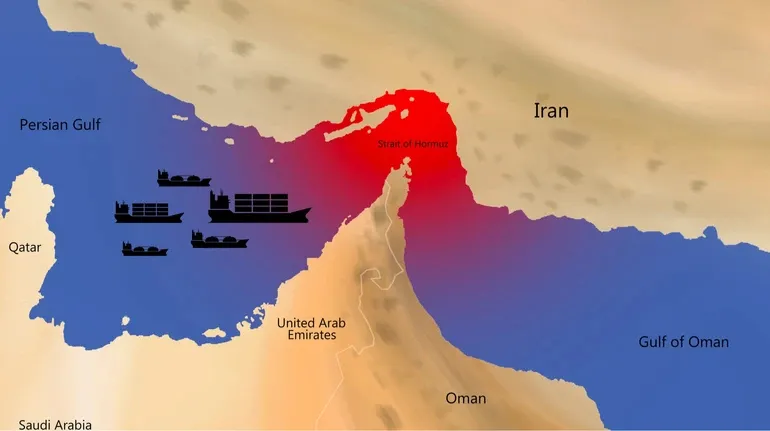
Following Iran’s claims of control over the Strait of Hormuz in the Persian Gulf, the situation for maritime logistics has deteriorated sharply, and more than 20,000 sailors have effectively been stranded on hundreds of ships. People are stranded at sea with no way to safely disembark and are living in a state of constant uncertainty and fear. This is reported by Reuters.
Iran’s statement and the publication of a new map, in which Tehran effectively claims control over the Strait of Hormuz, have caused a sharp escalation of the situation in one of the world’s most critical maritime routes, where ship traffic was already complicated by security risks.
According to Reuters, more than 20,000 sailors on approximately 2,000 ships are currently trapped in the Persian Gulf, and many of them cannot leave their ships due to security risks, travel restrictions, and the complex situation in the region.
Sailors who have been at sea for weeks and months describe their situation as exhausting and psychologically difficult, as the lack of normal living conditions, limited food and water supplies, and constant tension make staying on board increasingly difficult. “The only thing we do here is plan how to get through the night and pray to God that we won’t be hit during an attack,” said Indian sailor Salman Siddiki, who is among the stranded crews.
International maritime organizations warn that the situation could worsen, as uncertainty regarding the safety of passage through the Strait of Hormuz affects not only ship crews but also global supply chains that pass through this strategic region.
Earlier, Iran announced a new “control” zone in the Persian Gulf, which, according to its version, partially covers the waters of the United Arab Emirates. Abu Dhabi sharply rejected these claims, calling them unrealistic and provocative. Against this backdrop, tensions in the region have noticeably risen again.
Trump is willing to wait a few more days for Iran to provide a proper response.


