
Russia is becoming increasingly dependent on China in an asymmetrical relationship – Foreign Policy
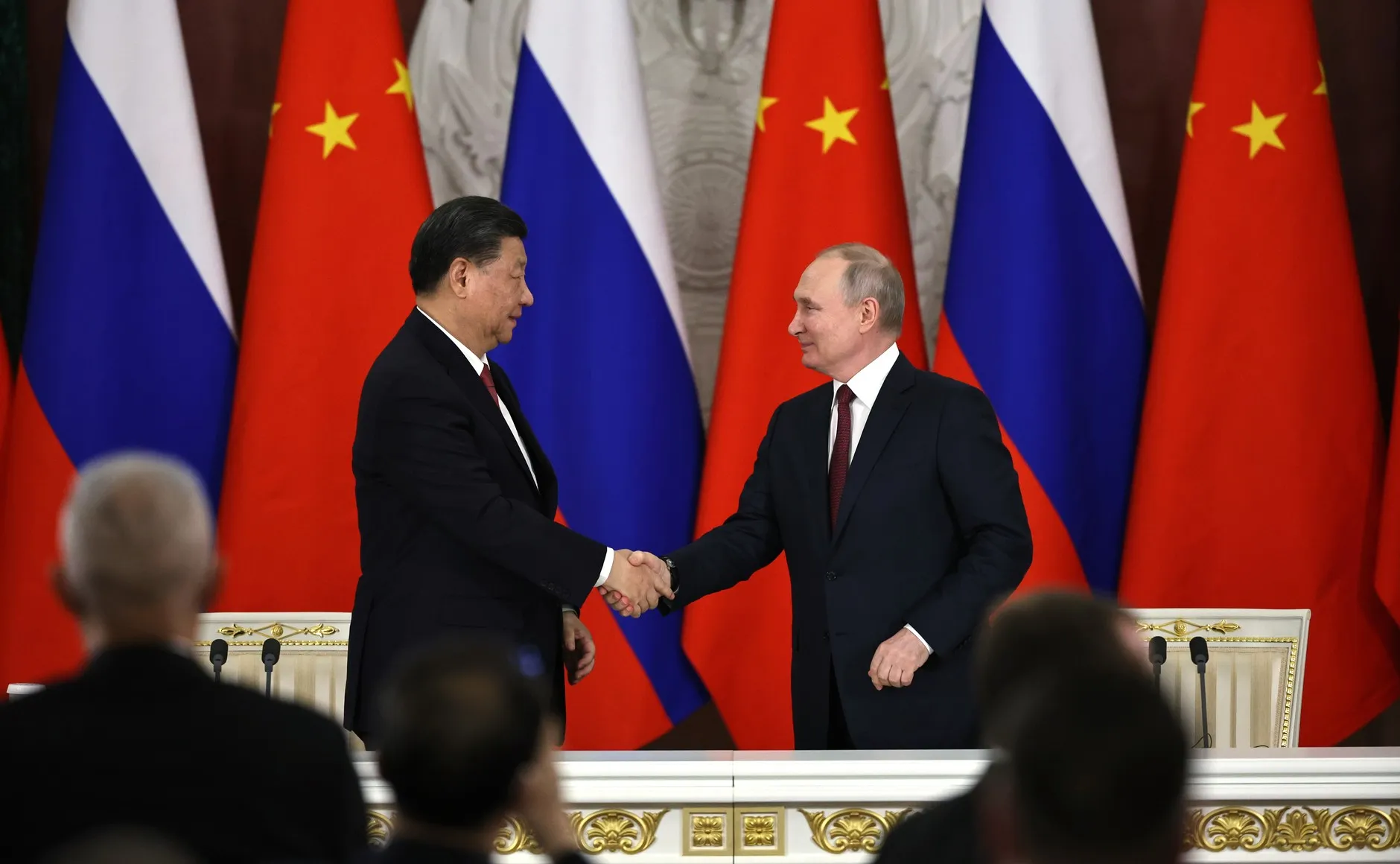
The “partnership without borders” solemnly proclaimed by the leaders of Russia and China in February 2022 has, in practice, turned into a deeply unequal and asymmetrical relationship in which Beijing dictates the key terms. Putin’s latest official visit to China clearly demonstrated that while Moscow is waging an exhausting war and facing economic stagnation, the Chinese side is exploiting the situation to maximize its own geopolitical and financial influence.
This is reported by the influential American publication Foreign Policy.
Despite the fact that, with the start of the full-scale invasion, China provided significant support to the Russian economy through the purchase of energy resources and the supply of machine tools, electronics, and dual-use goods, the Kremlin is not reaping the desired strategic dividends from this cooperation. Having lost the stable and highly profitable European market, Russia finds itself in a situation where its need for China is significantly greater than Beijing’s interest in Moscow. In particular, China currently purchases half of all Russian oil exports; however, thanks to its status as the primary buyer, Chinese corporations have managed to secure significant, ongoing discounts on raw materials from Russian companies subject to sanctions. In turn, the structure of bilateral trade has taken on a classic colonial character: Russia supplies exclusively cheap raw materials (oil, gas, minerals, and agricultural products), while importing finished high-tech goods, equipment, and automobiles.
Chinese businesses have effectively monopolized the niches vacated by the departure of Western, Japanese, and South Korean brands. A striking example is the Russian automotive market, where the share of Chinese cars has skyrocketed from less than 20% to 57% in just a few years, while European factories that have come under the control of Russian companies now simply assemble cars for Chinese brands, notably Chery. At the same time, analysts note that such investments do not boost the domestic productivity of Russian industry, and the economy itself has entered a prolonged period of low growth, which is already causing serious concern even among those Chinese investors who fear financial losses. Within Russia’s domestic expert community, alarming calls are increasingly being heard about the unacceptability of turning the state into China’s “junior partner,” yet the Kremlin has almost no room to maneuver.
Diplomatic and military support from Beijing is also not unconditional. China continues to officially declare its neutrality, verbally supports Ukraine’s territorial integrity, and calculates its own interests. Moscow fears that immediately after a potential end or freeze in hostilities, Chinese construction contractors and investors will instantly join large-scale projects to rebuild Ukraine, which will further exacerbate internal tensions between Russia and China. However, Putin’s fixation on waging an ideological war against the West and dismantling the Euro-Atlantic security system leaves Russia with no other alternatives. Since the European vector is completely closed off to Moscow, China is guaranteed to remain its sole economic and technological patron, allowing Beijing to unilaterally define the boundaries of this partnership.
Russian dictator Vladimir Putin stated that Russia is ready to provide China with “uninterrupted” supplies of oil, gas, and liquefied natural gas (LNG).
During his visit to China, Vladimir Putin had hoped to secure Beijing’s approval for the construction of a new large-scale gas pipeline, but the negotiations ended without a result.


